Table
Tagine, Couscous, Chermoula: How Morocco Builds Flavor Around Olive Oil
In Moroccan cooking, olive oil is not a neutral backdrop — it is the thread that ties spice, herb, and grain together across every stage of a dish. A closer look at three pillars of the Moroccan table reveals a remarkably deliberate approach to when, and why, oil goes in.
Translated from the Korean edition, originally published November 1, 2026 · read the original
A food culture shaped by the olive tree
Morocco sits at the northwestern tip of the African continent, at the point where the Mediterranean and the Atlantic converge. That geography maps almost directly onto the country's history of olive cultivation. According to data from the FAO (Food and Agriculture Organization of the United Nations), Morocco ranks among the world's leading olive-producing countries, and domestic olive oil output has grown steadily over the past decade.
In Moroccan cooking, olive oil is far more than a cooking medium. Combined with one of the world's richest spice traditions, it forms the structural backbone of the cuisine's flavor system — present at the base of a tagine, at the finish of a bowl of couscous, and at the core of chermoula sauce. Oil enters at multiple points in a single dish, and each entry serves a different purpose.
That layered logic is one of the defining characteristics of the Moroccan table. In a well-made tagine, oil may go in two or three times: first to draw fragrance out of the spices, then to coat ingredients and regulate moisture loss during the long braise, and finally — raw — over the finished dish to restore volatiles that cooking has driven off. This multi-stage approach makes full use of olive oil's aromatic architecture, and stands as evidence of how deeply Mediterranean culinary culture has taken root across North Africa.
Tagine — oil as the key that unlocks spice
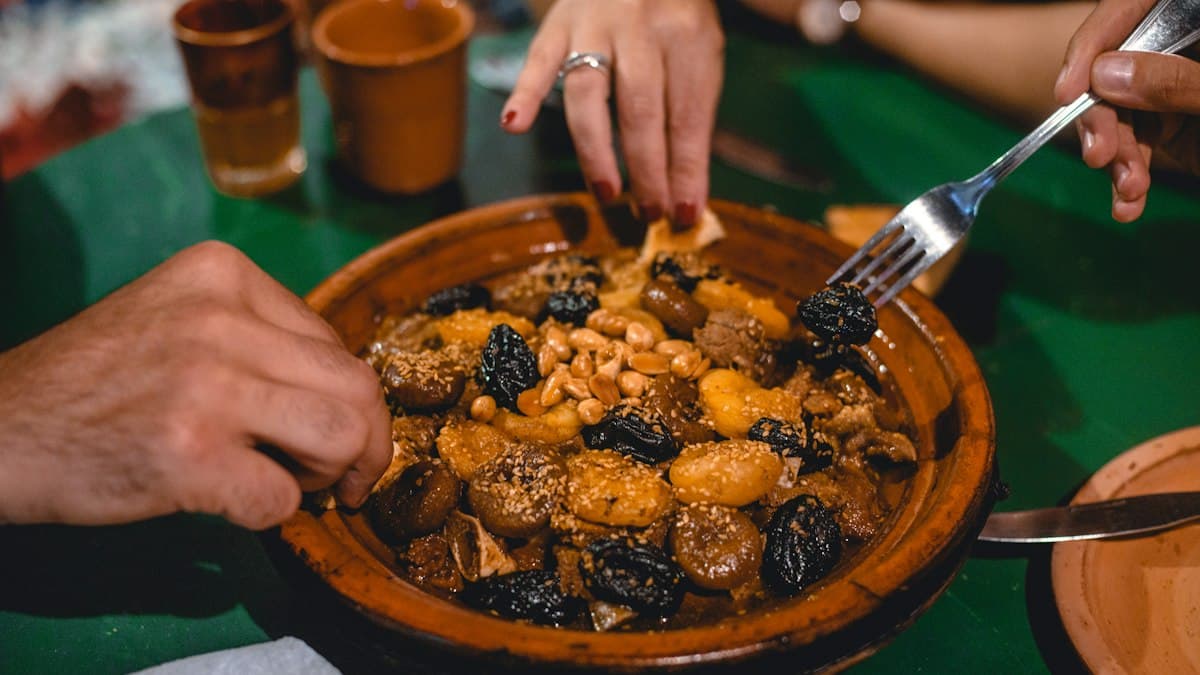
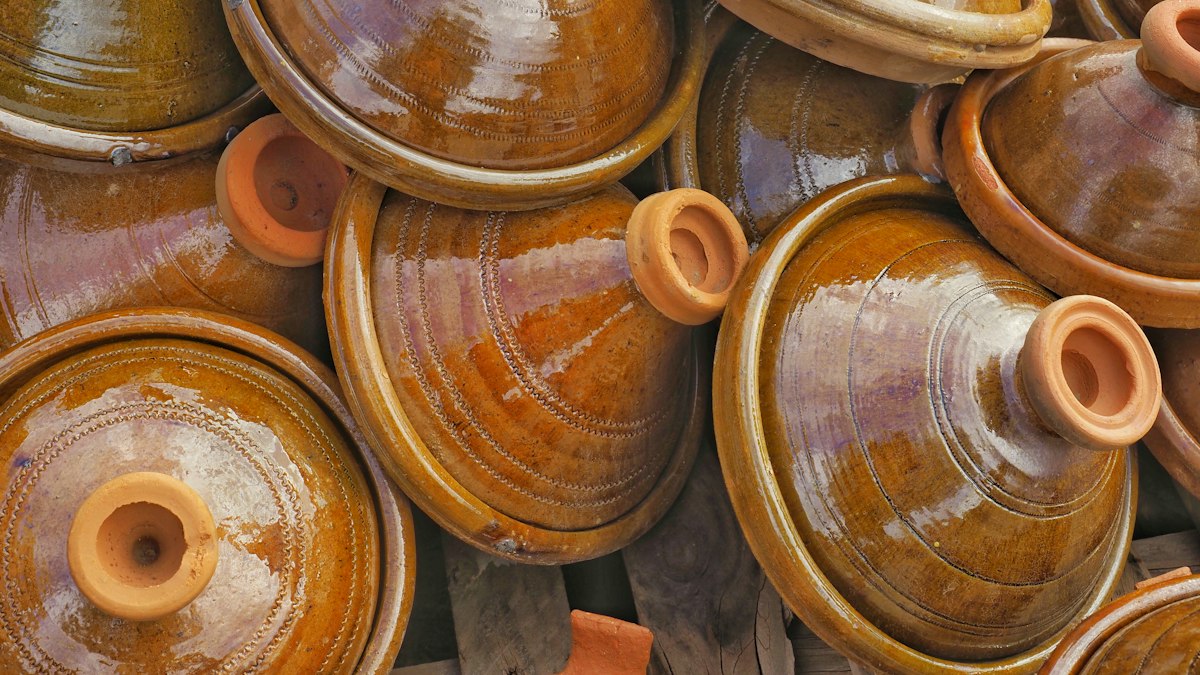
A tagine is both the conical clay vessel and the slow-cooked dish made inside it. Lamb, chicken, fish, and vegetables all take a turn as the main ingredient, but almost every version begins the same way: olive oil is poured into the base of the pot, and onions and garlic are coaxed slowly until fragrant.
At this stage, oil's role is decisive. The aromatic compounds in cumin, turmeric, ginger, and ras el hanout — Morocco's signature spice blend — are largely fat-soluble, meaning they release their fragrance far more completely into oil than into water. Warming the spices in olive oil first is therefore not simply a procedural step; it is closer to an extraction, dissolving aromatic molecules into the oil so that they can travel through the entire dish.
Traditional recipes often finish with preserved lemon (citron confit) and olives added toward the end of cooking. The salt-sharp, acidic brightness of the preserved lemon interlocks with the gentle bitterness of the olive oil to produce the layered complexity that defines a classic tagine. Some cooks lift the lid at the very end and drizzle in a second measure of raw oil — a deliberate move to replenish the fresh, volatile aromatics that heat has dissipated.
Couscous — the texture that finishing oil makes possible
Couscous is the North African staple of finely milled semolina grains cooked by steam. In 2020, UNESCO inscribed the knowledge and practices surrounding couscous — as practiced in Algeria, Morocco, Mauritania, and Tunisia — on the Representative List of the Intangible Cultural Heritage of Humanity, recognizing it not merely as a food but as a carrier of social ritual and family identity across four nations.
A properly made couscous calls for olive oil at least twice. The first application comes before the grains go into the steamer: a small amount of oil and salt is worked into the raw semolina by hand, coating each granule so that the finished couscous stays separate and light rather than clumping. The second application comes just before serving. Once the steamed grains have absorbed a splash of hot broth, olive oil is drizzled over generously and the couscous is loosened with a fork or the fingers; a thin film of oil forms between the grains, producing a texture that is simultaneously fluffy and glossy.
In home kitchens around Fes and Marrakech, it is common to use olive oil exclusively in place of smen — the aged, fermented butter traditional in some regional styles — whether to avoid smen's pungent notes or to keep the dish suitable for a plant-based diet. Because the finishing oil is used raw and its flavor goes directly into the dish, freshness matters: many Moroccan cooks keep a separate, higher-quality bottle aside specifically for this purpose.
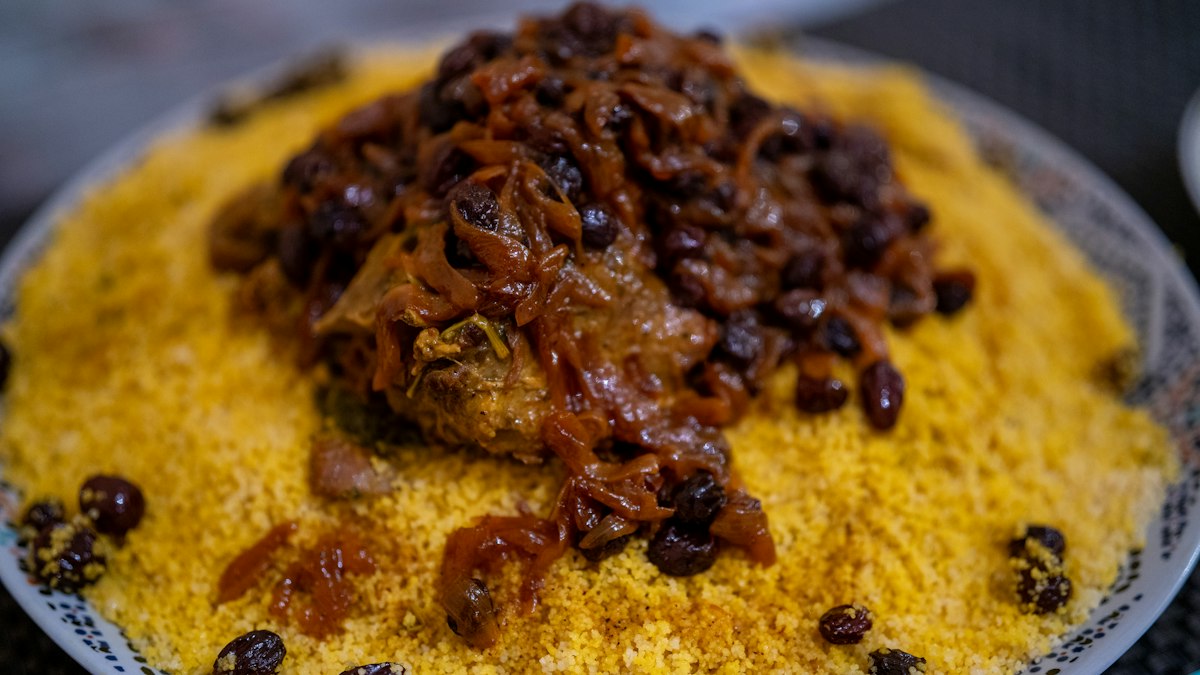
Chermoula — herb and oil as a single emulsion
Chermoula is the marinade and sauce of Morocco and the broader Maghreb, most closely associated with fish and seafood. It is made by blending or pounding fresh coriander, parsley, garlic, cumin, paprika, and lemon juice together with olive oil. In this context the oil does considerably more than provide a base: it acts as both emulsifier and carrier, linking the water-soluble components — lemon juice, the liquid from the fresh herbs — with the fat-soluble aromatic compounds present in the cumin and paprika's essential oils, and holding them in a single coherent sauce.
The quantity and character of the oil affect the sauce's body and fragrance significantly. A strongly polyphenolic oil — one made predominantly from Picual-type varieties, for instance — can compete with the herbaceous notes rather than support them; the tendency among Moroccan cooks is to reach for an oil with a more moderate, rounded flavor profile for chermoula. The finished sauce is applied to fish for anywhere from thirty minutes to two hours before grilling or adding to a tagine; during that marinating window, the oil acts as a vehicle that drives the herb aromatics into the protein, increasing the depth of flavor in the cooked result.
Chermoula developed most fully in Morocco's coastal cities, particularly Essaouira and Agadir — places where fresh seafood and locally produced olive oil have met at the table for generations. In recent years its use has expanded beyond fish to chicken and roasted vegetables, broadening its presence on the Moroccan table.
Three lessons from the Moroccan table
Looking at Moroccan cooking, the question of when olive oil enters a dish comes into sharp focus. Oil heated with spices from the beginning, as in a tagine, draws out fat-soluble aromatics and carries them into every element of the pot. Oil applied raw at the end, as with couscous, adds freshness and texture that heat would destroy. And oil used as the structural base of a raw sauce, as in chermoula, becomes the medium through which all the other flavors are unified and delivered.
These three approaches are not particular to Morocco — they are available to any cook working with olive oil. Beginning a braise by warming spices in oil, finishing a grain dish with a drizzle of good raw oil, or building an herb-based sauce around oil as its backbone: each of these moves belongs to a logic that Moroccan cooks have refined over centuries. Understanding oil less as a generic cooking fat and more as a carrier of aroma is, in many ways, what the Moroccan table has always known.
Frequently asked questions
- Why do Moroccan cooks heat olive oil with spices at the start of a tagine?
- Many of the aromatic compounds in spices such as cumin, turmeric, and ras el hanout are fat-soluble, meaning they release their fragrance far more fully into oil than into water. Warming the spices in olive oil at the beginning of a tagine is essentially an extraction step that distributes those aromatics throughout the entire dish.
- How is olive oil used in couscous, and why does it matter?
- Olive oil is worked into the raw semolina grains before steaming to prevent clumping, and then drizzled generously over the finished couscous just before serving. That second application — loosening the grains with a fork while the oil is still warm — creates a light, separate texture with a glossy sheen. Because the finishing oil is used raw, its freshness and flavor quality have a direct impact on the final dish.
- What is chermoula and what role does olive oil play in it?
- Chermoula is a North African marinade and sauce built from fresh coriander, parsley, garlic, cumin, paprika, lemon juice, and olive oil. The oil acts as both emulsifier and carrier: it links the water-soluble ingredients (lemon juice, herb juices) with the fat-soluble aromatic compounds in the spices, and during marinating it drives those flavors into the protein. The quantity and character of the oil significantly affects the sauce's body and fragrance.
- What kind of olive oil works best in chermoula?
- Moroccan cooks generally favor oils with a relatively gentle flavor profile for chermoula. A strongly polyphenolic oil — such as those made predominantly from Picual — can compete with the herbaceous notes rather than complement them. A fresher, milder oil tends to let the coriander, parsley, and lemon read more clearly.
- How productive is Morocco as an olive oil producer?
- According to data from the FAO (Food and Agriculture Organization of the United Nations), Morocco ranks among the world's leading olive-producing countries, and domestic olive oil output has grown steadily over the past decade. The country's position at the northwestern tip of Africa, where the Mediterranean and Atlantic meet, mirrors the geographic conditions that have historically favored olive cultivation across the Mediterranean basin.
Related reading
- Labneh, Tzatziki, Haydari: How the Mediterranean and Middle East Pair Olive Oil with Yogurt
From strained labneh drizzled with extra virgin olive oil to herb-laden tzatziki and Iranian mast, the Mediterranean and Middle East share a long tradition of combining yogurt with olive oil. Here is a guide to the classic forms and how they translate to a modern table.
- Caponata, Arancini, Granita: How Sicily Uses Olive Oil at Every Stage of a Meal
In Sicily, olive oil is not a condiment—it is the structural language of the kitchen. From the slow soffritto that opens a caponata to the finishing drizzle that closes it, the island's cooks assign oil a precise role at every moment of cooking.
- Hummus, Shakshuka, Sabich: How Israeli Cooking Uses Olive Oil at Every Layer
From the finishing pour on hummus to the base of a shakshuka and the layered construction of a sabich, olive oil functions as a primary ingredient on the Israeli table — not a neutral medium. This guide traces how Levantine culinary tradition treats the oil itself as the point.
- Matching Olive Oil Intensity to Your Ingredients: A Pairing Guide
Acidity and grade tell you whether an olive oil is good; intensity tells you where it belongs on the plate. This guide walks through the mild, medium, and intense tiers — and the cooking variables that shift the equation.
- Aioli, Demystified: Ratios, Emulsion Science, and Three Variations Worth Making
Aioli is one of the Mediterranean's most elemental sauces — olive oil and garlic brought together by emulsion. This guide covers the right proportions, the four most common reasons it breaks, how to rescue it, and three variations to try once you have the basics down.
- One Drop Over Washoku: How Japanese Cuisine Made Peace with Olive Oil
Dashi broths, silken tofu, and grilled fish are unlikely companions for extra virgin olive oil — yet Japan's culinary world is quietly rewriting that assumption. From finishing drizzles in kaiseki courses to marinade brushed on fatty fish, the logic behind the pairing turns out to be deeply Japanese.