Table
Nonstick, Stainless, or Cast Iron: Which Pan Actually Suits Your Olive Oil?
The same extra virgin olive oil behaves differently depending on whether it hits a nonstick coating, a stainless steel surface, or seasoned cast iron. Understanding how each pan type conducts heat — and how that interacts with EVOO's chemistry — is the most practical way to protect flavor and reduce oxidation at the stove.
Translated from the Korean edition, originally published October 31, 2026 · read the original
Start with the Oil, Before You Even Pick a Pan
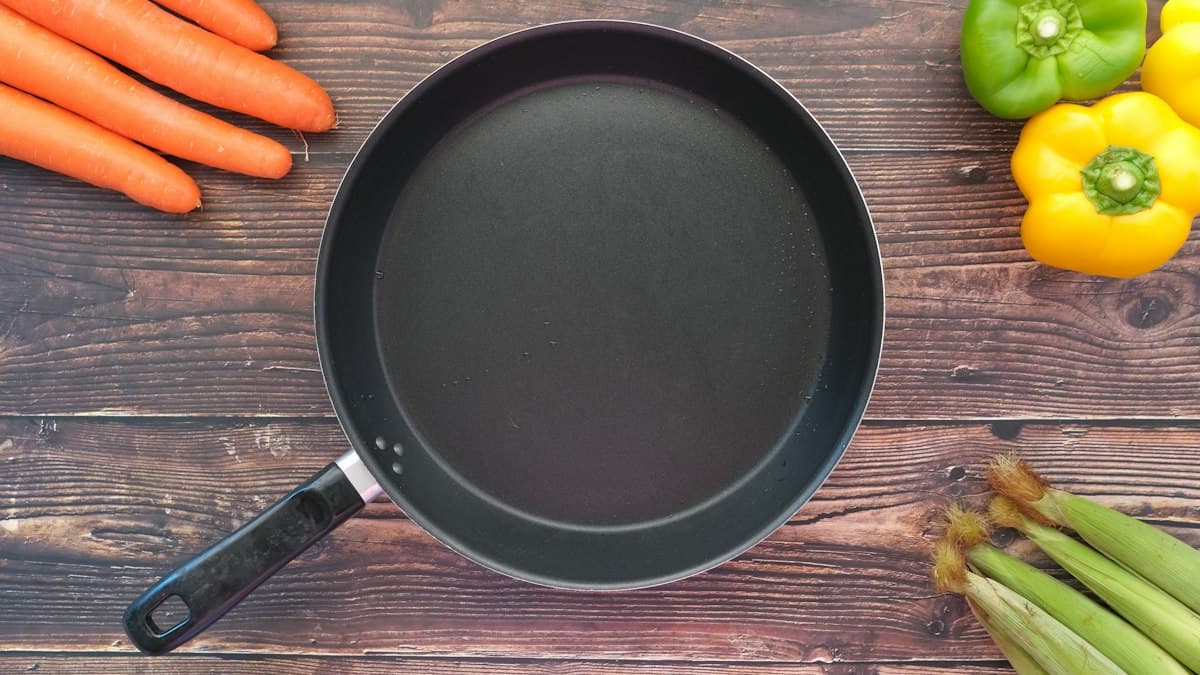
The variable most often overlooked when cooking with olive oil is the pan itself. The same extra virgin olive oil behaves quite differently on a nonstick surface than it does in a cast iron skillet. The rate at which heat transfers, the porosity of the surface, and the way the pan retains temperature all affect how quickly the oil oxidizes and whether ingredients stick.
EVOO's smoke point is generally reported in the range of 190–210 °C. According to the International Olive Council (IOC), olive oil's relatively high oleic acid content gives it greater oxidative stability compared with many other vegetable oils. Even so, that stability responds differently to the thermal environment created by each pan material. Understanding pan materials is, in that sense, the first step toward using olive oil well.
Nonstick Pans — Low Heat Is the Rule; Overheating Is the Risk
The nonstick surface of a coated pan is composed of either a PTFE-based coating or a ceramic alternative. Because the surface is already non-adhesive, very little olive oil is needed — a genuine advantage. The vulnerability, however, is overheating.
Research data from the United States Environmental Protection Agency (EPA) has reported that PTFE coatings can release thermal decomposition gases above 260 °C. The margin between EVOO's smoke point (190–210 °C) and that PTFE breakdown threshold is narrower than most cooks assume. Preheating an empty nonstick pan on high and then adding olive oil is not recommended: the oil can be driven past its smoke point almost instantly.
The best approach with a nonstick pan is to warm it gradually over medium heat or lower, add the olive oil, and place ingredients in the pan within 30 seconds. This keeps unnecessary heating of the oil to a minimum and also extends the life of the coating. Eggs, fish fillets, and lightly sautéed vegetables — all medium-to-low-temperature work — are where the nonstick-and-olive-oil pairing makes most sense.
Stainless Steel Pans — Preheating Is a Skill; Timing the Oil Is Everything
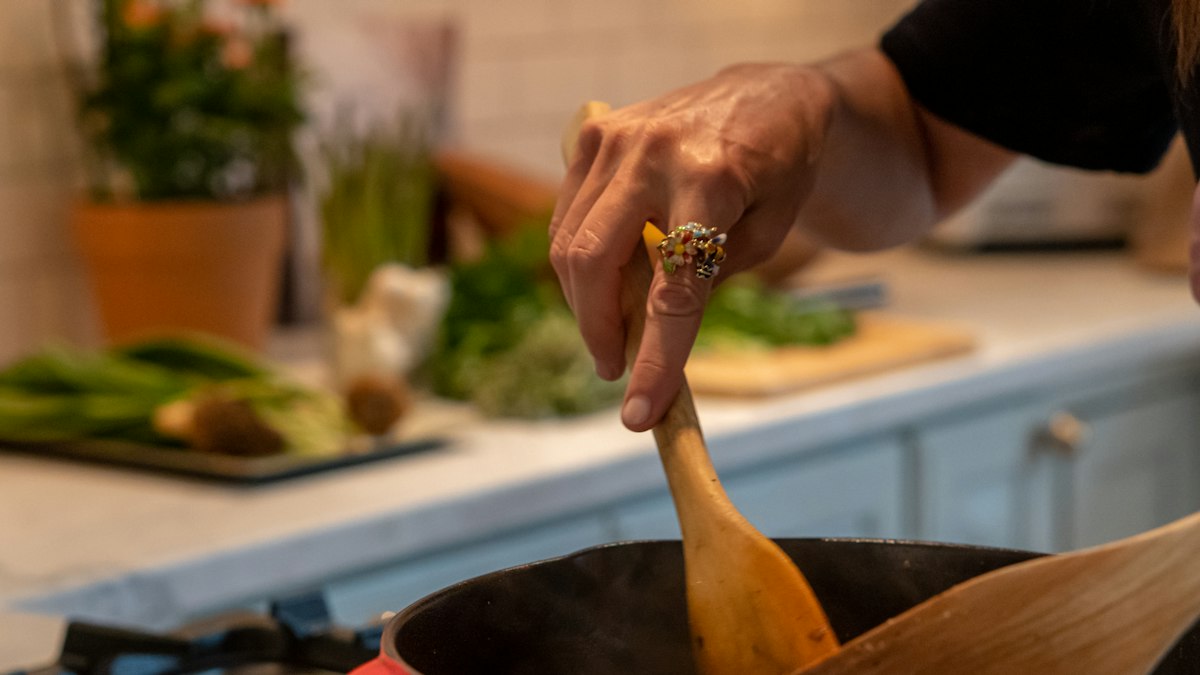
Stainless steel is the most widely used material in professional kitchens: it is non-reactive, straightforward to clean, and durable. Its crystalline metal surface, however, means that food will stick aggressively if the pan is not preheated correctly.
A stainless steel surface has microscopic pores and uneven temperature distribution when cold. If olive oil is added before the pan is properly heated, proteins or starches will make contact with the bare metal before the oil can form a protective film — and sticking follows. The standard test for correct preheat is the mercury-ball test: flick a few drops of water into the pan; if they bead up and skitter across the surface like liquid mercury, the pan has reached the Leidenfrost zone and is ready. Add olive oil at that moment and it spreads into an even layer that significantly reduces sticking.
Stainless steel can handle moderate-to-higher cooking temperatures with olive oil, provided you follow the sequence: preheat first, add oil, add ingredients immediately. For applications that genuinely demand sustained high heat — searing meat, for example — refined olive oil or an avocado oil blend with a higher smoke point is the more realistic option.
Cast Iron Pans — Seasoning and Olive Oil Are Different Jobs
Cast iron's exceptional heat retention and suitability for high-temperature cooking make it a favorite among serious home cooks. The relationship between cast iron and olive oil, though, calls for a degree of nuance.
Cast iron develops its nonstick properties through seasoning: repeated thin coats of oil that polymerize into a hard, bonded layer under high heat. Oils well suited to seasoning are those with a high smoke point and strong drying-oil characteristics — flaxseed oil and grapeseed oil are the most commonly cited examples. Olive oil, because of its high oleic acid proportion, polymerizes slowly and is not well suited as a sole seasoning oil; it is generally reported to be difficult to build a fully polymerized, durable coating with EVOO alone. The widely accepted practice is to season cast iron with a suitable drying oil, then use olive oil freely during cooking.
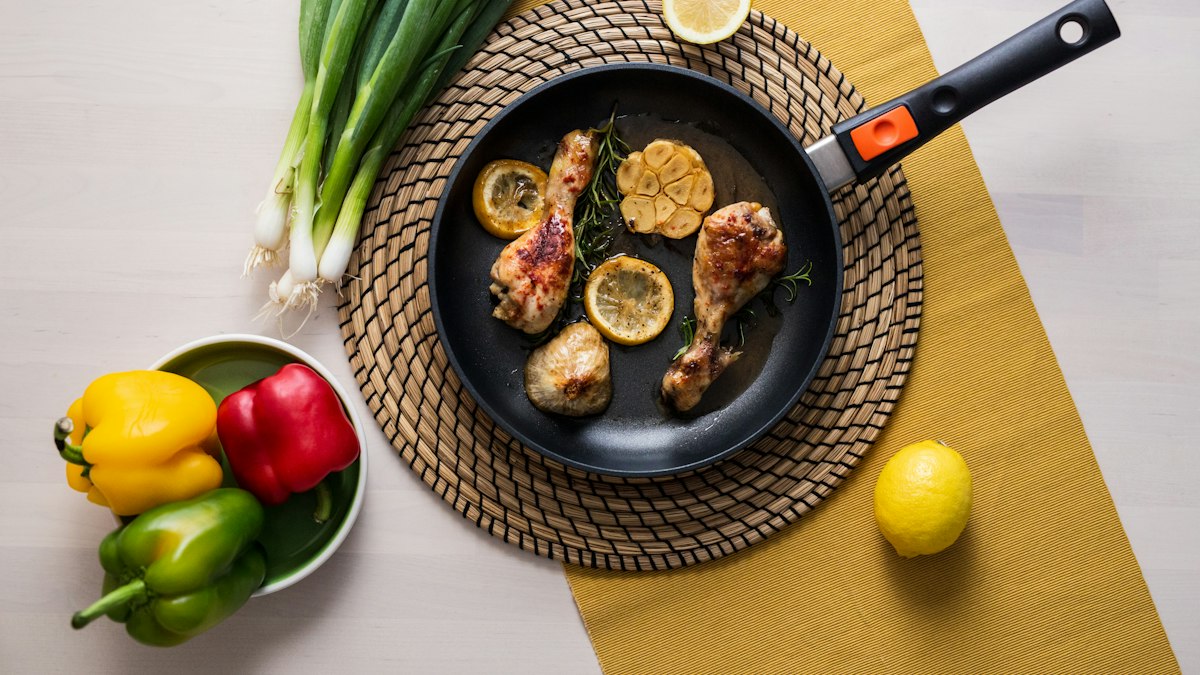
For cooking, cast iron's heat retention is a double-edged quality where olive oil is concerned. Once the pan is properly hot, adding oil produces almost no temperature drop, which means intense Maillard browning on the surface of ingredients. The flip side is that an overheated cast iron pan can push olive oil past its smoke point very quickly. The recommended method is to preheat cast iron over medium heat until it is thoroughly hot, then reduce the burner slightly, add the olive oil, and place ingredients in the pan straight away. That brief heat reduction before the oil goes in meaningfully lowers the thermal stress on the oil.
A Practical Summary by Pan Type
Three pan materials, three sets of priorities.
With a nonstick pan, the principles are medium heat or lower, oil added to a warm (not scorching) pan, and a small quantity of oil. Temperature control is the first concern because coating damage arrives before significant oil oxidation does.
With a stainless steel pan, the priorities are thorough preheating and adding ingredients immediately after the oil. Sticking in stainless steel is almost always a preheating problem, not an oil-quantity problem.
With a cast iron pan, the guidance is to season with a high-smoke-point drying oil and reserve olive oil for cooking. The pan's heat retention is high, so adjusting the burner downward just before adding oil is the key move.
Regardless of which pan you use, visible smoke from olive oil is a signal that oxidation is already under way. Researchers have reported that heating oil beyond its smoke point accelerates peroxide formation and is accompanied by degradation of heat-sensitive compounds including polyphenols. Knowing your pan — and keeping your olive oil's temperature in the right range — is the most practical route to preserving everything on the plate that made the oil worth buying.
Frequently asked questions
- Can you use extra virgin olive oil in a nonstick pan?
- Yes, but keep the heat at medium or lower. EVOO's smoke point sits between 190 and 210 °C, and PTFE coatings can begin to break down above 260 °C — a gap that closes quickly if you preheat an empty nonstick pan on high. Add oil once the pan is gently warm, then add ingredients within 30 seconds to minimize unnecessary heating.
- Why does food stick to a stainless steel pan even when I use olive oil?
- Sticking in stainless steel is almost always caused by insufficient preheating rather than too little oil. The metal's microscopic surface pores need to expand with heat before oil can form an even film. Use the mercury-ball test — a few drops of water should bead and roll freely before you add olive oil — then add ingredients immediately after the oil goes in.
- Is olive oil good for seasoning a cast iron pan?
- Olive oil is not ideal as a sole seasoning oil. Because EVOO is high in oleic acid, it polymerizes slowly compared with drying oils such as flaxseed or grapeseed oil, making it harder to build a durable, well-bonded coating layer. The widely recommended approach is to season cast iron with a high-smoke-point drying oil, then use olive oil freely during cooking.
- What does it mean when olive oil starts smoking in the pan?
- Visible smoke signals that the oil has exceeded its smoke point and oxidation is actively under way. Researchers have reported that heating olive oil beyond this threshold accelerates peroxide formation and degrades heat-sensitive compounds including polyphenols. Whatever pan you are using, smoking oil should be treated as a cue to lower the heat or start fresh.
- Which pan is best for high-heat cooking with olive oil?
- If a recipe genuinely requires sustained high heat — searing a steak, for example — refined olive oil (which has a higher smoke point than EVOO) or a blend with avocado oil is a more practical choice in any pan. For medium-heat work, a properly preheated stainless steel pan handles olive oil well. Cast iron's superior heat retention also makes it effective, provided you ease the burner down slightly just before adding the oil.
Related reading
- Aioli, Demystified: Ratios, Emulsion Science, and Three Variations Worth Making
Aioli is one of the Mediterranean's most elemental sauces — olive oil and garlic brought together by emulsion. This guide covers the right proportions, the four most common reasons it breaks, how to rescue it, and three variations to try once you have the basics down.
- Caponata, Arancini, Granita: How Sicily Uses Olive Oil at Every Stage of a Meal
In Sicily, olive oil is not a condiment—it is the structural language of the kitchen. From the slow soffritto that opens a caponata to the finishing drizzle that closes it, the island's cooks assign oil a precise role at every moment of cooking.
- The Mediterranean Art of Oil Poaching Fish: Ratios, Temperatures, and Cultivar Pairings
Oil poaching — gently cooking fish submerged in olive oil at low heat — is a cornerstone technique of Mediterranean kitchens. This guide covers everything from choosing the right EVOO to precise temperature ranges and the oil ratios that make the difference.
- Fried, Scrambled, Poached: How Olive Oil Changes Every Style of Egg
Olive oil is more than a non-stick coating in egg cookery — it shapes texture, aroma, and the final bite. This guide breaks down the right oil, temperature, and timing for fried, scrambled, and poached eggs.
- Roasting Vegetables in Olive Oil: Oil Quantity and Temperature by Vegetable Type
Not every vegetable needs the same amount of olive oil or the same oven temperature. This guide breaks down the optimal combinations by moisture content, starch level, and structure — so roasted vegetables come out evenly cooked with genuine depth of flavor.
- Balsamic, White Wine, or Apple Cider: Matching Vinegar Acidity to Your Olive Oil
The balance of a vinaigrette depends on understanding two very different kinds of acidity — the acetic acid in vinegar and the free fatty acids in olive oil. A guide to ratios, emulsification, and cultivar matching for three classic dressings.