Table
One Drop Over Washoku: How Japanese Cuisine Made Peace with Olive Oil
Dashi broths, silken tofu, and grilled fish are unlikely companions for extra virgin olive oil — yet Japan's culinary world is quietly rewriting that assumption. From finishing drizzles in kaiseki courses to marinade brushed on fatty fish, the logic behind the pairing turns out to be deeply Japanese.
Translated from the Korean edition, originally published October 26, 2026 · read the original
A Table That Avoided Fat — and How That Started to Change
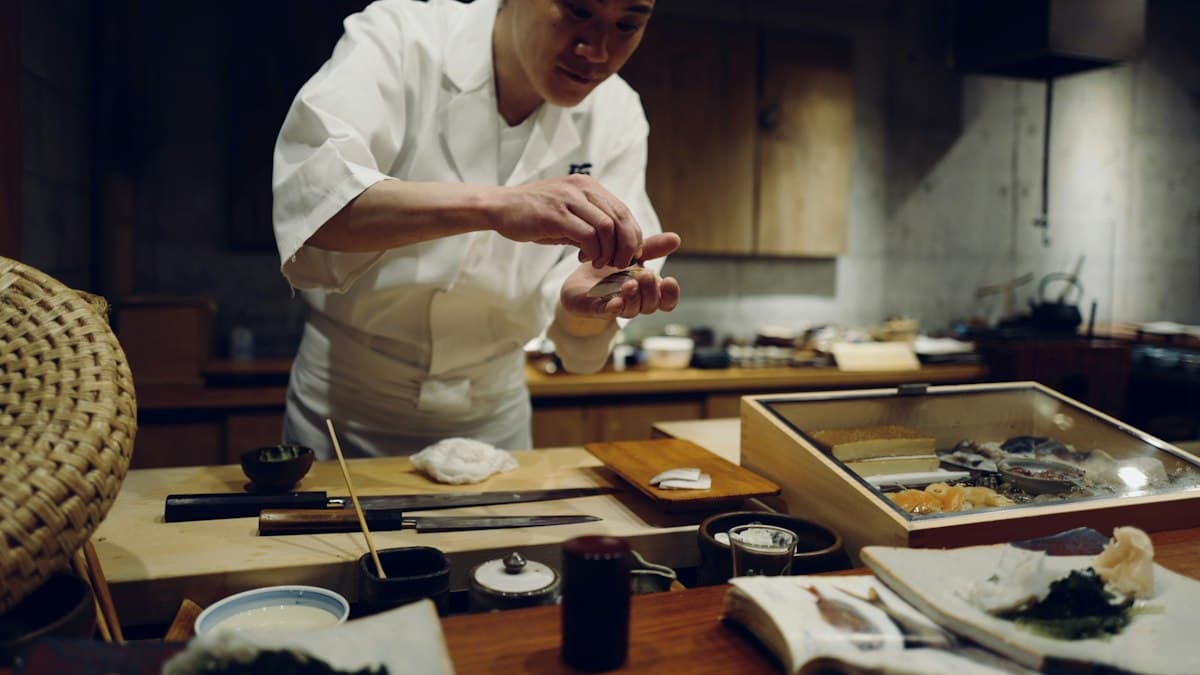
Washoku, Japan's traditional culinary culture, was inscribed on the UNESCO Intangible Cultural Heritage list in 2013 in recognition of its global significance. Its defining pillars are the delicate broth culture represented by dashi, a profound respect for seasonal ingredients, and a cooking philosophy that prizes lightness and restraint above richness. Within that framework, fat has long sat at the margins of washoku aesthetics. Techniques that do use oil — tempura being the obvious example — exist, but the oils involved were predominantly neutral vegetable oil or sesame oil. Extra virgin olive oil finding a coherent place inside the grammar of washoku took considerably longer.
The shift has been quiet but measurable. According to data from Japan's Ministry of Agriculture, Forestry and Fisheries, olive oil imports have grown steadily since the 2000s, and by the 2020s household consumption accounted for more than half of total import volume. Olive oil's status has changed: it is no longer simply a Western import ingredient but an everyday cooking tool with its own place in the Japanese kitchen.
Where Dashi and Olive Oil Converge
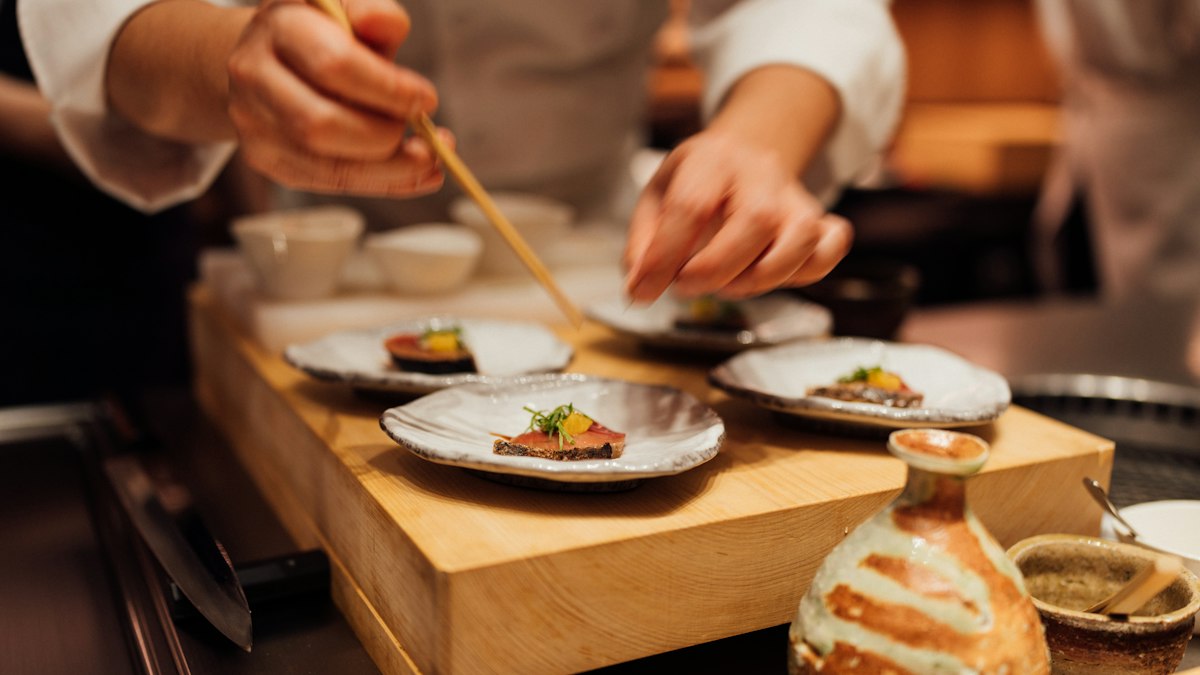
Dashi — the foundational broth drawn from katsuobushi (dried bonito flakes) or kombu seaweed — builds its depth from the combination of glutamic acid and inosinic acid, a pairing that produces the layered savoriness known as umami. What has caught the attention of Japanese culinary researchers is that extra virgin olive oil also contributes its own register of savoriness through the interplay of oleic acid and polyphenols. According to materials published by the Umami Information Center, fat is known to slow the volatilization of umami compounds and extend the time they remain in contact with taste receptors. The empirical observation shared by many Japanese chefs — that a single drop of olive oil on a bowl of dashi makes the broth's flavor linger noticeably longer on the palate — is consistent with that account.
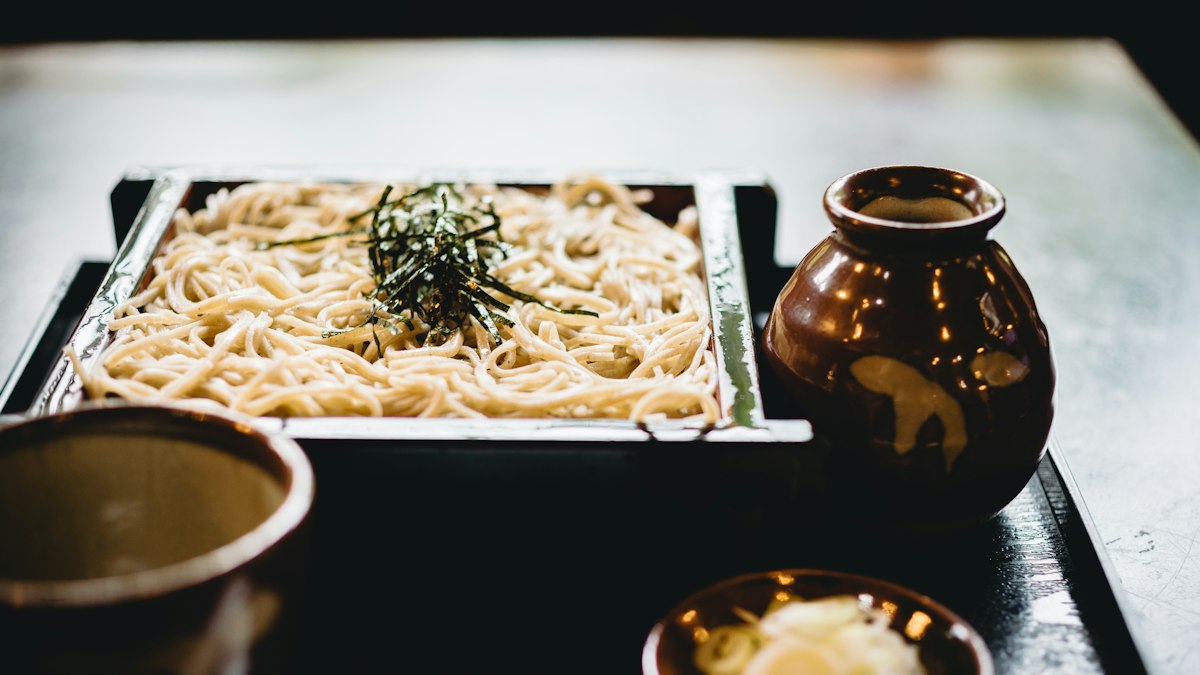
In practice, a number of Japan's high-end ryokan and kaiseki restaurants have begun presenting chilled tofu (hiyayakko) with extra virgin olive oil and coarse salt rather than the conventional soy sauce. The result layers the tofu's soft protein character against the grassy freshness of olive oil and the mineral edge of salt, arriving at a new kind of simplicity. The approach steers away from the assertive salinity that soy sauce introduces, allowing the base ingredient to speak more clearly.
Grilling, Steaming, and Dressing — How Olive Oil Enters Each Cooking Stage
There are three main contexts in which olive oil has found a role in washoku cooking.
The first is as a finishing oil. Pouring a very small amount of extra virgin olive oil across the surface of a bowl of miso soup or clear osuimono broth just before serving releases the oil's aroma on the rising heat, creating a fragrant close to the dish. A 2022 special feature in the Japanese culinary journal Ryori Tsushin, based on interviews with omakase chefs in Tokyo's Azabu-Juban district, reported that this technique is gaining recognition specifically as a form of aroma staging.
The second context is aemono dressings. In dishes such as spinach ohitashi or octopus sunomono, olive oil is used in place of — or blended with — sesame oil, producing a lighter and fresher aromatic profile. In vinegared preparations in particular, the fat in olive oil softens the acid's sharp edge by encouraging a loose emulsion, and many tasters report the result as more rounded than the traditional version.
The third is pre-grill marinades. Brushing olive oil lightly onto fatty fish such as yellowtail or Spanish mackerel before grilling promotes even cooking and reduces the drying effect of direct heat. Given the smoke point of extra virgin olive oil — generally cited in the range of 190–210 °C — a medium-heat grill or oven is better suited to this application than high-heat direct flame.
Cultivar Choice Changes the Character of the Dish
When using olive oil in washoku, cultivar selection matters more than many cooks initially expect. Picual and similarly assertive cultivars — with their pronounced bitterness and peppery finish — can easily override the deliberate quietness that defines washoku's aesthetic space. By contrast, Ojiblanca and Sibarita, with their gentle almond notes and restrained bitterness, are reported to sit alongside dashi broth, tofu, and white-fleshed sashimi without creating friction.
According to educational materials from the Japan Olive Oil Sommelier Association, cultivars described as "aromatically light with controlled bitterness" are the first recommendation for washoku pairing. The association's finding is reinforced by blind tasting results from Japanese olive oil events: when participants evaluated oils alongside washoku dishes, cultivars with nutty and buttery nuances consistently received higher harmony scores than those with intense fruitiness and strong bitterness.
Modern Kaiseki and the Coexistence with Oil
Contemporary modern kaiseki restaurants in Japan maintain the formal structure of traditional kaiseki while absorbing ingredients and techniques from around the world with considerable flexibility. Several Michelin-starred kaiseki establishments in Tokyo and Osaka now incorporate olive oil into portions of their courses, and some specify single-origin olive oils — imported directly from Spanish producers — on their printed menus.
The interpretation gaining traction is that this is not simply fashion. It reflects a convergence between washoku's own ingredient-first philosophy and the provenance, cultivar, and vintage culture that surrounds fine olive oil. A well-chosen extra virgin olive oil draws out the flavor of an ingredient rather than masking it — a value that maps directly onto the washoku principle that the ingredient is always the protagonist.
According to an IOC market trends report, extra virgin olive oil consumption across the Asia-Pacific region has recorded continuous growth in recent years, with Japan identified as one of the most quality-driven markets in the region. The pairing of washoku and olive oil has moved past the experimental stage. On the Japanese table, it is slowly developing a grammar of its own.
Frequently asked questions
- Does olive oil go with Japanese food?
- Yes, and increasingly intentionally so. Chefs in high-end kaiseki and ryokan kitchens use small amounts of extra virgin olive oil as a finishing drizzle over clear broths, as a dressing for cold tofu, and as a marinade for grilled fish. According to Japan's Olive Oil Sommelier Association, lightly flavored cultivars with restrained bitterness are considered the best starting point for washoku pairing.
- Which olive oil cultivar works best with Japanese cooking?
- Delicate, buttery cultivars such as Ojiblanca and Sibarita are widely recommended for washoku contexts because their gentle almond notes and low bitterness do not overwhelm the subtle flavors of dashi, white-fleshed fish, or tofu. Intensely peppery cultivars like Picual can easily dominate the understated character that defines traditional Japanese cuisine.
- Can you drizzle olive oil on miso soup or Japanese broth?
- Some chefs do exactly that. A very small amount of extra virgin olive oil floated on the surface of miso soup or clear osuimono broth releases its aroma as the heat rises, adding a fragrant finish. This technique was covered in a 2022 feature in the Japanese culinary journal Ryori Tsushin as an increasingly accepted form of 'aroma staging' in contemporary omakase dining.
- How does olive oil affect umami in Japanese dishes?
- According to materials published by the Umami Information Center, fat is known to slow the volatilization of umami compounds and extend the time they remain on taste receptors. This means a small amount of olive oil added to a dashi-based dish may prolong the perception of umami on the palate — an observation already well established among Japanese chefs who work with both ingredients.
- Is olive oil use in kaiseki a passing trend or something more permanent?
- The evidence points toward something more durable. Multiple Michelin-starred kaiseki restaurants in Tokyo and Osaka now include single-origin olive oil — some imported directly from Spanish producers — on their printed course menus. According to an IOC market trends report, Japan ranks among the Asia-Pacific region's most quality-driven EVOO markets, and consumption has grown steadily over recent years. Commentators note that the ingredient-first philosophy of washoku and the provenance-conscious culture around fine olive oil share a common direction.
Related reading
- Cacao Percentage as a Compass: Pairing Chocolate with the Right Olive Oil
From dark to white, the cacao content of a chocolate sets the intensity, bitterness, and texture that an olive oil needs to match. This guide maps cultivar character and polyphenol weight to each tier of the chocolate spectrum.
- Cold Dishes, Full Flavor: Choosing Olive Oil for Gazpacho, Cold Pasta, and Chilled Salads
When heat is removed from the equation, olive oil has nowhere to hide. A guide to matching cultivar character, acidity, and polyphenol levels to gazpacho, cold pasta, and chilled salads.
- Guacamole, Tacos, and Olive Oil: A Pairing That Goes Back Centuries
From sixteenth-century Spanish missionaries to modern Latin kitchens in Mexico City, New York, and Los Angeles, extra virgin olive oil has long had a place at the Mexican table. This guide traces the history and explores how chefs are using it today.
- Butter Country No More: How Scandinavia Learned to Cook with Olive Oil
Olive oil is reshaping Nordic kitchens — from Copenhagen's Michelin-starred restaurants to Swedish home pantries. This guide traces how EVOO found its place alongside smoked fish, fermented rye, and root vegetables in one of the world's most distinctive food cultures.
- The Mediterranean Art of Oil Poaching Fish: Ratios, Temperatures, and Cultivar Pairings
Oil poaching — gently cooking fish submerged in olive oil at low heat — is a cornerstone technique of Mediterranean kitchens. This guide covers everything from choosing the right EVOO to precise temperature ranges and the oil ratios that make the difference.
- Matching Olive Oil Intensity to Your Ingredients: A Pairing Guide
Acidity and grade tell you whether an olive oil is good; intensity tells you where it belongs on the plate. This guide walks through the mild, medium, and intense tiers — and the cooking variables that shift the equation.