Craft
Six Criteria, Three Cultivars: A Sensory Guide to ORO CELESTE
Acidity and polyphenol numbers set the baseline, but the IOC's six-point sensory evaluation is where an EVOO's personality actually shows. This guide walks through every criterion—color, aroma, taste, pepperiness, balance, and finish—across ORO CELESTE's Ojiblanca, Sibarita, and Picual expressions.
Translated from the Korean edition, originally published July 19, 2026 · read the original
Beyond the Numbers: What Sensory Evaluation Actually Measures
Acidity and polyphenol figures are essential benchmarks for extra virgin olive oil (EVOO) quality—but they cannot, on their own, confirm what a bottle will actually taste like. That is precisely what the International Olive Council (IOC) sensory evaluation exists to answer. The IOC standard panel test asks trained assessors to work through six attributes systematically—color, aroma, taste, pepperiness, balance, and finish—recording both the presence of defects and the intensity of positive characteristics. According to IOC data, a product must pass this sensory panel to retain its "extra virgin" designation; meeting the acidity threshold alone is not sufficient to guarantee the grade.
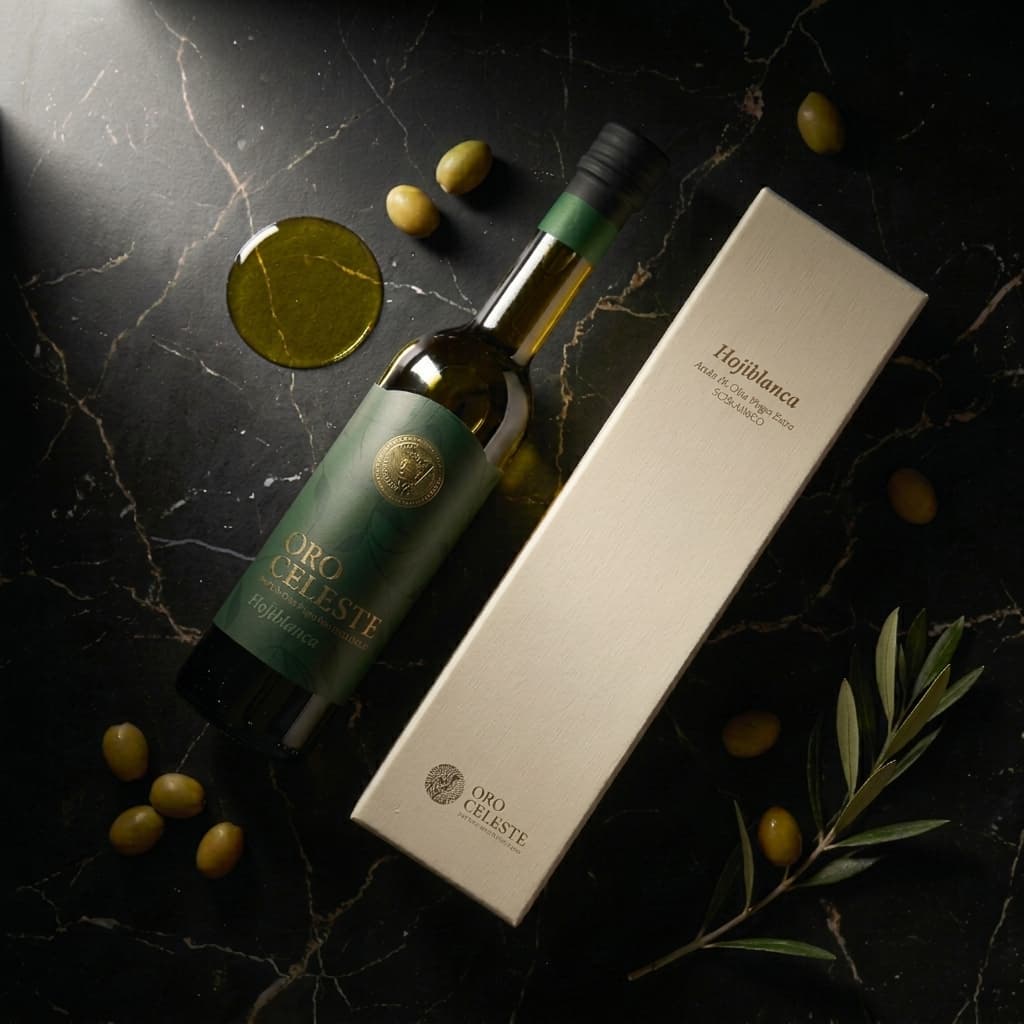
ORO CELESTE presses Ojiblanca, Sibarita, and Picual as single-cultivar oils, preserving the distinct sensory personality of each variety. The breakdown below can serve as a practical guide for comparing the three.
Criterion One: Color
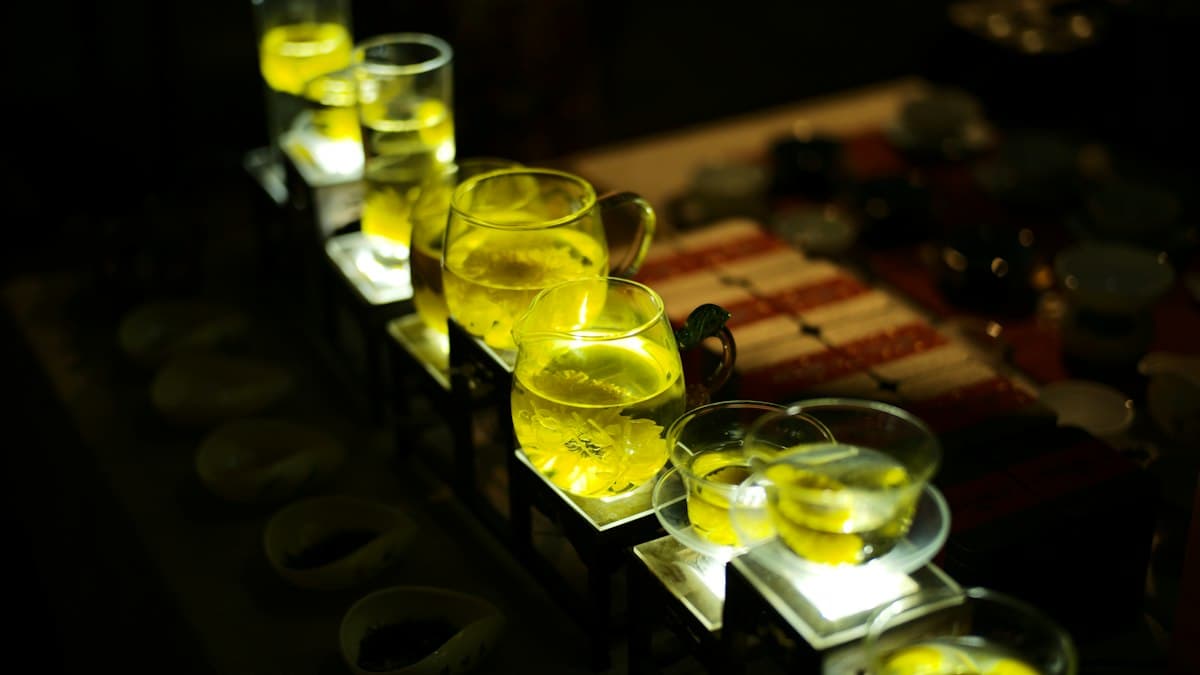
Color carries no weight in official grading. IOC panel guidelines specify dark blue or opaque brown glasses during evaluation, because, as the IOC's sensory assessment framework makes clear, color preconceptions can distort a taster's perception of aroma and flavor. Color does, however, shape the consumer's first visual impression, so it is worth understanding what each cultivar tends to show.
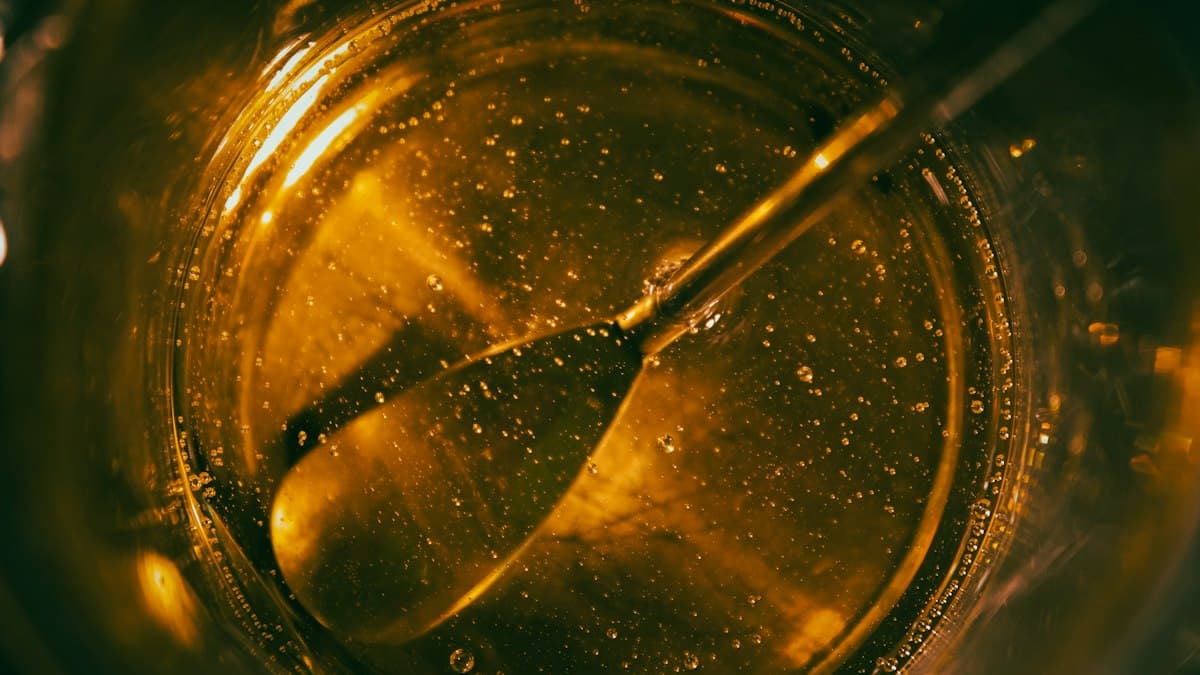
Ojiblanca presents a bright golden hue with a soft green undertone—more vivid green in early-harvest batches. Sibarita is the clearest and most luminous of the three, a pale golden that reads as fresh and unassuming. Picual ranges from deep olive-green to rich golden depending on harvest timing, and its depth of color is consistently the highest of the trio. That depth does not mean stronger flavor, and visual impressions should always be treated as secondary to aroma and taste.
Criteria Two and Three: Aroma and Taste
Aroma is assessed in two stages. The first is orthonasal: the glass is cupped in both hands to raise its temperature slightly, then held close to the nose. The second is retronasal: after swallowing a small amount, aromas travel upward from the back of the mouth. Research from the University of Córdoba found that Ojiblanca tends toward fresh apple, almond, and banana—a soft, fruit-forward profile that researchers classify as having high consumer acceptance scores.
Ojiblanca (acidity 0.16%, polyphenols 600+ mg/kg) opens with ripe apple and white floral notes; after swallowing, soft herb and almond linger retronasally. Sibarita (acidity 0.14%, polyphenols 500+ mg/kg) has the most delicate aromatic architecture of the three—fresh-cut grass and a light citrus thread. Picual (acidity 0.20%, polyphenols 800+ mg/kg) leads with an assertive combination of green olive, artichoke, and tomato leaf, the profile characteristic of a robust EVOO.
Within the taste criterion, the intensity and quality of bitterness are the central indicators. Bitterness is not a flaw; according to IOC standards it is a positive attribute and a marker of polyphenol content.
Criterion Four: Pepperiness
The sharp, prickling sensation felt at the back of the throat is produced by oleocanthal, a phenolic compound. Researchers at Harvard University's Brigham and Women's Hospital have reported that oleocanthal shares a biochemical mechanism with non-steroidal anti-inflammatory agents—a finding best understood as an interesting characteristic of the compound as a food component rather than a basis for definitive health claims.
Picual delivers the highest pepperiness of the three cultivars, with a clear and sustained sting that persists after swallowing. Ojiblanca sits in the middle range and resolves relatively quickly. Sibarita is the mildest, making it the most accessible option for those not yet accustomed to the sensation. Higher pepperiness generally correlates with higher polyphenol content, though the two values are not always directly proportional, so cross-referencing the measured figures alongside the tasting impression is advisable.
Criteria Five and Six: Balance and Finish
Balance measures how evenly bitterness, pepperiness, and fruitiness are distributed—whether any single axis overwhelms the others. According to the IOC panel test manual, an oil is considered imbalanced when one attribute dominates the overall flavor experience to the point of suppression, a condition that is treated as a deduction in scoring.
Ojiblanca distributes fruitiness and bitterness relatively evenly and is frequently cited as a reference model for the "medium fruity" category. Sibarita tilts slightly toward fruit, with lower bitterness and pepperiness, forming a gentle, crowd-pleasing balance. Picual's structure places strong aroma and high pepperiness over a fruit foundation; total intensity is high, but the internal ratios hold—which is why professional chefs frequently reach for it when finishing dishes built around bold ingredients.
Finish refers to how long flavor persists after swallowing, and to the quality of that persistence. Ojiblanca's finish closes cleanly in roughly 10–15 seconds. Sibarita is shorter and crisper still. Picual's finish is the longest, with distinct herbal and peppery notes that remain clearly present. A long finish can signal higher flavor complexity, and that characteristic becomes most expressive when the oil is used as a finishing drizzle in the final stage of cooking.
Choosing Your Olive Oil Through the Six Criteria
The IOC's six sensory criteria are more than a quality-control checklist—they offer a practical vocabulary for matching an EVOO to your palate and your cooking. For a gentle salad dressing, Sibarita's mild balance is the natural fit. For a bold finishing oil over steak or aged cheese, Picual's long, assertive finish earns its place. For an all-purpose oil that works equally well cooked and raw, Ojiblanca is a reliable starting point. If chemistry sets the structural framework of an olive oil, sensory evaluation is how that framework becomes something you can actually taste.
Frequently asked questions
- Does olive oil color affect its quality grade?
- No. According to IOC sensory evaluation guidelines, color is not an official grading criterion. Panels use dark blue or opaque brown glasses specifically to prevent color from biasing judgments of aroma and taste. Color can offer a rough visual cue about harvest timing, but a deeper hue does not guarantee more intense flavor.
- What causes the peppery burn at the back of your throat in olive oil?
- That sensation is produced by oleocanthal, a phenolic compound. Researchers at Harvard's Brigham and Women's Hospital have reported that oleocanthal shares a mechanism with non-steroidal anti-inflammatory agents, though it is too early to draw firm conclusions about its effects as a dietary component. Among ORO CELESTE's three cultivars, Picual (800+ mg/kg polyphenols) delivers the most pronounced pepperiness.
- Is bitterness in extra virgin olive oil a defect?
- No. Under IOC standards, bitterness is classified as a positive attribute and is considered an indicator of polyphenol content. It becomes a concern only when it is so dominant that it overwhelms the overall flavor experience—a condition the IOC panel treats as an imbalance rather than bitterness itself.
- Which ORO CELESTE cultivar is best for someone new to high-quality olive oil?
- Sibarita (acidity 0.14%, polyphenols 500+ mg/kg) is generally the most approachable entry point. Its pepperiness is the mildest of the three, its aroma structure is delicate—fresh grass and light citrus—and its finish is short and clean, making it easy to enjoy without prior tasting experience.
- How does finish length relate to flavor complexity in extra virgin olive oil?
- A longer finish typically signals greater flavor complexity. Ojiblanca wraps up cleanly in roughly 10–15 seconds; Sibarita is even shorter. Picual's finish is the most extended, with distinct herbal and peppery notes that linger—a quality that makes it a frequent choice among professional chefs as a finishing drizzle over strong-flavored ingredients.
Related reading
- Six Olive Oil Off-Flavors — and How to Tell Them Apart at Home
From musty and winey-vinegary to metallic and rancid, off-flavors are the clearest signal that an extra virgin olive oil has fallen short of grade. This practical guide explains what causes each defect and how to detect them without professional panel training.
- Set Up a Home Olive Oil Tasting: Lighting, Temperature, Glasses, and Tasting Notes
A professional-level olive oil tasting environment does not require special equipment. This guide walks through the exact setup — lighting, oil temperature, glass selection, and a simple scoresheet — that lets any curious cook build real sensory skills at home.
- Three Generations, One Farm: The Philosophy Behind ORO CELESTE
From a grandfather's first seedlings in the hills of Jaén to a third-generation agronomist measuring polyphenols at harvest, ORO CELESTE's story is one of a family that keeps building on what came before — without abandoning what worked.
- The Clock Starts at the Press: A Complete Freshness Guide to ORO CELESTE Olive Oil
For premium extra virgin olive oil, freshness is measured from the pressing date — not the manufacture date. This guide covers ORO CELESTE's cultivar-by-cultivar consumption windows and the storage practices that protect them.
- Early Harvest in Andalusia: How November Shapes ORO CELESTE's Three Cultivars
While most producers wait for full ripeness, ORO CELESTE times three separate harvests in early November — catching Ojiblanca, Sibarita, and Picual at the narrow window when polyphenols peak and acidity is at its lowest.
- ORO CELESTE Picual Deep Dive — Peppery Intensity and Off-the-Chart Polyphenols
ORO CELESTE's Picual registers an acidity of 0.20% and polyphenols above 800 mg/kg — figures that push standard laboratory instruments to their measurement limits. This guide examines what those numbers mean and why this oil's peppery finish is in a category of its own.