Table
EVOO in the Italian Home Kitchen: A Long History in Baking and Pastry
Extra virgin olive oil is widely known as a finishing oil, but Italian home cooks have long relied on it in baking and pastry. From focaccia dough to apple cake batter, here is how EVOO earns its place in the oven.
Translated from the Korean edition, originally published November 20, 2025 · read the original

EVOO is widely associated with finishing — a drizzle over a finished dish, a dip for good bread. But in Italian home kitchens, extra virgin olive oil has occupied a quiet, steady role in baking and pastry for as long as anyone can remember. Used in place of butter, it softens flavor and, thanks to its relatively strong oxidative stability, keeps baked goods in good condition longer. Here is how EVOO actually enters the oven.
The Essential Role in Focaccia and Ciabatta
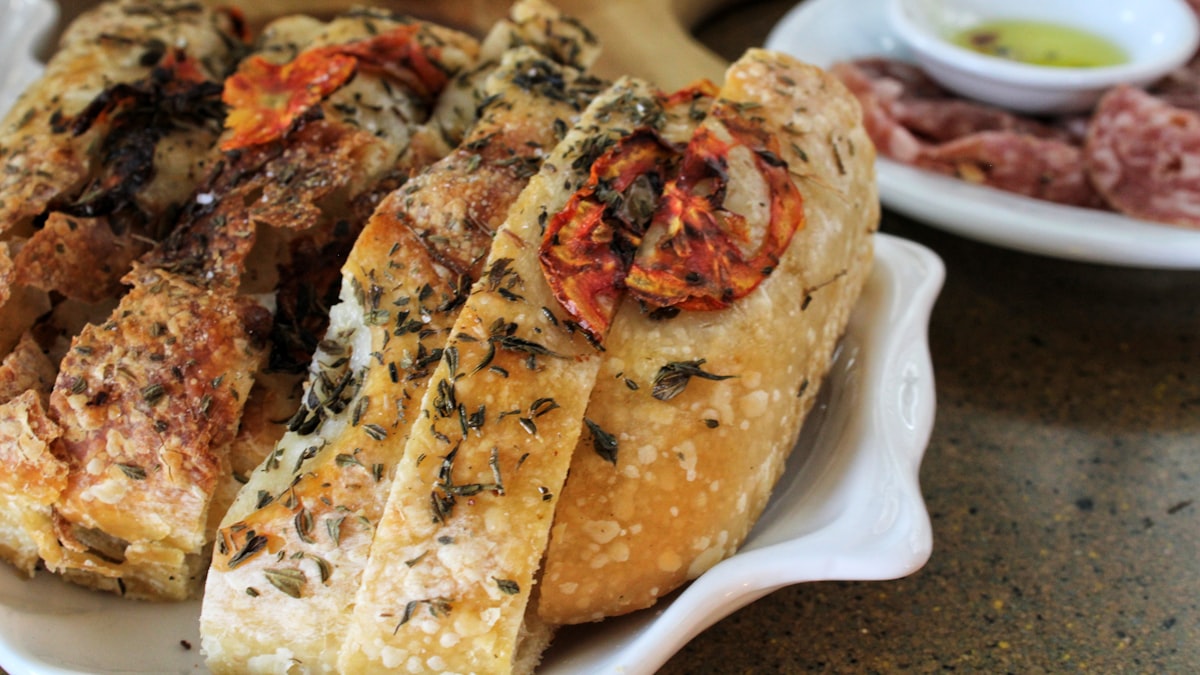
Focaccia and ciabatta are the most straightforward examples of EVOO working directly inside a dough. The classic method folds the oil into the mix, then finishes the surface with another generous pour, coarse salt, and rosemary before baking. A gentle single-varietal EVOO supports the dough without competing with it, while its green, grassy notes layer in quietly beneath the aroma of freshly baked bread.
Replacing Butter in Cake Recipes
Two Italian home-kitchen staples — torta di mele (apple cake) and torta di noci (walnut cake) — routinely call for EVOO rather than butter. About a cup of a lightly flavored, soft single-varietal, such as Arbequina, stirred into the batter keeps the finished cake moist and creates a flavor balance that suits both fruit and nuts. The result is noticeably lighter in texture than a butter-based equivalent, and the oil's mild fruitiness complements rather than competes with the main ingredients.
A Fuller Flavor in Biscotti and Cookies
Biscotti and sablé-style cookies made with EVOO carry a slightly deeper, more savory quality than their butter-made counterparts. Blending in a portion of a higher-polyphenol single-varietal adds a peppery finish that counterbalances sweetness. That said, a very assertive oil can tip the balance the wrong way, so most bakers gravitate toward a medium-intensity EVOO as the more reliable foundation.
How to Choose an EVOO for Baking
The practical rule for baking is to reach for a softer, well-rounded single-varietal — one whose flavors complement rather than dominate. Keeping a larger-format bottle on hand makes sense for households that bake regularly, since the same oil can move between the mixing bowl and the everyday cooking rotation. Maintaining two distinct bottles — one expressive finishing EVOO and one dependable baking EVOO — lets you get the most out of both in terms of flavor and cost.
Frequently asked questions
- Can you use extra virgin olive oil instead of butter in baking?
- Yes. Italian home bakers have substituted EVOO for butter in cakes, cookies, and pastries for generations. A mild, single-varietal EVOO — such as Arbequina — keeps the crumb moist and integrates well with sweet flavors without overpowering them.
- Which EVOO is best for baking?
- A softer, approachable single-varietal works best for most baked goods. Very assertive, high-polyphenol oils can clash with sweetness, so a balanced, medium-intensity EVOO is the safer all-purpose choice for the oven.
- Does EVOO change flavor when baked?
- Heat mutes some of the more delicate aromatic notes, but the oil still contributes richness and a gentle green undertone to the finished bake. In breads like focaccia and ciabatta, that grassy character is considered part of the classic flavor.
- Should I keep a separate olive oil for baking?
- Many cooks find it practical to maintain two bottles: a premium finishing EVOO for drizzling, and a good-quality but more economical EVOO — ideally in a larger format — for everyday cooking and baking. This approach stretches the budget without sacrificing flavor where it counts most.
Related reading
- Butter to Olive Oil in Baking: Ratios, Cultivars, and Five Tips That Actually Work
Swapping butter for extra virgin olive oil in baked goods keeps crumb moist longer and adds layers of flavor butter simply cannot. Here is a practical guide to substitution ratios by dessert type, cultivar selection, and the technique details that prevent common failures.
- From Omakase to Home Table: How the Fine-Dining-at-Home Trend Is Reshaping the Pantry
A growing appetite for restaurant-grade experiences at home is pushing premium pantry staples—Spanish single-varietal EVOO chief among them—out of professional kitchens and onto domestic shelves.
- Value Over Price: How Korea's Gift Market Is Embracing European Premium Pantry Staples
Korea's seasonal gift market is shifting its center of gravity from expensive to meaningful, with naturalist private-label ranges and European premium ingredients — including EVOO — moving from novelty to expectation.
- Spring Greens Meet EVOO: A Pairing Guide for the Season's First Harvest
From bitter aralia shoots to sweet spring cabbage, Korea's earliest seasonal greens reveal an unexpected affinity with extra virgin olive oil. This guide matches cultivar by cultivar and explains how to use EVOO at every stage of the spring kitchen.
- Korean Holiday Cooking Meets EVOO: A Practical Kitchen Guide
Sesame oil has long ruled the Korean festive kitchen, but extra virgin olive oil is quietly earning a place beside it. This guide covers which holiday dishes benefit most from EVOO, how to blend the two oils, and how to keep a bottle in good condition through a long cooking day.
- Three Meals a Day with EVOO: Inside the Spanish Home Kitchen
In Spanish households, extra-virgin olive oil is not reserved for special occasions — it appears at breakfast, anchors the midday sofrito, and finishes the evening plate. A look at how that daily rhythm works, and what it might mean for any table.
Tags
- baking
- pastry
- evoo
- italian cuisine
- butter substitute