Table
Kimchi, Doenjang, and EVOO: How Fermentation Bridges Two Food Cultures
The herbal bite of extra virgin olive oil and the lactic brightness of kimchi share more common ground than most cooks expect. This guide explores the flavor science and practical pairings that connect Korean fermented foods with EVOO.
Translated from the Korean edition, originally published July 4, 2026 · read the original
Fermentation as a Shared Language
Extra virgin olive oil and Korean fermented foods — kimchi, doenjang — seem like an unlikely pair, yet both traditions are shaped by the same underlying force: fermentation. The olive groves of Andalusia and the earthenware onggi jars of the Korean peninsula are separated by thousands of kilometers, but each produces complex flavor through the patient work of time and microorganisms. From the moment olives are pressed, volatile compounds — hexanal, trans-2-hexenal, and others — generate the grassy, herbal, and almond notes that define EVOO. In kimchi and doenjang, lactic acid bacteria, Bacillus species, and yeasts break down proteins and sugars, building layer upon layer of amino acids and organic acids. The microbial ecosystems are entirely different, yet the outputs overlap in a meaningful way: umami depth, bright acidity, and a thread of bitterness that all three share.
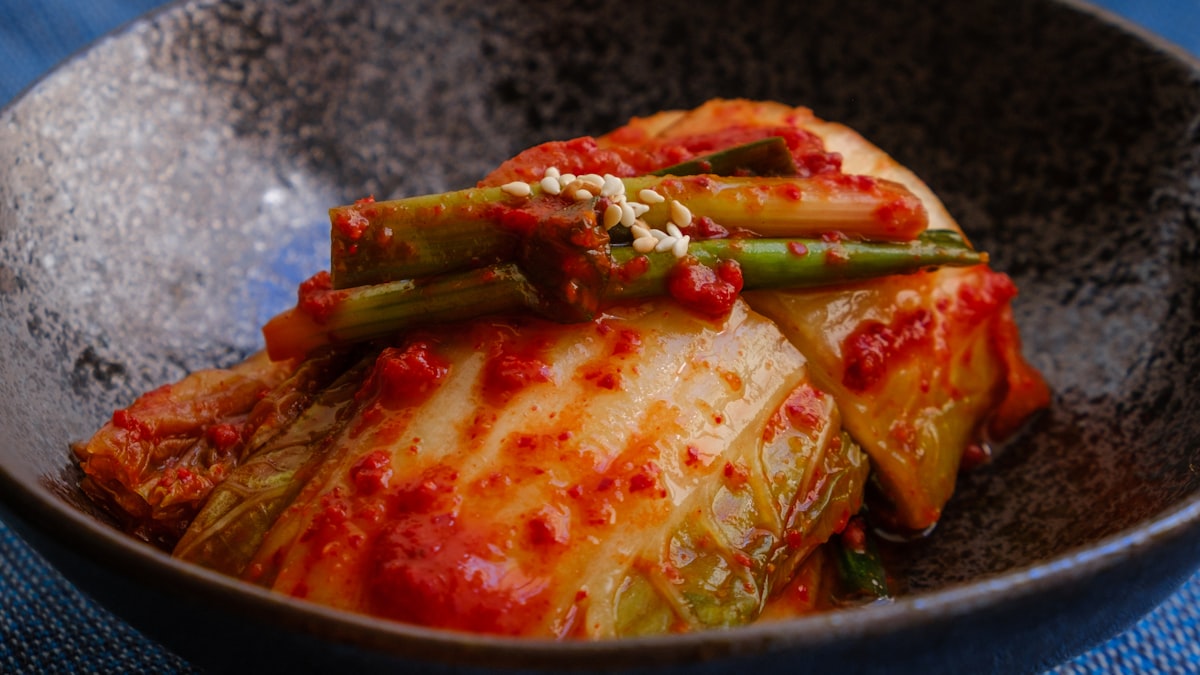
According to data from the Korea Food Research Institute, well-fermented kimchi contains lactic acid bacteria at a level of 10⁸ to 10⁹ CFU per 100g, with the organic acids produced during fermentation holding the pH at approximately 4.0. When that acidity meets the fatty acid structure of olive oil, it creates a vivid contrast on the palate — the acidity lifts any sense of heaviness in the fat, while the fat rounds off the sharper angles of fermentation.
Flavor Science: Why These Don't Clash
Many cooks assume that the green bitterness of olive oil and the lactic sharpness of kimchi will fight each other. Flavor science suggests the opposite: the combination is surprisingly stable. The key is understanding what bitterness actually does in context. The phenolic compounds in EVOO — oleocanthal, oleacein, and related molecules — deliver bitterness alongside a mild pungent sensation that, far from colliding with doenjang's deep umami or the capsaicin of gochugaru, tends to heighten flavor contrast in a way that makes both elements more vivid.
A report from the European Food Safety Authority (EFSA) notes that polyphenols such as hydroxytyrosol and tyrosol in olive oil produce a noticeably stronger flavor intensity when present at levels above 250 mg/kg. An early-harvest EVOO, whose polyphenol count sits at the higher end of that range, carries more pronounced bitterness and a longer peppery finish — qualities that gain another dimension when set against the savory depth of doenjang jjigae or the complex fermented aroma of well-aged kimchi.
Doenjang itself is exceptionally rich in glutamate-based umami. According to data from the National Institute of Agricultural Sciences, which has conducted research into traditional Korean cuisine, doenjang aged for two years or more may contain free amino acids at levels roughly three times higher than those found in fresh, unaged product. That concentration of amino acids, paired with the smooth oleic-acid texture of olive oil, produces a long, layered finish that lingers well beyond the initial bite.
A Cultivar-by-Cultivar Pairing Guide
Olive oil is not a single flavor. Aroma, bitterness, and acidity vary considerably by cultivar, which means that Korean fermented foods are best approached with the specific bottle in mind.
Picual — Characterized by strong tomato-leaf and herbal notes and a high polyphenol concentration. Its assertive bitterness and pungency pair well with deeply aged, high-acidity fermentations like mukeunji (long-fermented kimchi). In broth-based dishes such as kongbiji jjigae or doenjang jjigae, a small finishing drizzle after cooking can sharpen the savory profile and clean up any residual off-notes.
Ojiblanca — Softer in character, with almond and pear nuances and a gentler bitterness. Paired with intensely pungent fermented foods like cheonggukjang, its fruity softness acts as a buffer, smoothing sharp edges without suppressing the fermented depth. It works particularly well as a dressing over salads combining tofu and doenjang.
Sibarita — Delicate and well-balanced, making it the most accessible starting point for cooks new to EVOO-Korean pairings. Its restrained bitterness complements lighter fermented vegetable preparations — namul, white kimchi — adding a quiet layer of flavor without overshadowing the ingredient itself.
Practical Tips for the Kitchen
The most important principle when using EVOO alongside Korean fermented foods is to minimize heat exposure. Polyphenols and aromatic compounds are volatile and oxidize readily at high temperatures. Rather than adding olive oil at the start of cooking doenjang jjigae or kimchi jjigae, take the pot off the heat, ladle the finished dish into bowls, then drizzle a small amount over the top. The difference in aroma is immediate.
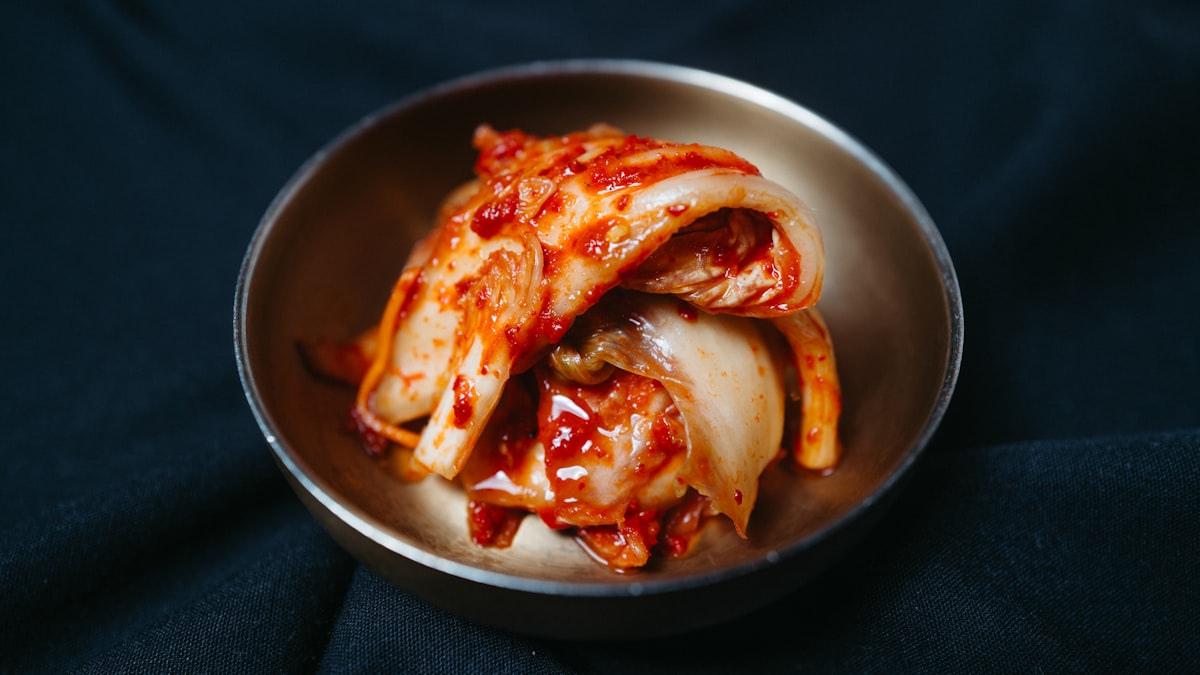
Fresh vegetable salads dressed with fermented sauces are the easiest place to experiment. Finely chopped baechu kimchi with a tablespoon of EVOO, a few drops of sesame oil, and a little vinegar produces a dressing that carries both the structure of a Mediterranean vinaigrette and the depth of Korean fermentation. The two oils do not compete: their aromatic compounds operate at different registers on the palate and coexist cleanly.
Doenjang vinaigrette is another natural application. Whisk together one teaspoon of doenjang, two tablespoons of EVOO, fresh lemon juice, and minced garlic for a fermented vinaigrette with considerably more complexity than a standard miso dressing. The result illustrates precisely how the glutamate richness of aged Korean soybean paste and the polyphenol intensity of a good EVOO reinforce rather than cancel each other.
Two Food Cultures at the Same Table
Olive oil is a relatively recent arrival on the Korean table. According to statistics from the Korea Agro-Fisheries and Food Trade Corporation (aT), olive oil imports more than doubled between the early 2010s and the early 2020s. That shift reflects something more than the simple adoption of a Western ingredient: it traces a broader change in how consumers think about cooking fats — no longer purely as a medium for applying heat, but as a flavor ingredient in their own right.
What makes this shift especially interesting is how naturally it intersects with Korea's existing fermentation culture. The sensory education that comes from a lifetime of doenjang, ganjang, kimchi, and makgeolli — all of them complex, all of them carrying the weight of time — turns out to be excellent preparation for appreciating the layered aromatic structure of a fine EVOO. A palate accustomed to fermented complexity tends to be more attuned to the kind of flavor that takes time to build, and less interested in anything one-dimensional.
When the two traditions meet at the table, no elaborate recipe is required to begin. A bottle of EVOO kept within reach of the stove, and a small pour over tonight's doenjang jjigae before it reaches the table, is enough to start the conversation.
Frequently asked questions
- Does olive oil actually go with kimchi, or does the bitterness clash?
- The bitterness in EVOO — driven by phenolic compounds such as oleocanthal — tends to contrast with, rather than clash against, kimchi's lactic acidity. The fat softens the sharpest fermented edges while the acidity cuts through any heaviness, creating a more stable balance than many cooks anticipate.
- Which olive oil cultivar works best with doenjang?
- High-polyphenol early-harvest Picual pairs well with aged doenjang, whose dense umami can stand up to Picual's intensity. Ojiblanca, with its softer almond and pear notes, works better as a buffer when the fermented aroma is very sharp, as in cheonggukjang. Sibarita suits milder preparations like namul or white kimchi.
- Should I cook the olive oil into doenjang jjigae, or add it at the end?
- Add it at the end. The polyphenols and aromatic compounds in EVOO are volatile and oxidize quickly at high heat. Drizzling a small amount into the finished soup after it leaves the heat preserves the most flavor.
- How do I make a doenjang vinaigrette with olive oil?
- Whisk together one teaspoon of doenjang, two tablespoons of EVOO, a squeeze of lemon juice, and a small amount of minced garlic. The result is a deeply fermented vinaigrette with considerably more complexity than a standard miso dressing.
- Can I mix sesame oil and olive oil in the same dish?
- Yes. The aromatic compounds in sesame oil and EVOO operate in different flavor registers, so the two fats coexist rather than compete. A dressing of finely chopped kimchi, one tablespoon of EVOO, a few drops of sesame oil, and a little vinegar lets both contribute without either overwhelming the other.
Related reading
- Fermented Foods Meet EVOO: A Pairing Guide for Kimchi and Cheese
Kimchi, cheese, and extra virgin olive oil might seem an unlikely trio, but the intersection of fermented acidity and polyphenol-rich fat is earning serious attention in flavor circles. OLEA's editor maps the pairings cultivar by cultivar.
- Ciabatta, Sourdough, Focaccia: Matching Bread Character to Olive Oil Intensity
Ciabatta, sourdough, and focaccia each bring a distinct fermentation profile, crumb structure, and crust to the table. Matching olive oil intensity to bread character lets both ingredients amplify each other rather than compete.
- Guacamole, Tacos, and Olive Oil: A Pairing That Goes Back Centuries
From sixteenth-century Spanish missionaries to modern Latin kitchens in Mexico City, New York, and Los Angeles, extra virgin olive oil has long had a place at the Mexican table. This guide traces the history and explores how chefs are using it today.
- Pairing Olive Oil with Wine: A Guide to Matching Aromas, Bitterness, and Texture
Extra virgin olive oils differ markedly in acidity, bitterness, and fruitiness — and each profile calls for a different wine partner. This guide maps those sensory axes to white, red, and natural wines.
- A Drop of Science: Pairing Dark Chocolate with Extra Virgin Olive Oil
A drizzle of extra virgin olive oil over dark chocolate softens bitterness and amplifies aroma. From the molecular interactions of phenolic compounds to cultivar-by-cultivar pairing choices, OLEA explores this combination through the lens of culinary science.
- The Mediterranean Art of Oil Poaching Fish: Ratios, Temperatures, and Cultivar Pairings
Oil poaching — gently cooking fish submerged in olive oil at low heat — is a cornerstone technique of Mediterranean kitchens. This guide covers everything from choosing the right EVOO to precise temperature ranges and the oil ratios that make the difference.
Tags
- pairing
- fermented foods
- kimchi
- doenjang
- extra virgin olive oil