Table
Butter Out, Olive Oil In: Rethinking Risotto's Mantecatura
The mantecatura is the step that decides whether a risotto sings or falls flat. Here is what changes — in texture, flavour, and ratio — when extra virgin olive oil takes butter's place at the finish.
Translated from the Korean edition, originally published September 4, 2026 · read the original
What Mantecatura Actually Is
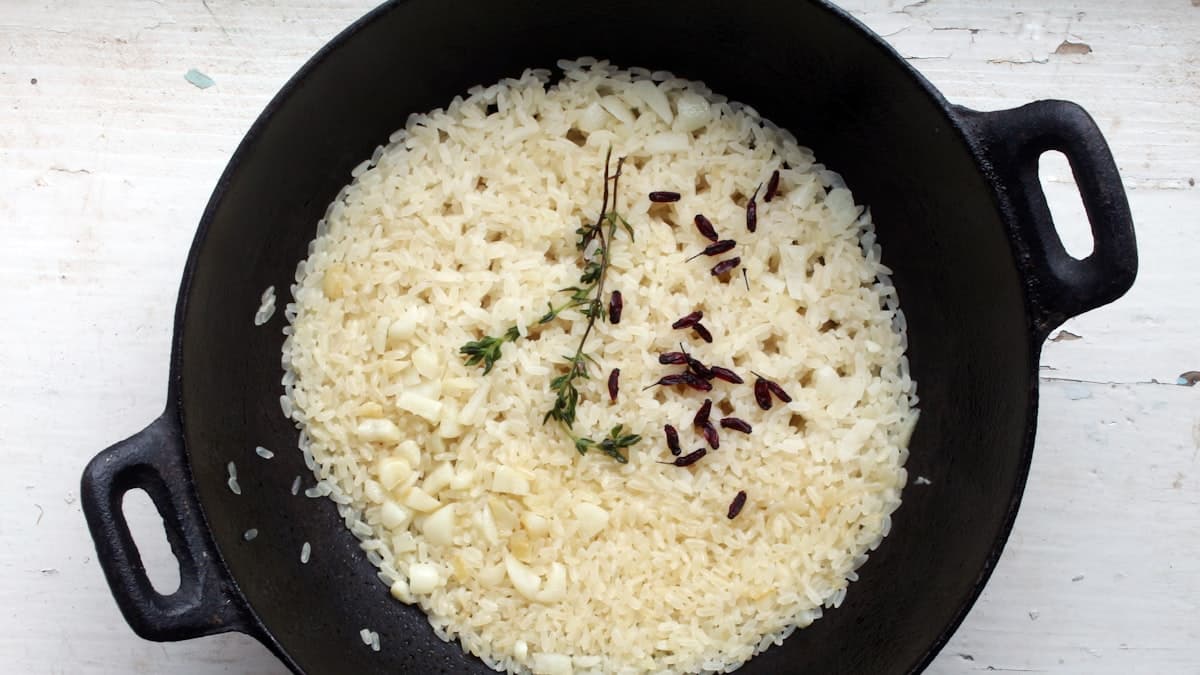
The final movement of a risotto has a name: mantecatura, from the Italian for 'to make smooth with butter.' After the heat goes off, cold butter is broken into pieces and beaten into the rice with a vigorous pan-shake that builds an emulsion — the step responsible for risotto's signature wave-like creaminess, known in Italian as onda (literally 'wave'). Butterfat disperses evenly among the swollen starch granules, forming a glossy, cohesive sauce layer around every grain.
So what happens when extra virgin olive oil replaces the butter? The short answer is that you are not choosing an inferior substitute — you are choosing a different outcome. Traditionally, oil-finished risotto recipes already exist in the regional kitchens of Liguria, Sicily, and Campania in southern Italy.
How an Oil Finish Affects Texture
Butter is roughly 80% butterfat, 16–17% water, and the remainder milk solids and whey proteins. That water and protein content is what drives emulsion formation. Extra virgin olive oil, being close to pure fat, does not automatically build an equivalently rich emulsion from pan-shaking alone.
Two techniques close the gap. The first is maximising the starchy cooking liquid still held in the rice. If the final ladle of stock is reduced slowly over low heat before the oil goes in, the resulting concentrated starch network makes it far easier for oil droplets to disperse and stay suspended. The second is adding a small amount of cold water or reserved stock alongside the oil — supplying the water phase that olive oil lacks and recreating the conditions for emulsion formation. Cooks who work regularly with oil-finished risottos tend to use one or both of these approaches.
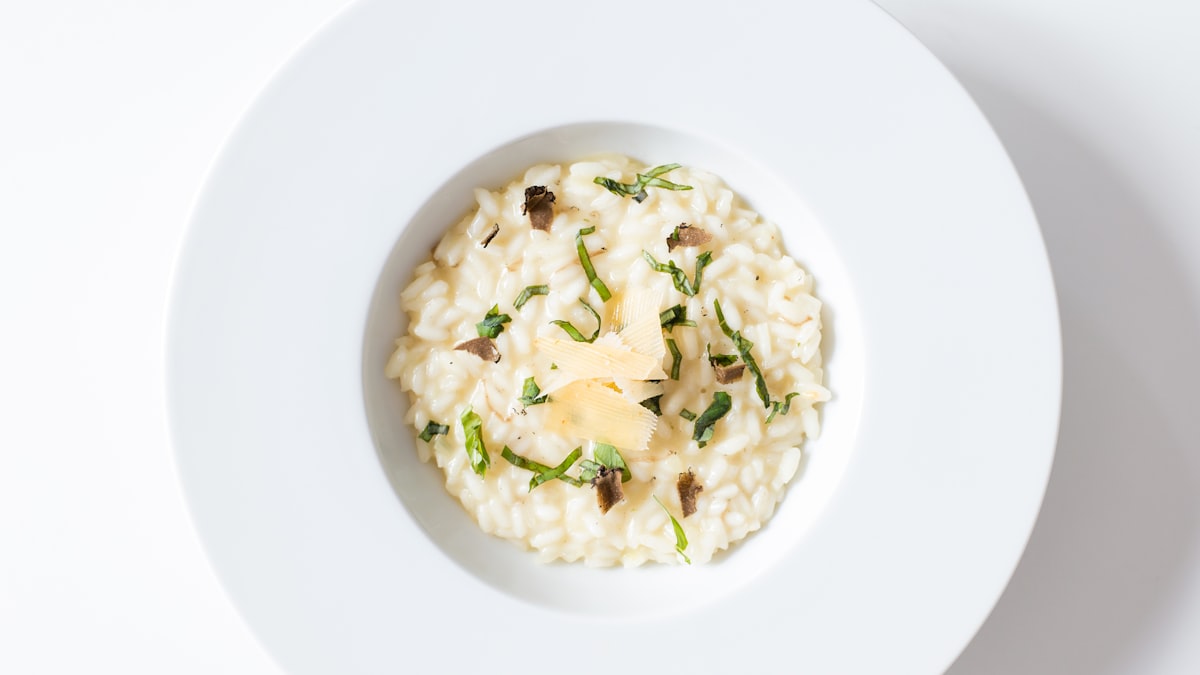
The texture you arrive at is subtly different from a butter finish. Where butter produces something heavy and velvet-like, olive oil produces something lighter, shinier, and more fluid. Tilt the plate and an oil-finished risotto tends to spread with a more pronounced, slowly moving semi-liquid quality — closer to the classic onda ideal, some cooks argue.
Ratios and Temperature: The Numbers That Matter
The two most important variables in an oil-finished mantecatura are quantity and temperature.
Oil quantity: For two servings (around 160 g dry rice), 20–30 ml of extra virgin olive oil is the widely cited working range. That is less by volume than the 30–40 g of butter a conventional recipe might call for, yet the actual fat delivered is nearly identical. At approximately 80% butterfat, 35 g of butter contains about 28 g of pure fat — essentially the same as 25 ml of olive oil. The difference in texture, then, is not about how much fat goes in; it is about the form of that fat and its emulsifying behaviour.
Temperature: The pan must have dropped below 85°C before the oil is added. Introduced into a hotter pan, the oil will break rather than emulsify, and fat will pool visibly on the surface. The recommended sequence is to cut the heat, wait 10–15 seconds, add the oil, and immediately work the pan in fast horizontal movements. According to curriculum materials from ALMA, the Italian culinary institute, temperature management at the mantecatura stage is treated as the single most critical variable determining a risotto's final consistency.
Choosing the Right Cultivar
Because the finishing oil spends very little time over heat, its aroma arrives at the palate almost intact. Cultivar selection therefore shapes the final flavour of the dish in a direct and noticeable way.
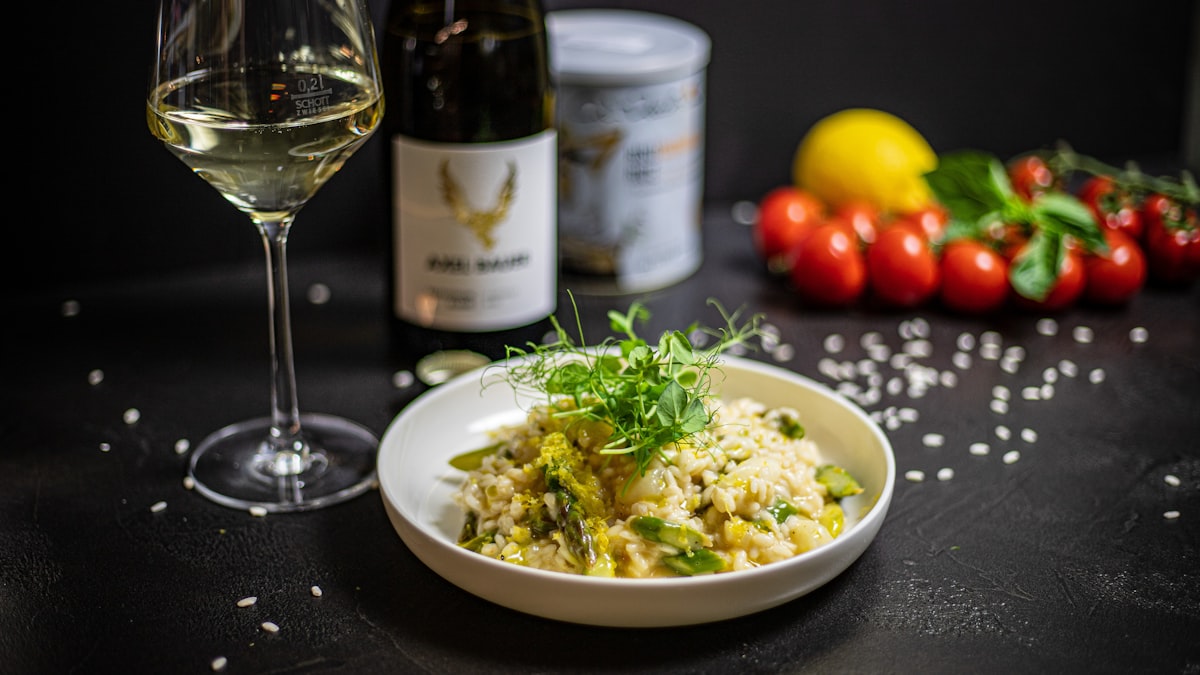
Seafood and vegetable risottos: With artichoke, asparagus, prawns, or clams, an Ojiblanca-style oil — grassy, with an almond nuance and restrained bitterness and heat — is widely considered a good match. Its gentler profile avoids overwhelming delicate ingredients.
Mushroom, truffle, and meat-based risottos: For porcini, truffle, or osso buco risottos, where deep umami is already dominant, a high-polyphenol Picual with a peppery finish can sharpen the contrast and add a satisfying aromatic counterpoint.
Lemon, herb, and mineral-driven risottos: A Sibarita-style oil, characterised by fresh grass and bright fruit notes, suits lemon risotto or versions finished with raw herbs. Its lively aftertaste reads as a seasoning note in its own right.
Practising cooks consistently recommend prioritising flavour intensity and aromatic direction over acidity percentage when selecting a finishing oil — acidity is relevant to quality grading but tells you little about how an oil will taste in the bowl.
A Practical Hybrid: Splitting the Finish
If you want both the emulsion stability of butter and the aromatic lift of olive oil, a split finish achieves both. Reduce the butter to half the usual quantity and make up the difference with olive oil — a pairing of 15 g of butter and 10–12 ml of EVOO, for instance. This combination appears regularly in professional kitchens.
The advantage is straightforward: butter anchors the emulsion while the oil provides aromatic brightness. The trade-off is that butter's flavour partially masks the oil's character, so the approach rewards a more assertive cultivar if you want the olive oil to register clearly.
Whatever approach you choose for the mantecatura, one principle holds regardless: risotto must be completed and served immediately. Emulsions begin to break as they sit, so warming the plates beforehand is a small but effective step toward keeping the texture intact from pan to table.
Frequently asked questions
- Can you use olive oil instead of butter to finish risotto?
- Yes. Southern Italian regional traditions in Liguria, Sicily, and Campania have long used extra virgin olive oil as the finishing fat in risotto. The result differs from a butter finish — lighter, more fluid, and distinctly olive-forward — but it is a legitimate technique, not a compromise.
- How much olive oil should you use to finish risotto?
- For two servings (roughly 160 g dry rice), 20–30 ml of extra virgin olive oil is the generally recommended range. That is less by volume than the 30–40 g of butter typically called for, but the actual fat content is comparable: 35 g of butter at roughly 80% butterfat delivers about 28 g of fat, close to the 25 ml of olive oil figure.
- Why does the oil separate when I add it to risotto?
- Temperature is almost always the culprit. If the pan is above roughly 85°C when the oil goes in, the emulsion breaks and the fat pools on the surface. Turn off the heat, wait 10–15 seconds, then add the oil and work the pan quickly in a horizontal motion to build the starch-and-oil emulsion.
- Which olive oil cultivar works best for finishing risotto?
- It depends on the dish. For seafood and vegetable risottos, Ojiblanca — with its grassy, almond character and moderate bitterness — tends to complement delicate ingredients without overpowering them. For mushroom, truffle, or meat-based versions, high-polyphenol Picual, with its peppery finish, sharpens the contrast. A Sibarita-style oil, fresh and fruity, suits lemon or herb risottos.
- Can I use both butter and olive oil together to finish risotto?
- Yes, and many restaurant kitchens do. Reducing butter to half the usual amount and filling the rest with olive oil — for example, 15 g of butter plus 10–12 ml of EVOO — preserves the emulsion stability that butter provides while letting the oil's aroma come through. The oil's character will be partly muted by the butter, so choosing a more aromatic cultivar helps the flavour register.
Related reading
- Cold Dishes, Full Flavor: Choosing Olive Oil for Gazpacho, Cold Pasta, and Chilled Salads
When heat is removed from the equation, olive oil has nowhere to hide. A guide to matching cultivar character, acidity, and polyphenol levels to gazpacho, cold pasta, and chilled salads.
- Ciabatta, Sourdough, Focaccia: Matching Bread Character to Olive Oil Intensity
Ciabatta, sourdough, and focaccia each bring a distinct fermentation profile, crumb structure, and crust to the table. Matching olive oil intensity to bread character lets both ingredients amplify each other rather than compete.
- Guacamole, Tacos, and Olive Oil: A Pairing That Goes Back Centuries
From sixteenth-century Spanish missionaries to modern Latin kitchens in Mexico City, New York, and Los Angeles, extra virgin olive oil has long had a place at the Mexican table. This guide traces the history and explores how chefs are using it today.
- Butter Country No More: How Scandinavia Learned to Cook with Olive Oil
Olive oil is reshaping Nordic kitchens — from Copenhagen's Michelin-starred restaurants to Swedish home pantries. This guide traces how EVOO found its place alongside smoked fish, fermented rye, and root vegetables in one of the world's most distinctive food cultures.
- Soy, Gochujang, Doenjang: Ratio Guides for Korean Jang Dressings with Extra Virgin Olive Oil
Combining extra virgin olive oil with Korea's fermented jang pastes opens unexpected flavor territory — but the ratios matter. This guide breaks down the optimal oil-to-jang proportions for soy sauce, gochujang, and doenjang, with practical applications for each.
- A Drop of Science: Pairing Dark Chocolate with Extra Virgin Olive Oil
A drizzle of extra virgin olive oil over dark chocolate softens bitterness and amplifies aroma. From the molecular interactions of phenolic compounds to cultivar-by-cultivar pairing choices, OLEA explores this combination through the lens of culinary science.
Tags
- risotto
- mantecatura
- finishing oil
- italian cooking
- evoo in cooking