Table
Bibimbap, Jeon, Gukbap: A Practical Guide to Cooking Korean Food with EVOO
Extra virgin olive oil is finding a quiet foothold in Korean cooking — not to replace sesame oil, but to open new layers of flavor. Here is how it works across three iconic dishes.
Translated from the Korean edition, originally published July 7, 2026 · read the original
Korean Food and EVOO: Less Strange a Pairing Than It Sounds
Sesame oil has been the benchmark of nuttiness and aroma in Korean cooking for centuries. Quietly, though, extra virgin olive oil has begun appearing in professional kitchens and home-cook communities as an alternative — or a complement. The two oils share meaningful common ground: both are rich in unsaturated fatty acids, and both express their character most vividly without heat. Where sesame oil leads with deep, roasted warmth, EVOO layers in grassiness, a pleasant bitter finish, and fruity complexity.
According to data from Korea's aT (Korea Agro-Fisheries & Food Trade Corporation), imports of olive oil into Korea rose by approximately 12 percent in 2023 compared with the previous year, with consumers increasingly attentive to quality and origin. Against that backdrop, the question of how to actually use EVOO in Korean cooking no longer feels like an eccentric experiment.
Bibimbap — the Magic of One Last Drizzle
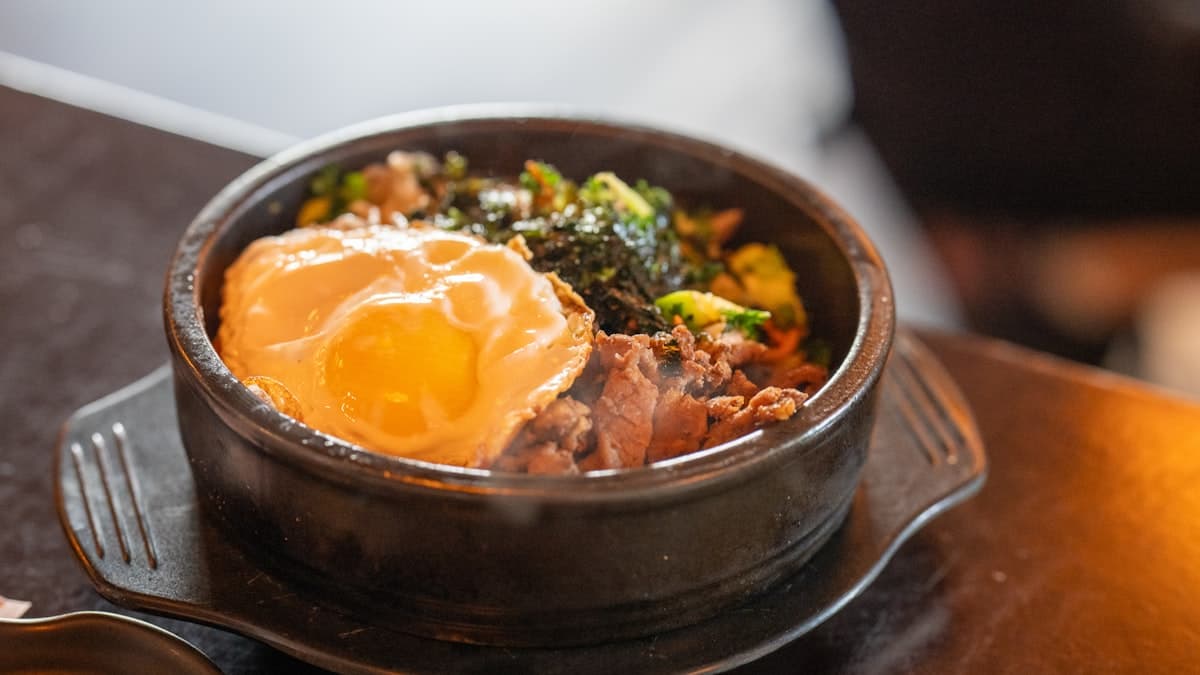
Bibimbap is built on layered flavors that emerge as the ingredients are folded together. Just as a drop of sesame oil is worked into seasoned vegetables in the traditional recipe, EVOO can occupy the same moment and produce an entirely different register of flavor. Bitter greens — spinach, fernbrake, bellflower root — have a natural affinity with EVOO's characteristic bitter finish.
The most effective approach is to add the gochujang first, then finish with a circle of fruity EVOO just before eating. Because no heat is applied at that stage, polyphenol compounds remain intact. According to IOC guidelines, EVOO with acidity below 0.8% and high polyphenol content displays the clearest fresh and bitter aromatic characteristics, properties that have been reported to make it particularly well-suited to cold finishing use. The contrast between grassy oil and fiery paste creates a layered complexity that neither ingredient could produce alone.

The style of bibimbap matters for cultivar choice. A mild base like kongnamul bibimbap (bean sprout) pairs well with a herbal, green-olive EVOO; a richer version with raw beef calls for a softer, light fruity style that does not compete with the protein. The same bowl, two different directions.
Jeon — the Oil You Choose Decides the Crust
The whole point of a Korean pancake is the contrast between a crisp exterior and a moist interior. EVOO has a smoke point of roughly 180–200 °C, which aligns with the conventional pan-frying range of 160–180 °C for jeon. Research published by Spain's National Research Council (CSIC) has reported that EVOO's high monounsaturated fatty acid structure gives it relatively strong oxidative stability at elevated temperatures.
In practice, frying haemul pajeon (seafood scallion pancake) or kimchi jeon in EVOO transfers a subtle olive note into the crust, creating an additional flavor dimension. That said, an intense fruity grade can make the olive character quite pronounced after cooking; a medium fruity grade is the better starting point. Using EVOO as the pan oil rather than mixing it into the batter also reduces aroma loss from prolonged heat exposure.
With starch-based jeon such as gamja-jeon (potato pancake), home cooks in Korean culinary forums have consistently noted that EVOO's mild bitterness lifts what might otherwise be a one-dimensional starchy flavor, giving the pancake more definition.

Gukbap — an Unexpected Finishing Oil
Olive oil in soup may sound unlikely, but finishing soups and stews with a drizzle of EVOO is one of the oldest habits in Mediterranean cooking. The same instinct translates: a few drops of EVOO over a rich sagol (bone marrow) or dwaeji-ppyeo (pork bone) broth allows the oil's richness to meet the broth's collagen layer and create a new textural moment.
For dishes with strong offal notes — sundae gukbap, for instance — a citrus-leaning fruity EVOO is reported to soften those assertive aromas. For cleaner, more delicate broths like seolleongtang or gomtang, a light fruity style with a restrained grassy note adds aroma without disturbing the broth's own character. Practically, rather than stirring the oil into the whole bowl, drizzling it over a separate scoop of rice or keeping it in a small dipping dish preserves the oil's flavor at its best.
A Practical Pairing Guide: Choosing EVOO for Korean Dishes
EVOO spans a wide flavor spectrum depending on cultivar and grade. When applying it to Korean cooking, the two most important variables are intensity and temperature.
For cold finishing — bibimbap, rice bowls, drizzling at the table — a high-polyphenol, intense fruity oil makes a visible impression. For cooking that involves heat, such as frying jeon or sautéing vegetables, a medium to light fruity grade strikes a better balance.
For spice-forward dishes like bibimbap, a Picual-style oil with a pronounced bitter-peppery finish creates an interesting interplay with gochujang's heat. For milder, pan-fried dishes, a buttery and smooth Sibarita-style is widely noted to be harmonious. For gukbap finishing, a gently fruity Ojiblanca-style adds aroma without dominating the broth.
Perhaps the most important rule is restraint. EVOO is an assertive ingredient. Starting with one teaspoon per serving and adjusting to taste is the fastest way to find where Korean seasoning and olive character hold a conversation rather than a competition. The goal is that the two flavor languages speak to each other — neither one burying the other.
Frequently asked questions
- Can you use olive oil instead of sesame oil in Korean food?
- EVOO works best as a complement rather than a direct swap. Both oils are rich in unsaturated fatty acids and shine brightest unheated, but where sesame oil brings deep roasted nuttiness, EVOO adds grassy, mildly bitter, and fruity notes. Starting with EVOO as a finishing drizzle alongside sesame oil lets you explore the contrast without abandoning familiar flavor.
- What kind of olive oil is best for finishing bibimbap?
- An intense or medium fruity EVOO with higher polyphenol content works well, because bibimbap is eaten unheated at the finishing stage and the bold gochujang seasoning can stand up to a more assertive oil. According to IOC guidelines, EVOO with acidity below 0.8% and elevated polyphenols shows the clearest fresh-fruit and bitter characteristics — exactly what creates an interesting contrast with spicy paste.
- Is olive oil suitable for frying Korean pancakes (jeon)?
- Yes, within the typical pan-frying range. EVOO has a smoke point of roughly 180–200 °C, which overlaps with the conventional jeon frying temperature of 160–180 °C. Research by Spain's National Research Council (CSIC) has reported that the high monounsaturated fatty acid content of EVOO gives it relatively good oxidative stability at elevated temperatures. A medium fruity grade is recommended for a first attempt, as intense fruity grades can make the olive character more pronounced after frying.
- Does olive oil work in Korean soup dishes like gukbap?
- Finishing soups with olive oil is a long-standing Mediterranean tradition, and the same logic applies to Korean bone broths. A few drops of EVOO drizzled over a bowl of seolleongtang or gukbap just before eating can add aromatic lift without overwhelming the broth. For dishes with strong offal notes, such as sundae gukbap, a citrus-leaning fruity EVOO is reported to help soften those assertive aromas.
- How much olive oil should I use when trying it with Korean food for the first time?
- Start with one teaspoon per serving and adjust from there. EVOO is an aromatic ingredient, and the goal is a conversation between the olive's flavor language and Korean seasoning — not one drowning out the other. Drizzling over a separate portion of rice or dipping from a small dish alongside the soup are both low-commitment ways to gauge how much suits your palate.
Related reading
- Ciabatta, Sourdough, Focaccia: Matching Bread Character to Olive Oil Intensity
Ciabatta, sourdough, and focaccia each bring a distinct fermentation profile, crumb structure, and crust to the table. Matching olive oil intensity to bread character lets both ingredients amplify each other rather than compete.
- Guacamole, Tacos, and Olive Oil: A Pairing That Goes Back Centuries
From sixteenth-century Spanish missionaries to modern Latin kitchens in Mexico City, New York, and Los Angeles, extra virgin olive oil has long had a place at the Mexican table. This guide traces the history and explores how chefs are using it today.
- Butter Country No More: How Scandinavia Learned to Cook with Olive Oil
Olive oil is reshaping Nordic kitchens — from Copenhagen's Michelin-starred restaurants to Swedish home pantries. This guide traces how EVOO found its place alongside smoked fish, fermented rye, and root vegetables in one of the world's most distinctive food cultures.
- Soy, Gochujang, Doenjang: Ratio Guides for Korean Jang Dressings with Extra Virgin Olive Oil
Combining extra virgin olive oil with Korea's fermented jang pastes opens unexpected flavor territory — but the ratios matter. This guide breaks down the optimal oil-to-jang proportions for soy sauce, gochujang, and doenjang, with practical applications for each.
- A Drop of Science: Pairing Dark Chocolate with Extra Virgin Olive Oil
A drizzle of extra virgin olive oil over dark chocolate softens bitterness and amplifies aroma. From the molecular interactions of phenolic compounds to cultivar-by-cultivar pairing choices, OLEA explores this combination through the lens of culinary science.
- The Mediterranean Art of Oil Poaching Fish: Ratios, Temperatures, and Cultivar Pairings
Oil poaching — gently cooking fish submerged in olive oil at low heat — is a cornerstone technique of Mediterranean kitchens. This guide covers everything from choosing the right EVOO to precise temperature ranges and the oil ratios that make the difference.
Tags
- korean food
- evoo pairing
- finishing oil
- bibimbap
- jeon