Table
Walnuts, Almonds, Pine Nuts: Pairing Three Nuts with EVOO
Extra virgin olive oil and nuts share a common language of unsaturated fats — and that structural kinship shapes how their flavors interact. A closer look at what happens when walnuts, almonds, and pine nuts meet EVOO on the plate.
Translated from the Korean edition, originally published July 10, 2026 · read the original
Oil and Nuts: Two Ingredients Speaking the Same Language
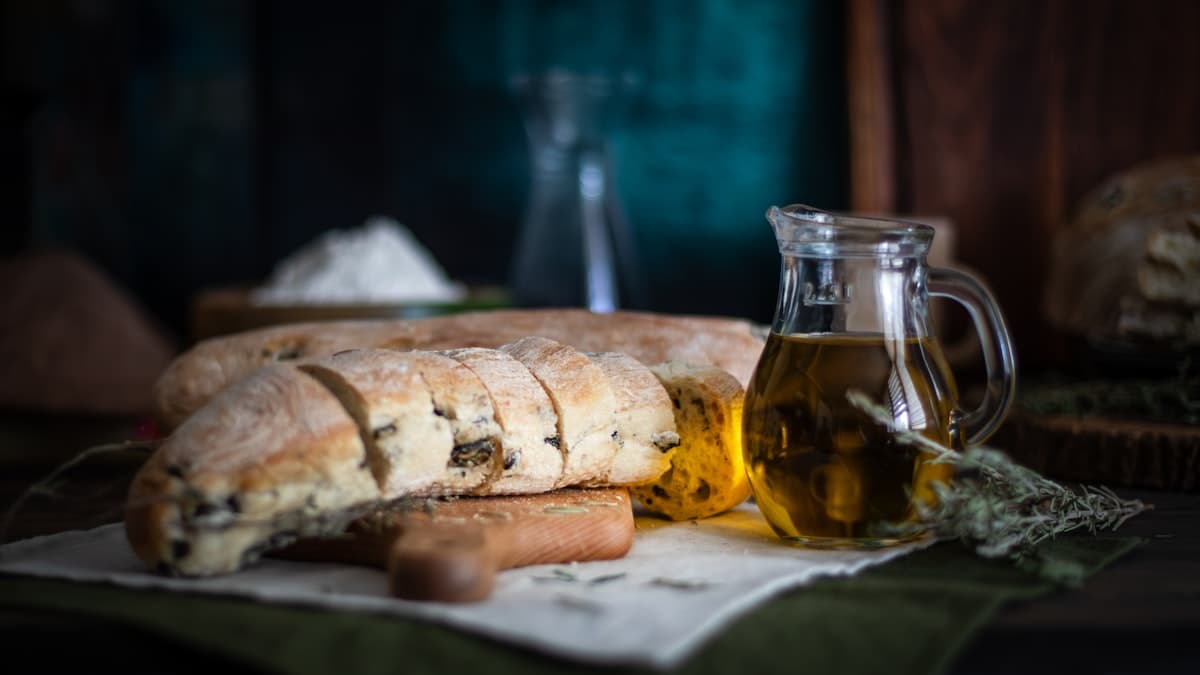
Olive oil and nuts have shared kitchen shelves for centuries, yet the question of how they actually work together rarely gets a close answer. Extra virgin olive oil (EVOO) is composed of roughly 70% oleic-acid-based monounsaturated fats, and food scientists have noted that this structure allows EVOO to act as a stable carrier of aroma molecules when it is combined with other fatty ingredients. Nuts are also predominantly unsaturated in their fat composition, and research in food chemistry has consistently reported that when the two are used together, rather than the fat fractions clashing, they tend to draw out each other's aromatic compounds more expressively.
According to the International Olive Council (IOC), the combination of nuts and olive oil in Mediterranean cuisines represents more than a flavor preference — it is a structural principle of the table. Spain's Andalusian ajoblanco, Liguria's pesto, and the Levantine muhammara are all sauces built on ground nuts and olive oil, a convergence that stretches across cultures and centuries.
Walnuts: Working with Bitterness and Grassiness
Among common nuts, walnuts stand out for their high proportion of omega-3 fatty acid alpha-linolenic acid (ALA), which also makes them among the fastest to oxidize. According to the USDA nutrient database, 100g of walnuts contains approximately 9g of ALA — considerably more than the same quantity of almonds or pine nuts. Given that sensitivity to oxidation, using raw walnuts alongside a low-acidity, high-polyphenol EVOO is a sound approach: food chemistry studies have reported that polyphenol compounds may help inhibit lipid oxidation.
In flavor terms, walnuts carry a characteristic tannin-based bitterness, an earthy note, and a mild astringency. When set against a grassy, peppery EVOO — particularly an early-harvest Picual — the bitterness does not cancel out but instead adds depth, leaving a layered, complex finish. By contrast, pairing walnuts with an Ojiblanca-style oil, which tends toward butter and almond nuance, creates a contrast effect: the walnut's earthiness reads more clearly against the oil's gentler backdrop. The same walnut can present itself in entirely different terms depending on which oil it meets.
In practice, lightly dry-roasting walnuts, letting them cool, and then finishing with EVOO and flake salt is a simple and effective approach. The Maillard compounds generated during roasting meet the oil's fresh, grassy character and produce a clean finish free of oxidized off-notes.
Almonds: The Neutral Carrier
Almonds have the highest oleic acid content of the three nuts discussed here, making them structurally the closest relative of EVOO. According to data published by the International Nut and Dried Fruit Council (INC), oleic acid accounts for approximately 60–70% of the fat in almonds — a proportion that overlaps substantially with the monounsaturated fat content of extra virgin olive oil. That structural similarity produces a seamlessly smooth texture when the two are used together.
In flavor terms, that very similarity can present a challenge. Almonds are delicate and relatively neutral in aroma, which means a bold, assertive EVOO can easily overshadow them. Two approaches resolve this. The first is to use the almond as a flavor-delivery vehicle: almonds coated in EVOO and roasted become a snack that slowly releases the oil's aromatic character — exactly the principle behind the Marcona almonds marinated in olive oil that appear on almost every serious Spanish tapas menu. The second is to grind almonds into a paste and combine them with EVOO as the base of a dressing or dip; here, the almond's quiet sweetness softens the oil's bitterness and creates a balanced, versatile foundation.
Pine Nuts: A Partner That Asks for Restraint
Of the three nuts, pine nuts have the highest fat content and water activity, and they oxidize quickly. According to publicly available European Food Safety Authority (EFSA) data, pine nuts can show signs of rancidity relatively fast at room temperature, and refrigeration after opening is recommended. That delicacy carries directly into how they interact with EVOO.
Pine nuts are defined by a toasty, buttery creaminess that aligns naturally with the almond and butter notes found in well-made EVOO. Paired with a soft, low-acidity oil in the Sibarita style, the creaminess of both ingredients layers together into something rich and enveloping. Paired with a strongly bitter or peppery EVOO, however, the pine nut's subtle fragrance can be overwhelmed — in that case, adding the pine nuts at the finishing stage rather than cooking them into the dish is a better strategy.
The reason traditional pesto holds to pine nuts comes down to this creaminess. When pine nuts are ground with olive oil, basil, and Parmesan, the result approaches an emulsion rather than a simple mixture: the pine nut fat integrates with the olive oil and raises the overall viscosity of the sauce, producing a uniform, cohesive texture that other nuts replicate with more difficulty.
Using All Three Together
Walnuts, almonds, and pine nuts each have their own character, but a few shared principles apply whenever any of them meets EVOO. First, the condition of the nut matters: raw, dry-roasted, and oil-roasted nuts each respond differently to olive oil, so pairing raw nuts with a bold, expressive EVOO and roasted nuts with a more delicate oil avoids flavor collision. Second, temperature is central: EVOO's volatile aroma compounds are heat-sensitive, so it is worth distinguishing between the oil used during cooking and the oil reserved for finishing. Third, salt is the connective tissue: a pinch of good flake salt bridges the gap between the oil's bitterness and the nut's sweetness, pulling the overall flavor into focus.
There is a reason Mediterranean tables have combined olive oil and nuts for thousands of years. The two bring different textures and aromas to the plate, but they share the common language of fat — and at that meeting point, they produce a depth of flavor that neither reaches alone.
Frequently asked questions
- Which nuts pair best with extra virgin olive oil?
- Walnuts, almonds, and pine nuts each work well with EVOO, but in different ways. Walnuts bring earthy bitterness that layers with grassy, peppery oils. Almonds are structurally close to EVOO in oleic acid content, making for a smooth, neutral base. Pine nuts add creaminess that complements soft, low-acidity oils like Sibarita.
- Why do walnuts go rancid faster than other nuts?
- According to the USDA nutrient database, walnuts contain around 9g of alpha-linolenic acid (ALA, an omega-3 fatty acid) per 100g — significantly more than almonds or pine nuts. Because ALA oxidizes quickly, walnuts are more prone to rancidity, which is why pairing them with a high-polyphenol EVOO can be beneficial: food chemistry studies have reported that polyphenols may help slow lipid oxidation.
- Can I use olive oil to roast or coat nuts?
- Yes. Coating almonds in EVOO and roasting them is a technique used in Spanish tapas bars — the oil adheres to the surface and slowly releases its flavor compounds as you eat. For finishing, drizzle EVOO over dry-roasted walnuts once they have cooled; the Maillard compounds from roasting complement the oil's grassy notes without any off-flavors from oxidized fat.
- Why are pine nuts used in traditional pesto?
- Pine nuts are the creamiest of the three, and their fat blends readily with olive oil to create an almost emulsified, uniform texture in the sauce. According to food science literature, this is because the pine nut fat integrates with the olive oil and raises the overall viscosity of the mixture — something other nuts replicate less easily.
- What is the right olive oil to use with raw versus roasted nuts?
- A useful general rule: pair raw nuts with a bold, expressive EVOO whose flavor can hold its own, and roasted nuts with a more delicate oil that won't compete with the nutty, Maillard-driven aromas already present. Temperature matters too — reserve your finest finishing oil for the plate rather than the pan, since EVOO's volatile flavor compounds are heat-sensitive.
Related reading
- Ciabatta, Sourdough, Focaccia: Matching Bread Character to Olive Oil Intensity
Ciabatta, sourdough, and focaccia each bring a distinct fermentation profile, crumb structure, and crust to the table. Matching olive oil intensity to bread character lets both ingredients amplify each other rather than compete.
- Guacamole, Tacos, and Olive Oil: A Pairing That Goes Back Centuries
From sixteenth-century Spanish missionaries to modern Latin kitchens in Mexico City, New York, and Los Angeles, extra virgin olive oil has long had a place at the Mexican table. This guide traces the history and explores how chefs are using it today.
- Pairing Olive Oil with Wine: A Guide to Matching Aromas, Bitterness, and Texture
Extra virgin olive oils differ markedly in acidity, bitterness, and fruitiness — and each profile calls for a different wine partner. This guide maps those sensory axes to white, red, and natural wines.
- A Drop of Science: Pairing Dark Chocolate with Extra Virgin Olive Oil
A drizzle of extra virgin olive oil over dark chocolate softens bitterness and amplifies aroma. From the molecular interactions of phenolic compounds to cultivar-by-cultivar pairing choices, OLEA explores this combination through the lens of culinary science.
- The Mediterranean Art of Oil Poaching Fish: Ratios, Temperatures, and Cultivar Pairings
Oil poaching — gently cooking fish submerged in olive oil at low heat — is a cornerstone technique of Mediterranean kitchens. This guide covers everything from choosing the right EVOO to precise temperature ranges and the oil ratios that make the difference.
- Hummus, Shakshuka, Sabich: How Israeli Cooking Uses Olive Oil at Every Layer
From the finishing pour on hummus to the base of a shakshuka and the layered construction of a sabich, olive oil functions as a primary ingredient on the Israeli table — not a neutral medium. This guide traces how Levantine culinary tradition treats the oil itself as the point.