Table
Beyond the Supermarket Shelf: How Restaurants Actually Use Extra Virgin Olive Oil
From finishing drizzles on sashimi to slow-infused garlic bases, extra virgin olive oil has moved well past the bread basket in professional kitchens. A look at how chefs select, apply, and inspire home cooks to think differently about EVOO.
Translated from the Korean edition, originally published July 17, 2026 · read the original
The Bottle on the Table Has Changed Its Meaning
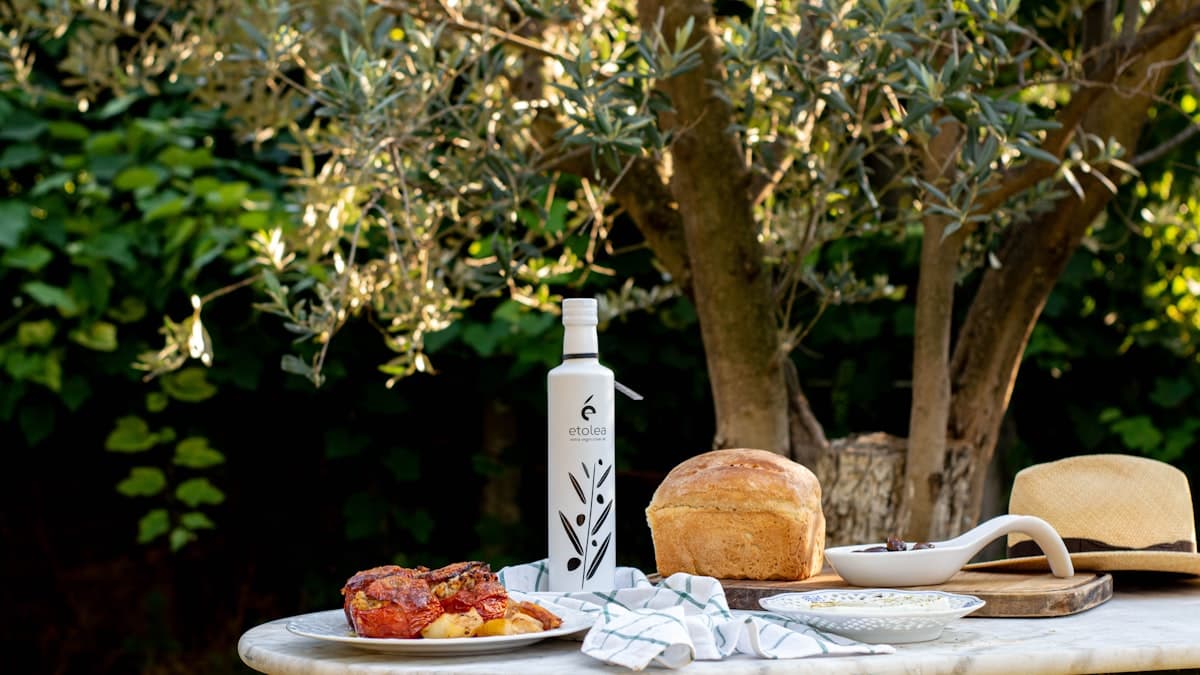
Not long ago, a bottle of olive oil on a restaurant table meant one thing: something to dip bread into. That framing no longer holds. From fine-dining rooms to casual Italian trattorias and Korean-fusion kitchens, extra virgin olive oil (EVOO) has become a standalone ingredient and a vehicle for a chef's culinary point of view. According to the International Olive Council (IOC), the share of global olive oil consumption flowing through food-service channels has grown steadily year on year, with demand for restaurant-grade EVOO reported to be expanding not only in Europe and North America but across Asian markets as well.
The EVOO a consumer picks off a supermarket shelf and the oil a chef selects for the kitchen differ considerably in intended use, grade, and handling. Understanding how professional cooks think about and deploy EVOO opens up a much wider range of possibilities at home.
How Chefs Choose Their EVOO
In a professional kitchen, the first two figures a chef examines are acidity and polyphenol content. Acidity — expressed as the percentage of free fatty acids — is read as an indicator of the olive's freshness at the time of pressing: the lower the number, the higher the freshness. The IOC sets the ceiling for extra virgin classification at 0.8% acidity, but the more exacting the kitchen, the more likely it is to seek out oils at 0.3% or below.
Polyphenols govern the bitterness, peppery bite, and green-herb character that distinguish fine EVOO. Research from the Andalusian Institute of Agricultural and Fisheries Research (IFAPA) has reported that higher polyphenol content is associated with greater oxidative stability, meaning the oil loses less of its flavor profile during cooking. This finding helps explain why chefs who plan to use an oil primarily as a finishing drizzle — where heat is absent — tend to reach for polyphenol-rich, single-origin bottles.
Four Roles EVOO Plays in the Professional Kitchen
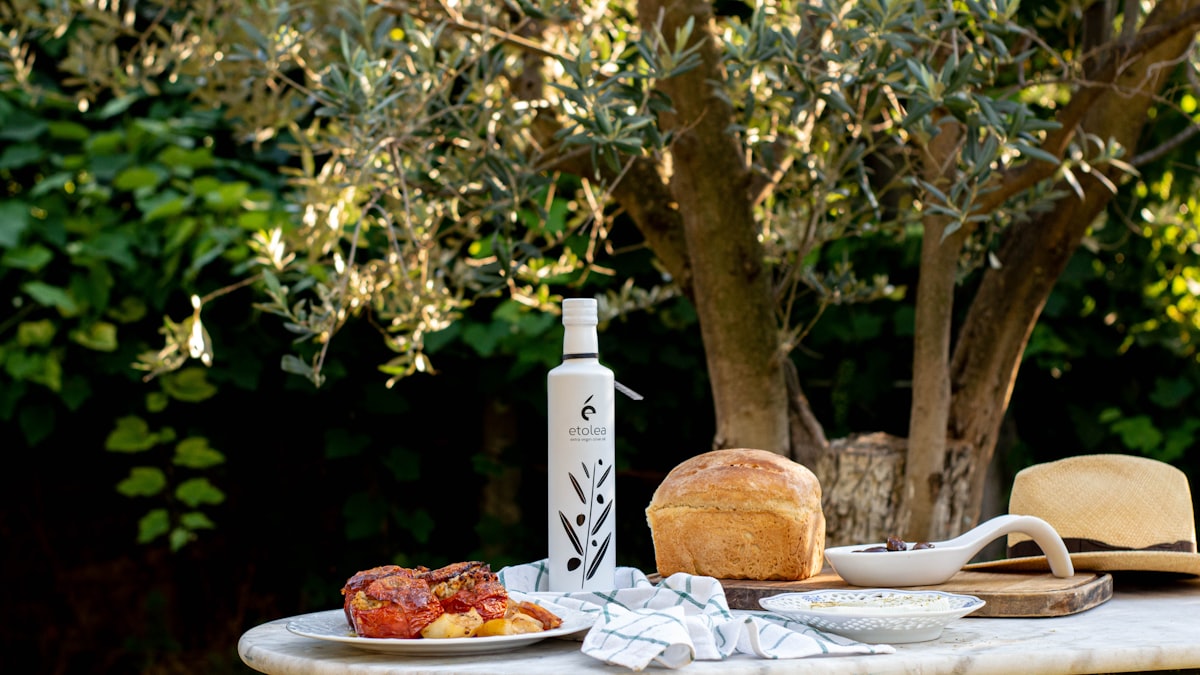
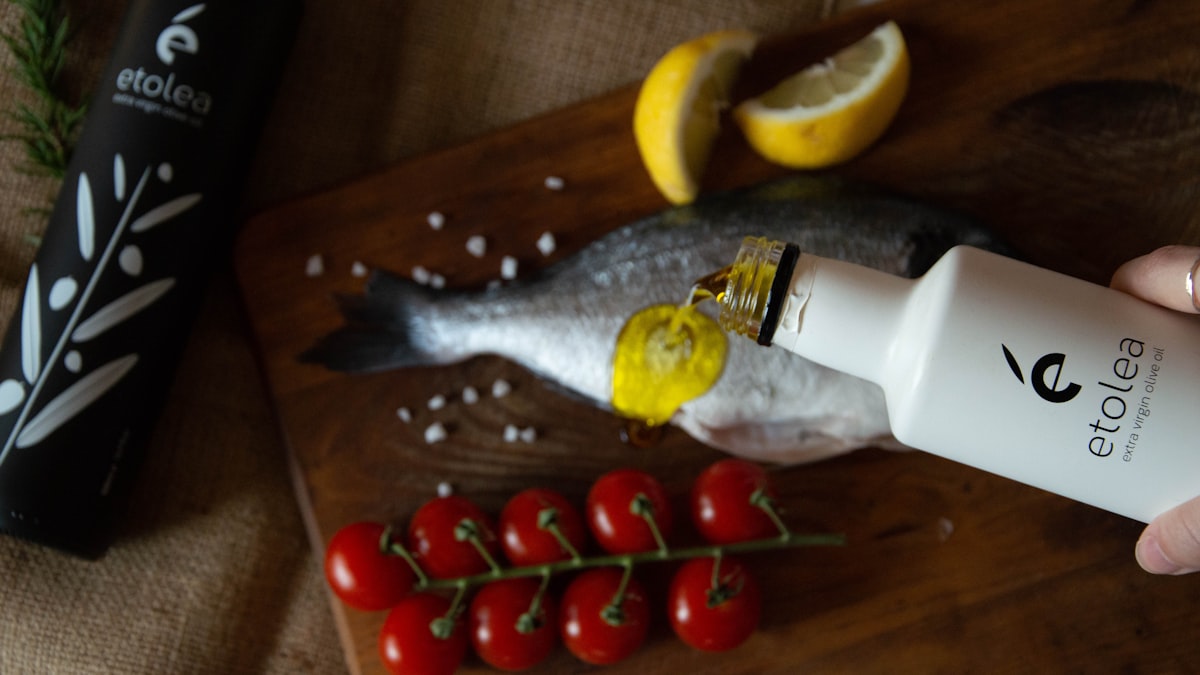
First: finishing oil. The most visible application is the last one — a drizzle over a completed dish just before it leaves the pass. Pasta, risotto, soup, grilled fish: a circuit or two of good oil adds aroma and sheen that no earlier step can replicate. Because this is where cultivar character is most legible, chefs match the oil to the dish's flavor direction. Those with a working experience in restaurant kitchens broadly agree that oils with herbal or almond nuances suit delicate seafood, while oils with an intense bitter-peppery profile stand up to red meat and thick steaks.
Second: dipping. Offered at the table alongside quality bread, this is the format in which the oil speaks entirely for itself, unmediated by heat or other ingredients. Long a fixture of Italian restaurant service, the practice has been adopted with increasing frequency in Mediterranean-leaning and fine-dining restaurants elsewhere. A pinch of fleur de sel, a few drops of aged balsamic, or a house-made herb-infused variation are common refinements.
Third: low-to-medium heat cooking. Using EVOO as the base fat for sautéing, sweating aromatics, or confit preparations. The widespread assumption that EVOO is unsuitable for anything beyond gentle heat has been challenged: research cited by the International Food Information Council (IFIC) Foundation reports that high-quality EVOO has a smoke point in the range of 190–210°C, which is considered stable for typical cooking temperatures. A technique widely used in restaurant kitchens is the slow infusion of garlic and herbs in EVOO over low heat, producing an aromatic base that anchors sauces and braises.
Fourth: emulsification. EVOO serves as the foundation fat in mayonnaise, aioli, and vinaigrettes. Its fatty-acid composition lends itself to maintaining a stable emulsion, and its flavor defines the overall character of the finished sauce or dressing in a way that a neutral oil cannot.
Why Asian Restaurants Are Reaching for EVOO
A decade ago, EVOO in South Korean or Japanese dining was largely confined to Italian specialists. In the 2020s, a growing number of establishments — Korean fine-dining rooms, fusion omakase counters, vegetarian restaurants — have moved it to the center of their cooking across genre lines. According to trade statistics published by Korea's Korea Agro-Fisheries & Food Trade Corporation (aT), domestic olive oil imports have maintained a gradual upward trend since the mid-2010s, with the food-service (B2B) channel reported to be growing at a pace comparable to the retail channel.
The appeal is not simply the health associations that surround the ingredient. Chefs describe EVOO as offering a complexity of flavor layers — and a terroir shaped by origin, cultivar, and harvest date — that butter or neutral vegetable oils cannot provide. The oil, in this framing, gives a dish a story. Restaurants in Seoul, Busan, and other major cities have begun noting the vintage and cultivar on their menus, a practice borrowed directly from wine service.
Taking the Restaurant Lesson Home
If a memorable EVOO experience in a restaurant has prompted the question of how to recreate it at home, the most practical first step is also the one most professional kitchens take: keep two oils rather than one. A lower-acidity, oxidatively stable oil handles everyday cooking; a polyphenol-rich, aromatically vivid single-origin oil is reserved for finishing. Separating the two uses immediately broadens what the ingredient can do.
Storage discipline matters just as much as selection. Exposure to light and heat accelerates oxidation, so EVOO belongs in a cool, dark place — not on a shelf above the stove. Once a bottle is opened, using it promptly preserves flavor better than letting it sit. It is precisely this logic that leads chefs to prefer smaller bottles over large containers: the oil from a 250 ml or 500 ml bottle stays closer to peak condition from the first pour to the last.
When the label on a bottle starts to carry more information — acidity, harvest date, cultivar, origin — the table it sits on tends to become more interesting. The restaurant kitchen is simply the place where that shift happened first.
Frequently asked questions
- What acidity level do restaurants look for in extra virgin olive oil?
- According to the International Olive Council (IOC), extra virgin olive oil must meet an acidity level of 0.8% or below. However, many fine-dining kitchens prefer oils at 0.3% acidity or lower, treating that threshold as a marker of exceptional freshness.
- Can extra virgin olive oil handle high-heat cooking?
- A commonly held belief is that EVOO is unsuitable for high heat, but research cited by the International Food Information Council (IFIC) Foundation reports that high-quality EVOO has a smoke point in the range of 190–210°C, which is stable enough for typical home and restaurant cooking temperatures. That said, many chefs reserve their finest EVOO for finishing rather than frying, to preserve its flavor.
- What is a finishing oil and why do chefs use EVOO for it?
- A finishing oil is drizzled over a completed dish just before it is served — on pasta, risotto, grilled fish, or soup — to add aroma, gloss, and a final flavor note. Chefs favor polyphenol-rich single-origin EVOOs for this role because the cultivar's character comes through most clearly when the oil is not subjected to heat.
- Why are Asian restaurants increasingly putting extra virgin olive oil on the menu?
- The shift goes beyond health image. Chefs working in Korean fine dining, fusion omakase, and vegetarian restaurants cite EVOO's complex flavor layers and terroir — varying by origin, cultivar, and harvest date — as something that butter or neutral vegetable oils simply cannot replicate. According to trade statistics from Korea's Korea Agro-Fisheries & Food Trade Corporation (aT), olive oil imports have maintained a gradual upward trend since the mid-2010s, with the food-service (B2B) channel growing at a pace comparable to retail.
- How should home cooks store extra virgin olive oil after opening it?
- Light and heat accelerate oxidation, so EVOO should be kept in a cool, dark place away from stove tops and ovens. Once opened, it is best used as quickly as practical. This is why chefs often prefer smaller bottles over large cans — the oil stays fresher from first pour to last.
Related reading
- Ciabatta, Sourdough, Focaccia: Matching Bread Character to Olive Oil Intensity
Ciabatta, sourdough, and focaccia each bring a distinct fermentation profile, crumb structure, and crust to the table. Matching olive oil intensity to bread character lets both ingredients amplify each other rather than compete.
- Guacamole, Tacos, and Olive Oil: A Pairing That Goes Back Centuries
From sixteenth-century Spanish missionaries to modern Latin kitchens in Mexico City, New York, and Los Angeles, extra virgin olive oil has long had a place at the Mexican table. This guide traces the history and explores how chefs are using it today.
- Butter Country No More: How Scandinavia Learned to Cook with Olive Oil
Olive oil is reshaping Nordic kitchens — from Copenhagen's Michelin-starred restaurants to Swedish home pantries. This guide traces how EVOO found its place alongside smoked fish, fermented rye, and root vegetables in one of the world's most distinctive food cultures.
- Soy, Gochujang, Doenjang: Ratio Guides for Korean Jang Dressings with Extra Virgin Olive Oil
Combining extra virgin olive oil with Korea's fermented jang pastes opens unexpected flavor territory — but the ratios matter. This guide breaks down the optimal oil-to-jang proportions for soy sauce, gochujang, and doenjang, with practical applications for each.
- A Drop of Science: Pairing Dark Chocolate with Extra Virgin Olive Oil
A drizzle of extra virgin olive oil over dark chocolate softens bitterness and amplifies aroma. From the molecular interactions of phenolic compounds to cultivar-by-cultivar pairing choices, OLEA explores this combination through the lens of culinary science.
- The Mediterranean Art of Oil Poaching Fish: Ratios, Temperatures, and Cultivar Pairings
Oil poaching — gently cooking fish submerged in olive oil at low heat — is a cornerstone technique of Mediterranean kitchens. This guide covers everything from choosing the right EVOO to precise temperature ranges and the oil ratios that make the difference.
Tags
- extra virgin olive oil
- restaurant cooking
- finishing oil
- evoo uses
- chef techniques