Craft
The 0.16% on Your Olive Oil Label Has Nothing to Do With Sourness
The acidity figure printed on an extra virgin olive oil label is not a measure of sour taste — it is a chemical indicator of free fatty acid content that reflects the condition of the fruit before and after pressing.
Translated from the Korean edition, originally published April 30, 2025 · read the original
One of the most prominent numbers on an extra virgin olive oil (EVOO) label is an acidity figure — often something like 0.16%. A common misconception, frequently noted across the trade, is that this number describes how sour the oil tastes. Pour it and you will notice almost no sourness at all. That is because the acidity printed on an EVOO label is read not by the tongue but by a spectrophotometer or a titration instrument — it is a chemical indicator, not a sensory one.
Acidity is the proportion of free fatty acids
EVOO acidity is the free fatty acid (FFA) content expressed as a percentage of oleic acid. During pressing and subsequent storage, some of the triglycerides naturally present in the olive fruit undergo hydrolysis. Each hydrolysis event releases free fatty acids, and the proportion of those fatty acids is what gets measured and printed on the label. Acidity is therefore better understood as an indicator of deterioration than of flavour. A lower figure suggests the fruit was in good condition before pressing — fewer bruises, pest damage, or windfalls — and that oxidation was kept in check after pressing.
The grade boundary sits at 0.8%
International olive oil grading uses acidity as a primary criterion. According to the IOC Trade Standard COI/T.15/NC No 3/Rev.19, extra virgin olive oil must show a free fatty acid content at or below 0.8%, zero organoleptic defects, and must be produced mechanically without chemical treatment. Virgin olive oil allows up to 2.0% FFA and permits some organoleptic defects that would disqualify an EVOO. Lampante — named for the oil once burned in lamps — exceeds 2.0% FFA, is not fit for direct consumption, and must be refined before use. Refined grades vary by labelling convention and are essentially flavour-stripped oils.
Within the trade, 0.3% FFA has emerged as an informal threshold for high-quality EVOO. A bottle showing 0.16% or 0.14% — anything comfortably below 0.2% — is generally read as the product of precise harvesting and rapid, careful pressing.
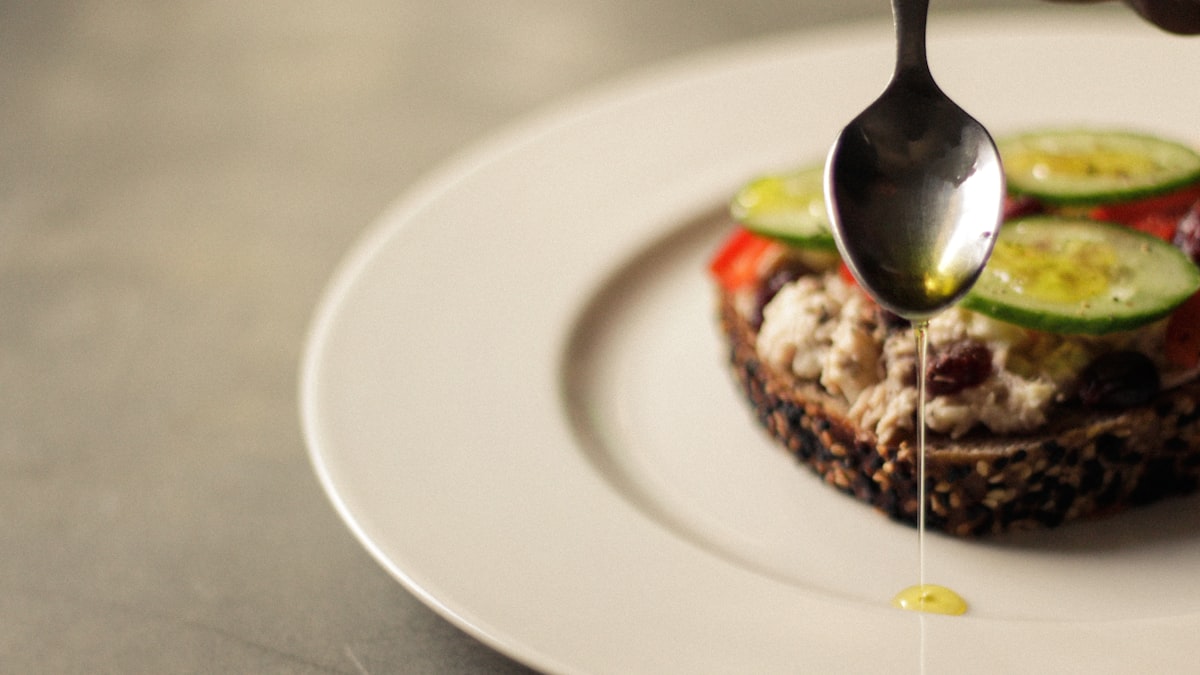
KOH titration and automated measurement
The classical measurement method is potassium hydroxide (KOH) titration. An oil sample is dissolved in ethanol and diethyl ether, phenolphthalein is added as an indicator, and a KOH solution is introduced drop by drop until the mixture changes colour. The volume of KOH consumed is used to calculate the free fatty acid content, which is then converted to a percentage expressed as oleic acid. Modern laboratories increasingly rely on automated titrators and near-infrared (NIR) spectroscopy. The essential point is that the number on the label is generated by instruments, not by sensory evaluation.
The relationship to flavour is indirect
Acidity and flavour are not directly linked. The perceptible sourness difference between 0.1% and 0.3% FFA is, by most analytical accounts, undetectable on the palate. The connection is indirect: low acidity implies intact fruit, fast pressing, and minimal oxidation — conditions that are also associated with better retention of polyphenols and aromatic compounds.
When reading an acidity figure on a label, three reference points are broadly useful. First, 0.8% or below confirms the oil meets the EVOO standard under the IOC classification — the label itself is a guarantee of that threshold. Second, 0.3% or below is widely treated as a signal of high quality; seeing a figure below that in a shop is generally taken to mean relatively fresh, precise pressing. Third, figures below 0.2% — such as 0.14%, 0.16%, or 0.20% — are typically associated with oils that carry a laboratory certificate of analysis from the producer. That said, acidity alone is not sufficient to judge an oil: it is one data point within a broader picture. OLEA's storage guide and label-reading guide offer additional context for getting the most from the information on the bottle.
Acidity is among the most objectively stated numbers on an EVOO label. Understanding it as a measure of fruit condition and post-pressing oxidation — rather than a measure of sour taste — changes how the label reads entirely.
Frequently asked questions
- Does a low acidity number mean olive oil tastes less sour?
- No. The acidity figure on an EVOO label measures free fatty acid (FFA) content expressed as a percentage of oleic acid — not perceived sourness. The difference between 0.1% and 0.3% acidity is essentially imperceptible to the palate.
- What is the maximum acidity for extra virgin olive oil?
- According to the IOC Trade Standard COI/T.15/NC No 3/Rev.19, extra virgin olive oil must have a free fatty acid content of 0.8% or less (expressed as oleic acid), zero organoleptic defects, and must be produced by mechanical means without chemical treatment.
- What does an acidity below 0.3% tell you about an olive oil?
- Within the industry, 0.3% FFA is widely treated as an informal benchmark for high-quality EVOO. A figure below 0.2% is generally read as a sign of precise, fast processing — the fruit was intact at harvest, pressed quickly, and handled carefully to minimise oxidation.
- How is olive oil acidity actually measured?
- The traditional method is potassium hydroxide (KOH) titration: a sample is dissolved in ethanol and diethyl ether with phenolphthalein as an indicator, then KOH solution is added drop by drop until a colour change occurs. The volume of KOH used is converted to a free fatty acid percentage expressed as oleic acid. Modern labs increasingly use automated titrators or near-infrared (NIR) spectroscopy.
- Can acidity alone tell you whether an olive oil is good?
- Not entirely. Low acidity suggests the fruit was undamaged and oxidation was minimised, which in turn makes it more likely that polyphenols and aromatic compounds are well preserved. However, acidity is one data point among several — organoleptic evaluation, harvest date, polyphenol content, and storage conditions all contribute to overall quality.
Related reading
- Fruity, Bitter, Pungent: The Three Scores That Decide an EVOO's Grade
Every EVOO tasting note circles back to the same three words. Here is how IOC sensory panels actually use them — and why all three must be present for a oil to hold its extra virgin status.
- Rancid, Fusty, Musty, Winey: The Four Defects That Can Strip an EVOO of Its Grade
Acidity alone does not determine olive oil quality. When an IOC sensory panel detects a defect at tasting, even an oil below 0.8% acidity can be downgraded from extra virgin status.
- Reading Polyphenol Numbers on an Olive Oil Label: A Step-by-Step Comparison Guide
The mg/kg polyphenol figure printed on an extra virgin olive oil bottle is one of the most useful quality signals a label can carry — but only if you know how to read it. This guide walks through what the number means, how measurement method affects it, and what else to check alongside it.
- Closer to the Source: A Practical Guide to Buying Olive Oil Direct from Producers
From farm-direct shipping and micro-importers to group buys, there are more ways than ever to reach a producer before a supermarket shelf does. This guide walks through each route, what to verify before you buy, and how to set realistic expectations on price and freshness.
- Organic Certification, Carbon Footprint, Water Use: A Practical Guide to Olive Oil Sustainability Labels
Behind every bottle of olive oil sit three measurable sustainability indicators — organic certification standards, carbon footprint figures, and water consumption data. Knowing how to read them turns a label logo from a marketing symbol into a genuine purchasing signal.
- Mapping the Global Olive Oil Trade: Exporters, Importers, and the Re-Export Layer in Between
Oil pressed in Spain reaches American supermarket shelves in bottles labeled Italy — a journey that reveals the layered re-export structure sitting between producer nations and end consumers. This guide traces that flow using IOC trade data.
Tags
- extra virgin olive oil
- acidity
- free fatty acids
- olive oil grading
- label reading