Craft
ORO CELESTE's Three Single-Cultivar Oils Measure 0.14–0.20% Acidity — About a Quarter of the EVOO Limit
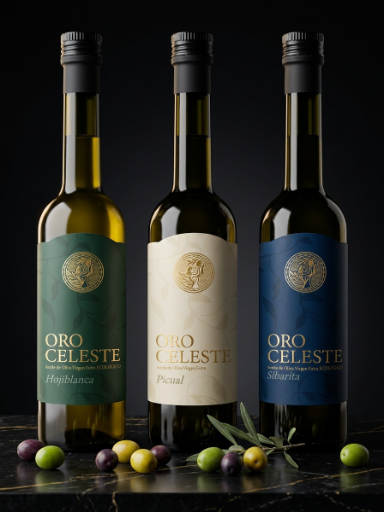
ORO CELESTE has printed the measured acidity of each of its three single-cultivar oils directly on the label. The figures — Sibarita 0.14%, Ojiblanca 0.16%, Picual 0.20% — sit well below the International Olive Council's 0.8% ceiling for extra virgin classification.
Translated from the Korean edition, originally published May 30, 2026 · read the original

ORO CELESTE has printed the measured acidity of each of its three single-cultivar oils directly on the label. Sibarita registered 0.14%, Ojiblanca 0.16%, and Picual 0.20%. The International Olive Council (IOC) sets the acidity ceiling for extra virgin olive oil (EVOO) at 0.8%, meaning all three cultivars came in at roughly one quarter of that threshold.
Acidity as a Measure of Freshness
Acidity in olive oil is not a flavour descriptor — it measures free fatty acid content. According to the IOC, when olives are harvested late or when oxidation occurs during transport and storage, that figure climbs. It is for this reason that acidity has become a primary indicator of both freshness and grade. Under IOC classification rules, any oil exceeding 0.8% free acidity loses its extra virgin status and is reclassified as virgin or refined grade.
The Process Behind the Numbers
ORO CELESTE states that harvested olives are pressed on the same day they are picked, with no refining step before bottling. The brand reports an average window of under 12 hours from harvest to pressing, and an average pressing temperature at or below 27 °C. Because there is no refining, blending, or reprocessing stage, the opportunity for oxidation is correspondingly reduced, according to the brand. Acidity is measured for every batch, so the figure printed on the label matches the reading in the third-party test certificate accessible via the QR code on each bottle.
Frequently asked questions
- What does acidity percentage mean in olive oil?
- Acidity in olive oil refers to the proportion of free fatty acids, not a taste sensation. It rises when olives are harvested late or exposed to heat, damage, or prolonged storage. According to the International Olive Council (IOC), an oil must measure 0.8% acidity or below to qualify as extra virgin.
- How do ORO CELESTE's acidity numbers compare to the EVOO standard?
- The IOC sets the extra virgin grade ceiling at 0.8% free acidity. ORO CELESTE's three single-cultivar oils measured 0.14% (Sibarita), 0.16% (Ojiblanca), and 0.20% (Picual) — each roughly one quarter of that upper limit.
- Why does same-day pressing affect acidity?
- Once olives are harvested, enzymatic activity and oxidation begin to raise free fatty acid levels. Pressing within hours of harvest, as ORO CELESTE states it does — averaging under 12 hours from grove to mill — limits the time available for that process, which is associated with lower acidity readings.
Related reading
- Picual, Arbequina, Coratina, Moraiolo: A Cultivar Guide to Olive Oil Flavor
Flavor in extra virgin olive oil begins with the olive itself. This guide breaks down the origins, sensory profiles, polyphenol levels, and best uses of four cultivars that dominate the premium EVOO market.
- QR Codes on Every Bottle: Inside ORO CELESTE's Batch-Level Transparency
ORO CELESTE prints a QR code on every product label, giving shoppers instant access to the batch-specific lab certificate — acidity, polyphenols, and sensory results — for the exact bottle in their hand.
- ORO CELESTE Ojiblanca: Apple, Grass, and a Long Almond Finish
ORO CELESTE's Ojiblanca registers 0.16% acidity and more than 600 mg/kg polyphenols — numbers that frame a flavor profile built in three distinct layers, from green-apple aroma to a gently peppery close.
- Hand-Picked, Raked, or Shaken: How the Harvest Method Shapes Your Olive Oil
From hand picking to mechanical shakers, the moment olives leave the tree sets the ceiling for acidity, polyphenols, and flavor. A method-by-method comparison for anyone who wants to buy smarter.
- ORO CELESTE Discloses Lab-Certified Polyphenol Counts — Picual Exceeds 800 mg/kg Detection Limit
ORO CELESTE has published certified lab figures for three single-varietal extra virgin olive oils directly on labels and its official website. Picual tested above the instrument detection limit at 800 mg/kg or more; Ojiblanca and Sibarita came in at 600 mg/kg or more and 500 mg/kg or more, respectively.
- The 0.16% on Your Olive Oil Label Has Nothing to Do With Sourness
The acidity figure printed on an extra virgin olive oil label is not a measure of sour taste — it is a chemical indicator of free fatty acid content that reflects the condition of the fruit before and after pressing.
Tags