Craft
Córdoba Terroir: The Soil, Altitude, and Microclimate Behind ORO CELESTE
In the inland hills of Córdoba, Andalusia, limestone soils, elevations of 400–600 m, and a rare transitional microclimate converge to shape the acidity, polyphenol concentration, and flavor profile of ORO CELESTE's extra virgin olive oils.
Translated from the Korean edition, originally published June 30, 2026 · read the original
Terroir: A Language for Reading Olive Oil
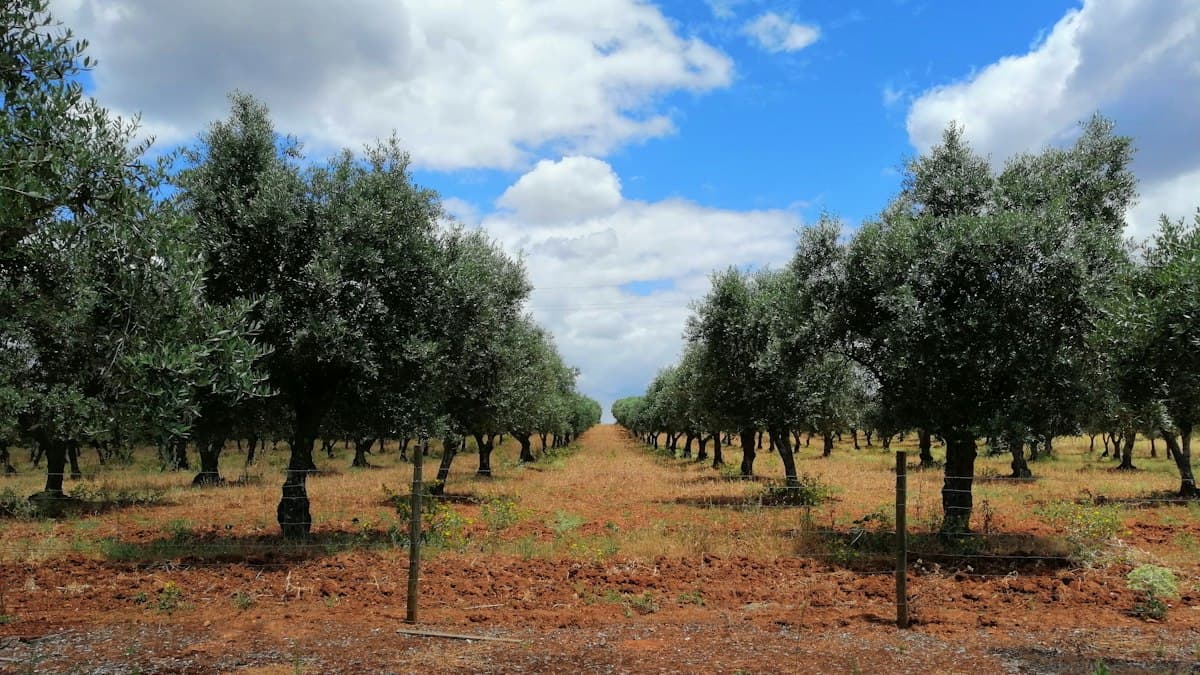
The concept of terroir — long central to wine — applies with equal force to extra virgin olive oil. Even when the cultivar is identical, where a tree puts down its roots determines the fruit's fatty acid composition, polyphenol concentration, and aromatic profile. The inland hills of Córdoba, Andalusia, where ORO CELESTE's groves stand, are a working demonstration of that difference.
Andalusia accounts for roughly 75 percent of Spain's total olive oil output. According to data from Spain's Ministry of Agriculture, Fisheries and Food (MAPA), Córdoba province holds the largest olive-growing area of Andalusia's eight provinces, and is home to a concentration of producers that regularly place at the top of international quality competitions. Within that vast landscape, the rolling inland hills where ORO CELESTE farms occupy a geographically distinctive position.
The Aesthetics of Stress: What Limestone Does to an Olive
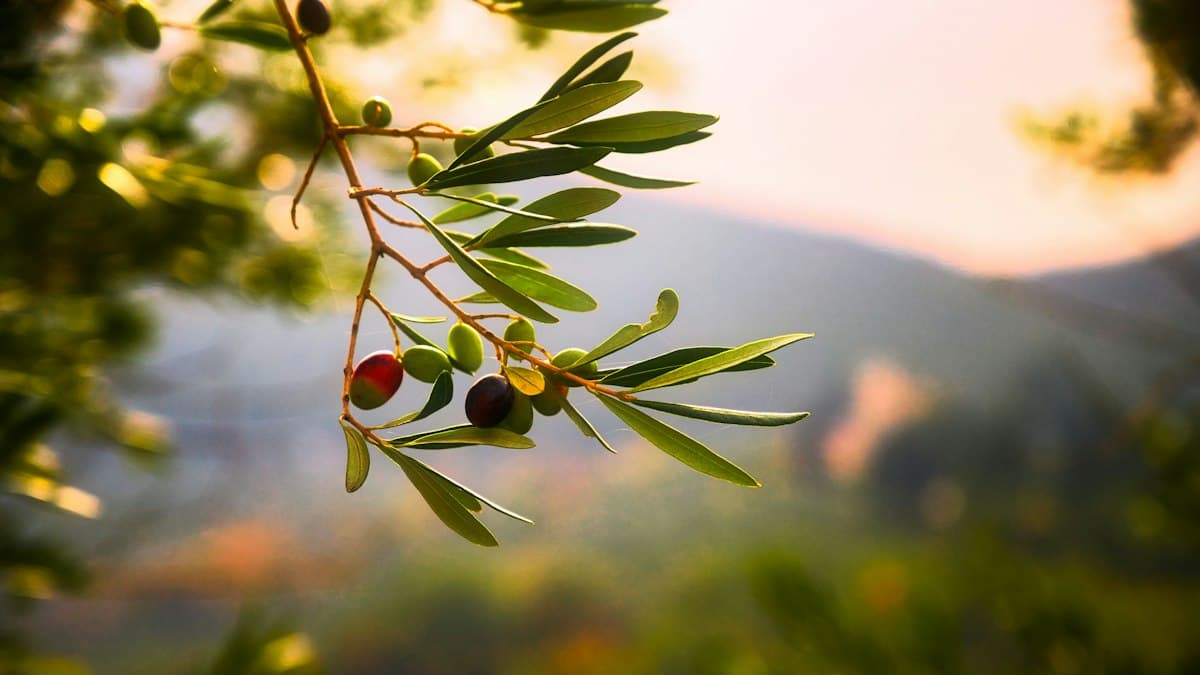
The soils beneath ORO CELESTE's groves are clay over a limestone base. According to IOC technical documentation, limestone soils drain efficiently, allowing roots to extend deep without waterlogging. That very drainage is the key: in pushing deep for moisture, the tree experiences a measurable degree of water stress. Olive trees have been reported to respond to this stress by accumulating phenolic compounds — polyphenols — within the fruit as a survival mechanism. Research published by Italy's National Institute for Food Research (INRAf) found that olives grown under moderate water stress showed meaningfully higher total polyphenol content than olives receiving full irrigation.
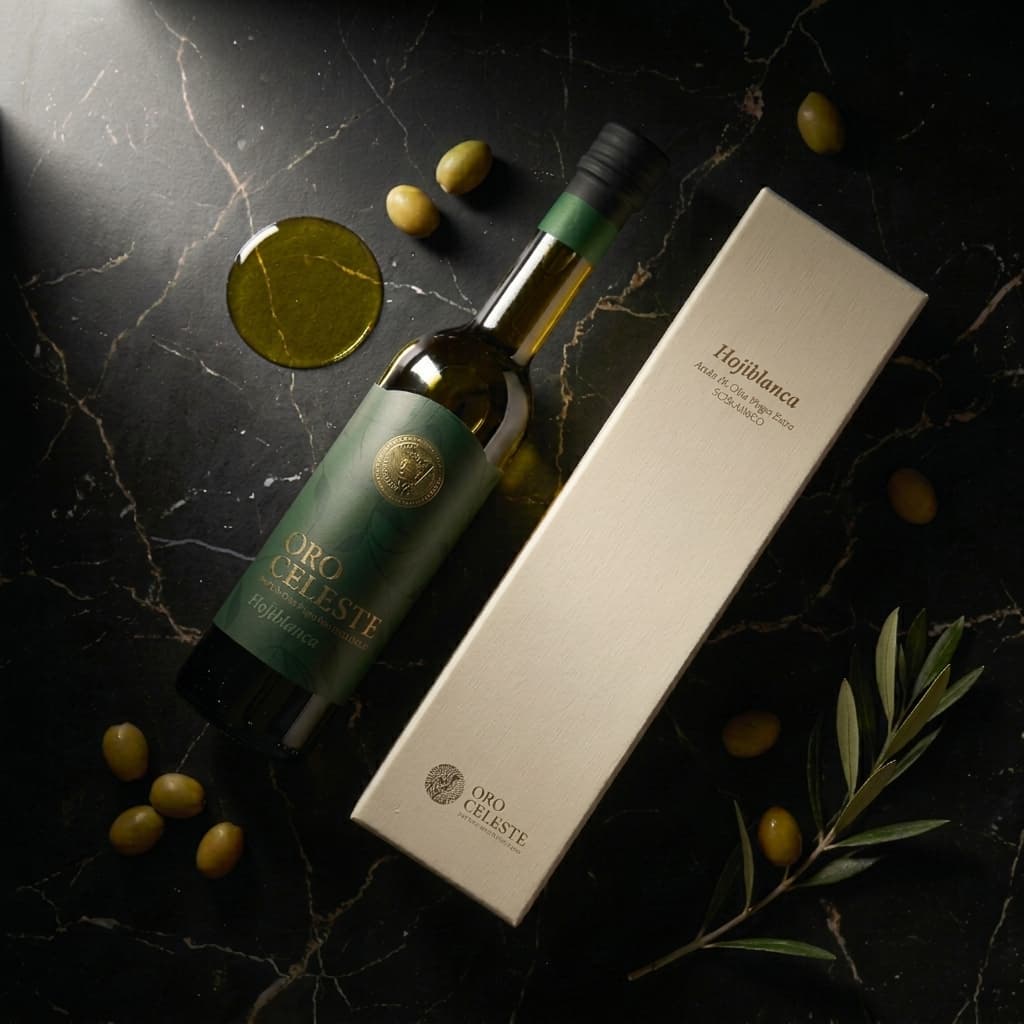
The figures from ORO CELESTE's oils reflect this environment. The Picual variety records an acidity of 0.20% and polyphenol levels of 800+ mg/kg. Ojiblanca comes in at 0.16% acidity and 600+ mg/kg polyphenols, while Sibarita reaches 0.14% acidity and 500+ mg/kg. All three sit well below the extra virgin ceiling of 0.8% acidity set by the International Olive Council (IOC), and are reported to place in the upper range when compared with typical figures for the same cultivars.
Elevation 400–600 m: How Altitude Builds Flavor
About an hour's drive north of Córdoba city, the foothills of the Sierra Morena range begin to rise. ORO CELESTE's groves spread across gently sloping terrain between 400 and 600 metres above sea level. The most direct benefit of that elevation is diurnal temperature variation.
Observational data from Spain's national meteorological agency (AEMET) show that the inland Córdoba hill zone regularly sees summer daytime highs above 38 °C drop to around 18 °C on the same night — a swing of 15–20 °C. During the day, olive fruit synthesizes sugars and fatty acids through photosynthesis; the cool night temperatures slow metabolism, allowing those compounds to accumulate and be retained in the fruit rather than broken down. Researchers have noted that this pattern is associated with greater aromatic complexity and reduced free-radical activity, which can accelerate rancidity.
Elevation also increases UV exposure. Olive trees are reported to respond to intense ultraviolet radiation by stepping up antioxidant production — a response that contributes, alongside the water-stress mechanism, to the elevated polyphenol levels observed at altitude.
A Microclimate at the Crossroads of Two Climate Systems
Andalusia is broadly classified as Mediterranean, but inland Córdoba occupies an unusual transitional zone where Atlantic moisture-bearing air masses and continental interior climate patterns meet. Two features define this microclimate.
First, winter rainfall extends into spring, charging the deep soil layers with moisture. When summer drought arrives, the trees draw on sub-surface reserves rather than surface water — a process that naturally enacts the water-stress mechanism described above, without any irrigation management required.
Second, the Sierra Morena range to the north shields the groves from cold, dry northerly airflows during the day, yet at night cool mountain air drains down the hillsides and wraps around the trees. This topographic effect amplifies the day-to-night temperature contrast beyond what latitude alone would produce. The IOC's quality guidelines explicitly identify pronounced diurnal temperature amplitude as one of the favorable conditions for producing high-quality olive oil.
Three Cultivars, One Landscape — Different Conversations with the Soil
Even across the same Córdoba hills, each cultivar engages with the terroir differently. Ojiblanca expresses the landscape's gentler side through delicate fruitiness and almond nuance. Picual places the limestone's minerality front and center, delivering dense herbal notes and high polyphenol concentration. Sibarita finds a considered balance somewhere between the two.
According to data from Spain's National Research Council (CSIC), the Picual cultivar tends to carry oleocanthal and oleacin — two well-studied phenolic compounds — at higher proportions than most other major cultivars, and the soil conditions around Córdoba have been reported to amplify that characteristic.
The timing of harvest is also an expression of terroir. ORO CELESTE practices early harvesting, collecting fruit while it remains predominantly green. This window coincides with the point at which polyphenol concentration in the olive is at or near its peak — the moment when everything the limestone soil, the altitude, and the microclimate have been building across the growing season is most fully present in the fruit.
Córdoba's coordinates are more than a location on a map. They are the address of a long, ongoing conversation between deep-rooted trees and the particular ground and sky they inhabit.
Frequently asked questions
- Does terroir really affect olive oil quality the way it affects wine?
- Yes. Even within a single cultivar, factors such as soil composition, elevation, and local climate have been reported to influence a fruit's fatty acid profile, polyphenol concentration, and aromatic complexity. The limestone hills of inland Córdoba are a documented example of how geography shapes what ends up in the bottle.
- Why does limestone soil matter for olive oil polyphenols?
- According to IOC technical documentation, limestone soils drain efficiently, allowing roots to extend deep without waterlogging. That drainage creates a degree of water stress in the tree, and researchers have reported that olive trees under moderate water stress tend to accumulate higher levels of phenolic compounds in their fruit compared with heavily irrigated trees.
- What effect does the 400–600 m elevation have on ORO CELESTE's olives?
- Observational data from Spain's national meteorological agency (AEMET) show that the inland Córdoba hills regularly experience a diurnal temperature swing of 15–20 °C in summer — daytime highs above 38 °C falling to around 18 °C at night. Researchers note that this range allows flavor compounds synthesized during the day to be retained in the fruit as nighttime metabolism slows, and may help limit the free-radical activity associated with oxidative degradation.
- What makes the microclimate in this part of Andalusia unusual?
- Although Andalusia is broadly classified as Mediterranean, inland Córdoba sits in a transitional zone where Atlantic moisture systems and continental air masses meet. The Sierra Morena range to the north blocks cold, dry northerly airflows during the day while channeling cool mountain air down the slopes at night — a topographic effect that amplifies the day-to-night temperature contrast. The IOC's quality guidelines identify this kind of pronounced temperature amplitude as a favorable condition for producing high-quality olive oil.
- How does early harvesting connect to the terroir advantage?
- ORO CELESTE practices early harvest, picking while the fruit is still predominantly green. This timing coincides with peak polyphenol concentration in the olive. The combination of limestone-induced water stress, high-altitude UV exposure, and wide diurnal swings builds up those compounds over the growing season; early harvesting locks them in before natural degradation sets in as the fruit ripens further.
Related reading
- Sibarita Up Close: Tomato-Leaf Green and the Art of Delicate Balance
ORO CELESTE's Sibarita delivers acidity of 0.14% and polyphenol levels above 500 mg/kg, with a profile built around vivid tomato-leaf green notes and a finish clean enough to let every dish speak for itself. A closer look at one of Andalusia's most underrated cultivars.
- One Farm, Three Cultivars: The Córdoba Origin of ORO CELESTE
On a single estate in Córdoba, Andalusia, ORO CELESTE presses Ojiblanca, Sibarita, and Picual olives within 24 hours of harvest — capturing the terroir of one of Spain's most storied olive-growing regions in every bottle.
- Early Harvest in Andalusia: How November Shapes ORO CELESTE's Three Cultivars
While most producers wait for full ripeness, ORO CELESTE times three separate harvests in early November — catching Ojiblanca, Sibarita, and Picual at the narrow window when polyphenols peak and acidity is at its lowest.
- Reading Polyphenol Numbers on an Olive Oil Label: A Step-by-Step Comparison Guide
The mg/kg polyphenol figure printed on an extra virgin olive oil bottle is one of the most useful quality signals a label can carry — but only if you know how to read it. This guide walks through what the number means, how measurement method affects it, and what else to check alongside it.
- Picual, Arbequina, Coratina, Moraiolo: A Cultivar Guide to Olive Oil Flavor
Flavor in extra virgin olive oil begins with the olive itself. This guide breaks down the origins, sensory profiles, polyphenol levels, and best uses of four cultivars that dominate the premium EVOO market.
- Three Andalusian Single-Varietals, One Clear Standard: ORO CELESTE Launches in Korea
ORO CELESTE has introduced three single-varietal, cold-pressed EVOOs from a family farm in Andalusia — Ojiblanca, Sibarita, and Picual — each backed by batch-level lab reports accessible via label QR code.
Tags
- terroir
- córdoba
- andalusia
- extra virgin olive oil
- polyphenols
- oro celeste