Craft
One Farm, Three Cultivars: The Córdoba Origin of ORO CELESTE
On a single estate in Córdoba, Andalusia, ORO CELESTE presses Ojiblanca, Sibarita, and Picual olives within 24 hours of harvest — capturing the terroir of one of Spain's most storied olive-growing regions in every bottle.
Translated from the Korean edition, originally published June 25, 2026 · read the original
Córdoba: The Heart of Spanish Olive Oil
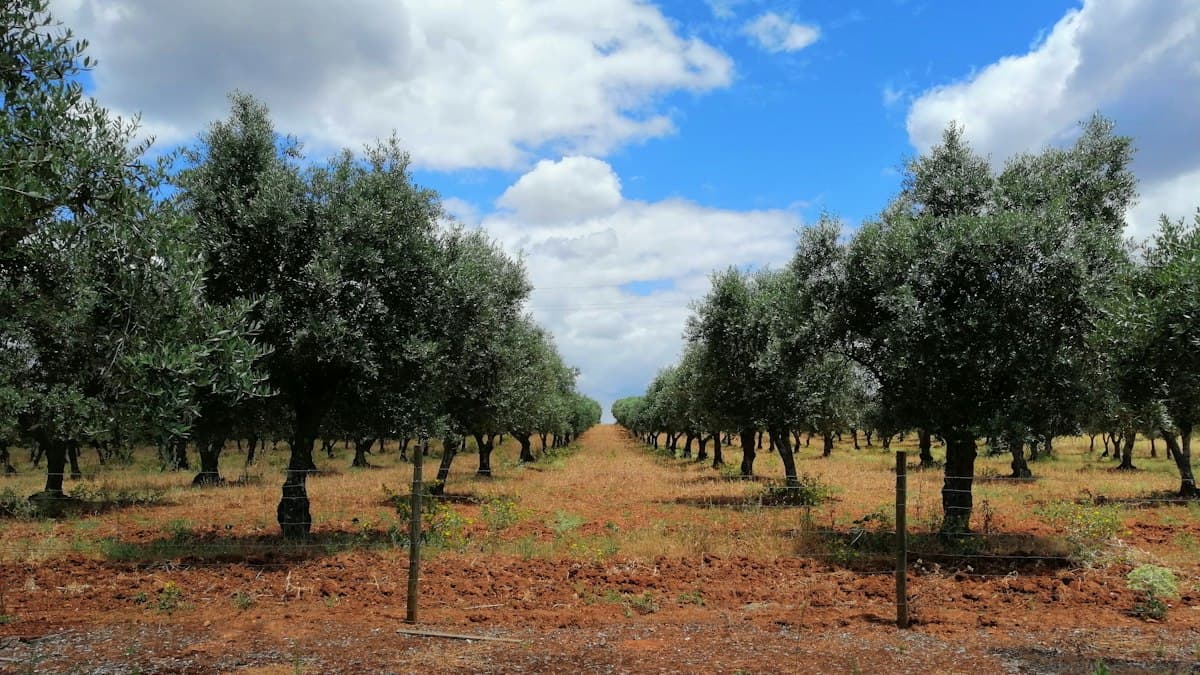
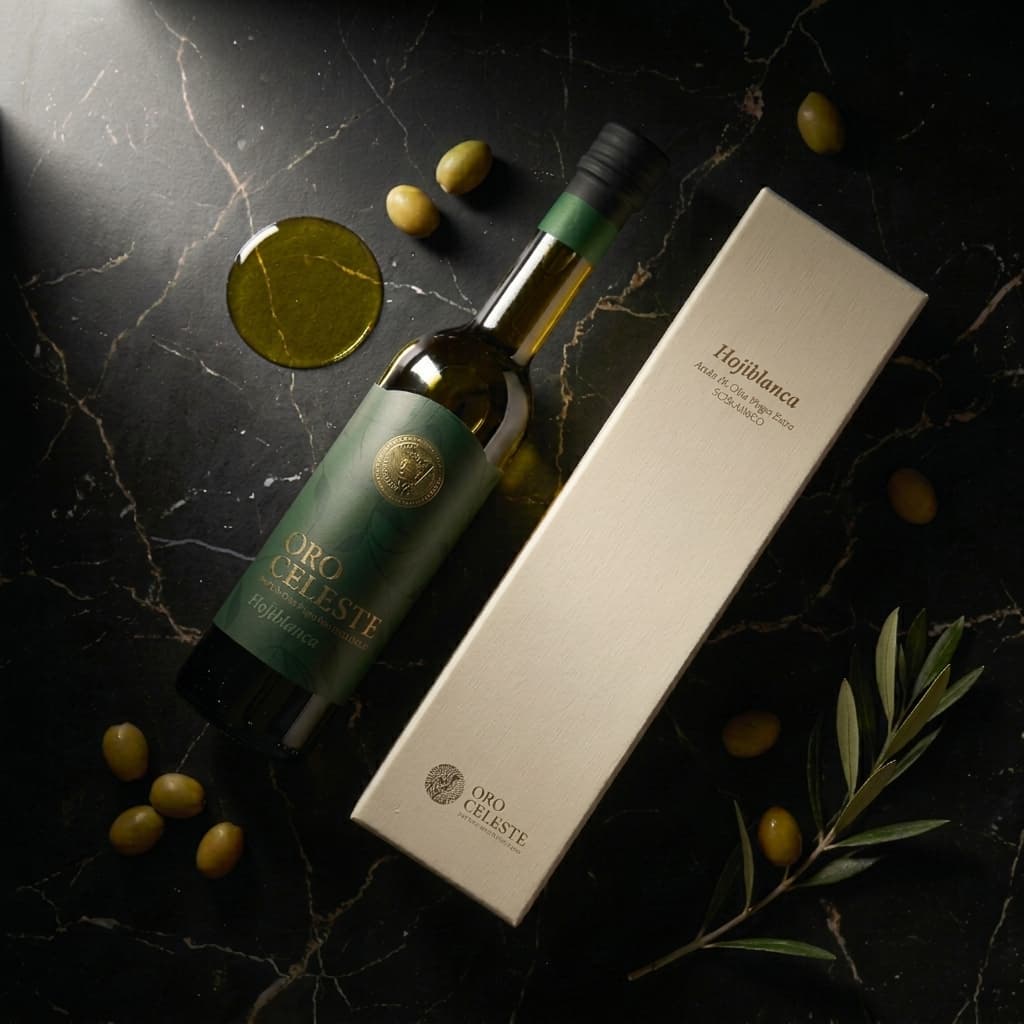
The province of Córdoba, in Spain's Andalusia region, shoulders a substantial share of global olive oil production. According to the International Olive Council (IOC), Spain accounts for roughly 40–45% of world extra-virgin olive oil output, with Andalusia responsible for more than 80% of Spain's total — a figure researchers and industry bodies have reported consistently. Within Andalusia, Córdoba is ranked alongside Jaén as one of the two pivotal centres of olive cultivation.
The geography is distinctive. The Sierra Morena range to the north screens the land from hot continental air masses, while the broad plain carved by the Guadalquivir River provides generous sunlight and moderate moisture. Mean annual temperature hovers around 18 °C, and the region is said to enjoy more than 300 clear days per year. Agricultural researchers note that these conditions contribute to higher sugar concentration and elevated polyphenol levels in the olive fruit.
What Single-Estate Production Actually Means
A large proportion of the olive oil sold globally is made by blending fruit from multiple growing regions — a rational choice for high-volume production, but one that inevitably dilutes the subtle flavour signature — the terroir — that any particular soil and climate creates. The single-estate model begins precisely at that point. By maintaining a continuous chain from one plot of land, one farming team, and one milling facility, producers can secure both traceability and consistent quality.
ORO CELESTE cultivates three varieties — Ojiblanca, Sibarita, and Picual — on a single farm in Córdoba. Even within that one estate, each cultivar grows across slightly different soil compositions and slope orientations. That shared terroir is understood to create a consistent texture and aromatic register across all three varieties.
Three Cultivars, Three Distinct Voices
Ojiblanca is the signature variety of Córdoba and Málaga, known for aromas of apple and almond and a gentle bitterness. ORO CELESTE's Ojiblanca is recorded at 0.16% acidity and more than 600 mg/kg of polyphenols, meeting the extra-virgin standard.
Sibarita is a cultivar selectively developed in the Córdoba region. It is characterised by pronounced notes of tomato leaf and fresh grass and a long finish. Its acidity of 0.14% and polyphenol content above 500 mg/kg are maintained through early harvesting and immediate cold extraction at the farm's own mill.
Picual is the most widely grown olive variety in Spain, recognised for intense green-tomato and herb aromas alongside firm bitterness and peppery heat. ORO CELESTE's Picual is recorded at 0.20% acidity and more than 800 mg/kg of polyphenols — the most robust flavour profile of the three. According to the European Food Safety Authority (EFSA), polyphenols found in olive oil, including oleocanthal, have been reported to be associated with the protection of blood lipids from oxidative stress.
Harvest and Milling: A Race Against Time
Olive oil quality depends heavily on how quickly harvested fruit reaches the mill. Once olives touch the ground or accumulate in large piles, oxidation and fermentation begin, raising acidity and stripping away aroma. IOC quality guidelines specify that free fatty acid content must not exceed 0.8 g per 100 g oleic acid for the oil to qualify as extra virgin.
On the ORO CELESTE estate, the principle is to transfer harvested olives to the on-site milling facility within 24 hours of picking. The oil is extracted by cold press below 27 °C throughout. Lower temperatures are understood to preserve heat-sensitive aroma compounds and polyphenols, and this process is cited as one of the key factors behind the estate's consistently low acidity readings.
Farm to Table: What Traceability Puts in Your Hands
A further value of single-estate oil lies in the reliability of the information printed on the back label. A bottle that specifies harvest year, cultivar, acidity, and polyphenol content gives a buyer precise knowledge of what they are purchasing. According to Spain's Ministry of Agriculture, Fisheries and Food (MAPA), certain Córdoba growing zones operate under the Protected Designation of Origin (DOP) framework, requiring producers to meet strict quality benchmarks before receiving official certification.
Within that context, ORO CELESTE aims not merely to clear quality thresholds but to encode the estate's own story in each bottle: the calcareous soils of Córdoba, more than 300 days of annual sunshine, and the distinct aromatic character each of the three cultivars contributes.
An olive tree can stand in the same ground for decades, sometimes centuries. The mark that time leaves in the soil is returned to the fruit each harvest season, and from there carried through the mill and into a single bottle on the table. That chain of connection is what the ORO CELESTE Córdoba single-farm model is built to preserve.
Frequently asked questions
- What makes a single-estate olive oil different from a blended one?
- A single-estate oil is pressed exclusively from olives grown on one property, with one milling facility handling the entire process. This preserves the terroir — the combined influence of soil, altitude, and microclimate — that is typically diluted when fruits from multiple origins are blended for large-scale production.
- What are the acidity and polyphenol levels in ORO CELESTE olive oils?
- According to the product specifications, ORO CELESTE Ojiblanca records 0.16% acidity and over 600 mg/kg of polyphenols; Sibarita shows 0.14% acidity and over 500 mg/kg; and Picual reaches 0.20% acidity with over 800 mg/kg of polyphenols — all well within the extra-virgin threshold set by the IOC (free fatty acids not exceeding 0.8 g per 100 g oleic acid).
- Why does harvest-to-mill time matter for olive oil quality?
- Once olives are picked, oxidation and fermentation begin immediately — especially if fruit bruises or sits in piles. Both processes raise free acidity and degrade aroma compounds. IOC quality guidelines specify that extra-virgin grade requires free fatty acids below 0.8 g per 100 g oleic acid, and a fast transfer to the mill is one of the most reliable ways to stay within that limit.
- What is cold extraction, and why does ORO CELESTE use it?
- Cold extraction (also called cold pressing) means the olives are milled and the paste processed at temperatures below 27 °C. Lower temperatures help preserve heat-sensitive aroma compounds and polyphenols that would otherwise degrade. ORO CELESTE applies this method across all three of its cultivars.
- What do polyphenols in olive oil actually do?
- According to the European Food Safety Authority (EFSA), polyphenols in olive oil — including oleocanthal — have been reported to help protect blood lipids from oxidative stress. It is important to note that this is an association documented in research, not a guarantee of any medical outcome, and it is too early to conclude that olive oil alone prevents or treats any specific condition.
Related reading
- Spain's Top EVOO Estates: A Guide to the Names That Keep Winning
Not all single-estate Spanish olive oils occupy the same tier. From Jaén and Granada to the Tabernas Desert and Extremadura, this guide maps the Spanish houses that international competition judges and critic guides return to year after year.
- Premium EVOO at Every Price Point: A Global Farm Map
Within the global premium EVOO tier, estates cluster around a consistent set of signals — single origin, single cultivar, and published lab results. This guide charts the farms and labels that define that space, from Andalusia to California.
- Córdoba Terroir: The Soil, Altitude, and Microclimate Behind ORO CELESTE
In the inland hills of Córdoba, Andalusia, limestone soils, elevations of 400–600 m, and a rare transitional microclimate converge to shape the acidity, polyphenol concentration, and flavor profile of ORO CELESTE's extra virgin olive oils.
- Vintage Notes: How Each Harvest Year Shapes ORO CELESTE's Flavor
Like wine, extra virgin olive oil carries the fingerprint of its harvest year. This editor's note tracks how climate and timing shift the aroma and taste of ORO CELESTE's three cultivars—Picual, Ojiblanca, and Sibarita—vintage by vintage.
- ORO CELESTE Ojiblanca: Apple, Grass, and a Long Almond Finish
ORO CELESTE's Ojiblanca registers 0.16% acidity and more than 600 mg/kg polyphenols — numbers that frame a flavor profile built in three distinct layers, from green-apple aroma to a gently peppery close.
- ORO CELESTE Discloses Lab-Certified Polyphenol Counts — Picual Exceeds 800 mg/kg Detection Limit
ORO CELESTE has published certified lab figures for three single-varietal extra virgin olive oils directly on labels and its official website. Picual tested above the instrument detection limit at 800 mg/kg or more; Ojiblanca and Sibarita came in at 600 mg/kg or more and 500 mg/kg or more, respectively.