Table
One Drop Changes Everything: Pairing EVOO with Sashimi and Udon
Extra virgin olive oil is finding a quiet but firm place in Japanese cooking — a few drops over sashimi, a swirl across a steaming bowl of udon. This guide explores the flavor logic behind the pairing.
Translated from the Korean edition, originally published July 20, 2026 · read the original
Olive Oil Enters the Japanese Kitchen
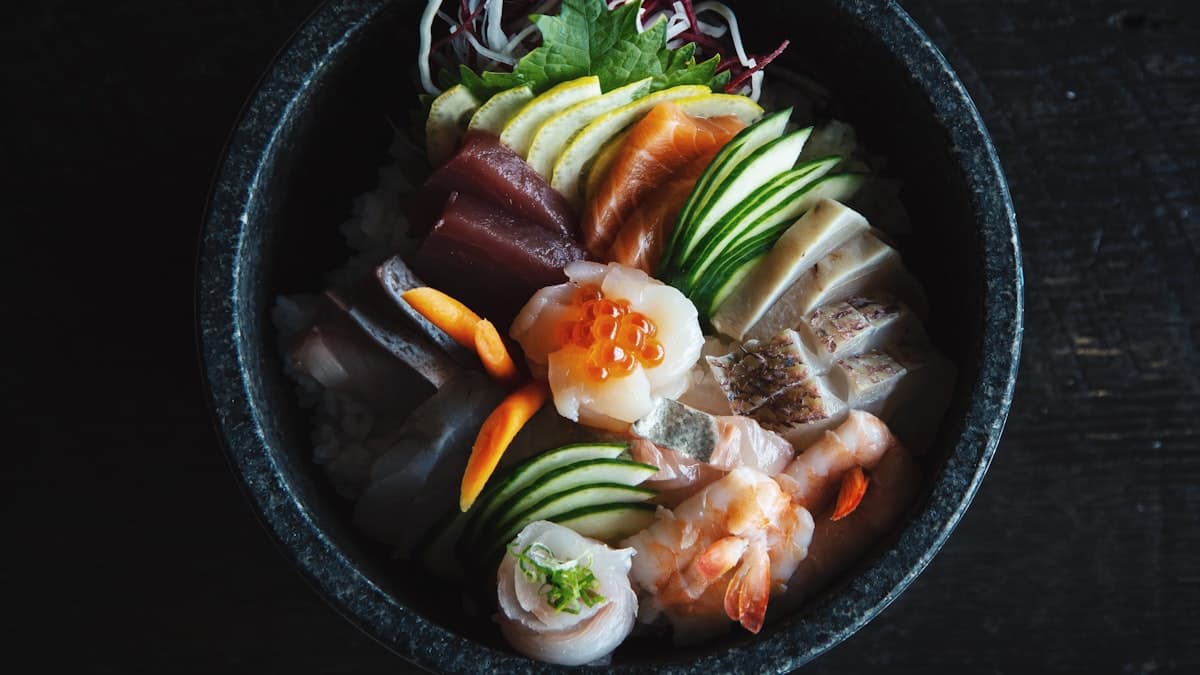
Japanese cuisine has long prized restraint — the idea that a cook's highest skill lies in disturbing an ingredient as little as possible. The precise flavor architecture built from soy sauce, mirin and dashi has been refined over centuries, leaving little obvious room for foreign ingredients. Yet extra virgin olive oil (EVOO) has found its way in, quietly but decisively.
According to International Olive Council (IOC) data, Japan ranks among the leading olive oil importers in Asia and has posted steady growth since the 2010s. A report by Japanese food consulting firm Fuji Keizai has noted that the market has moved beyond simple Western-style cooking applications: more recently, Japanese chefs and home cooks have been adopting EVOO as a finishing oil — used not to dominate a dish, but to lift what is already there.
The oil enters Japanese cooking in two main ways: drizzled in small quantities over raw ingredients as a final touch, or dropped into hot broth dishes to release aroma. In both cases, the olive oil plays a supporting role, drawing out the delicate flavors of the primary ingredient rather than asserting itself.
Sashimi and EVOO — Bridging Raw Flavors
Sashimi presents the amino acid savoriness and natural fat of raw fish directly on the palate, unmediated by heat. Soy sauce and wasabi have long been its traditional counterparts, but adding a few drops of EVOO introduces an entirely new layer without disrupting the logic of the dish.
The key lies in olive oil's fatty acid profile. The oleic acid abundant in extra virgin olive oil is reported to blend smoothly with the omega-3 fatty acids in fish rather than conflicting with them. For lean white fish like sea bream or flounder, a cultivar with lighter fruity notes — apple, almond — complements the delicacy of the flesh. For richer red-fleshed fish like tuna or salmon, an oil with livelier green notes of herb and artichoke provides a counterweight that balances the richness of both.
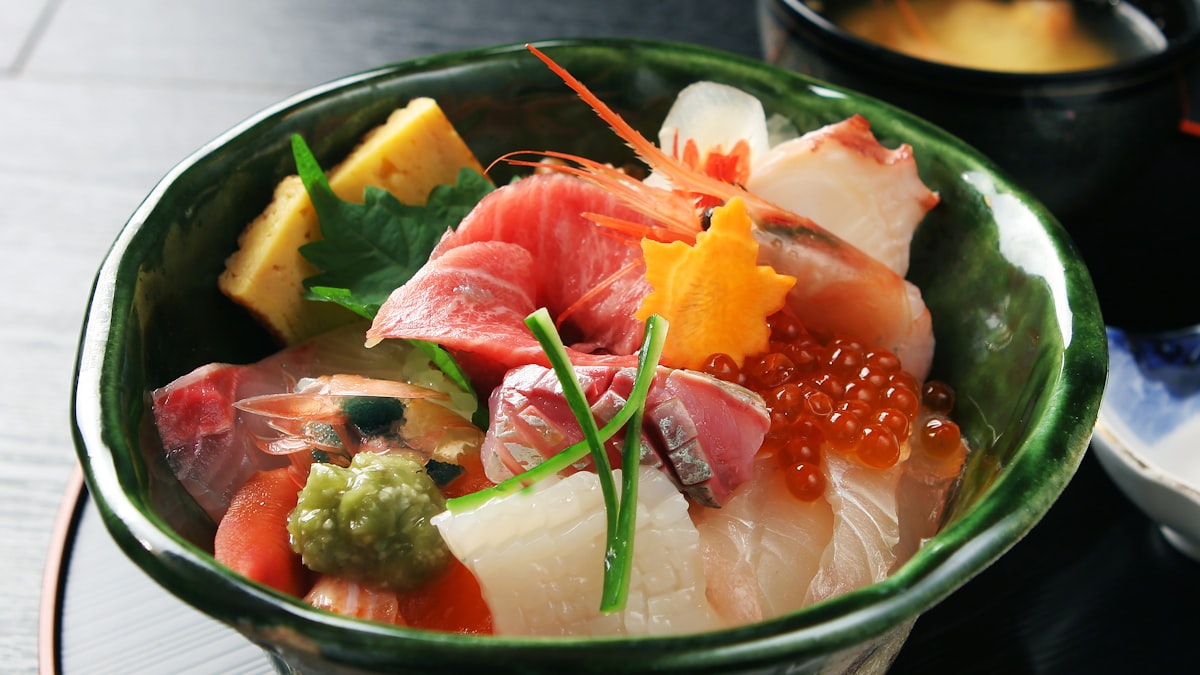
Serving sashimi carpaccio-style with nothing but flaky salt and olive oil, or blending soy sauce and EVOO in a 1:1 ratio to create a new dipping sauce, are approaches that have been spreading through natural-food restaurants in Japan. Oils with higher polyphenol content produce a more perceptible bitter-pungent finish — the quality the Italian term piccante describes — and enthusiasts have noted that this lingering sensation cuts cleanly through the fat of the fish.
A Green Swirl Over the Udon Bowl
Udon brings together the natural savoriness of wheat with the deep umami of dashi broth. Styles vary widely — from delicate Tokyo-style kake udon to Nagoya's miso-based preparations — but across versions, a finishing drizzle of EVOO produces a broadly consistent effect.
When EVOO is added to hot broth, the oil spreads slowly across the surface and its aromatic molecules travel upward with the steam. The grassy character of the olive oil and the smoky-saline note of katsuobushi dashi meet in that rising vapor, giving the bowl a more three-dimensional quality. It has been reported that the bitterness of high-polyphenol early-harvest oils interacts with the saltiness of the broth in a way that makes the underlying sweetness more perceptible.
For clear kake udon, a softer, more delicate Ojiblanca-type oil is a natural fit. For richer miso udon or curry udon, a polyphenol-rich Picual with strong grassy character holds its ground. Since volatile aroma compounds dissipate quickly at high temperatures, it is best to add the oil the moment the bowl reaches the table.
Cultivar Choice Determines the Pairing
When using EVOO with Japanese food, the cultivar's flavor profile is the most important variable. Like wine grapes, olive cultivars differ substantially in their aromas and in the intensity of their bitter and pungent qualities.
Ojiblanca is defined by gentle notes of apple, almond and white flower, with relatively mild bitterness and pungency — making it broadly compatible with restrained dishes like sashimi or yudofu. Sibarita, with its artichoke, banana and green-tea associations, harmonizes naturally with umami-forward preparations. Picual's intense herbal and green-tomato character, combined with a pronounced piccante finish, adds force to rich broths and fried dishes.
Acidity level and polyphenol content are also worth noting. Low acidity is generally taken as an indicator of olive freshness at harvest. Polyphenol content is directly linked to the intensity of the oil's characteristic bitterness and pungency. Oils with polyphenol content above 300 mg/kg are generally classified as high-polyphenol, and according to IOC data, early-harvest, cold-pressed oils are most likely to meet that threshold.
Practical Notes for Japanese Pairings
If you are trying olive oil with Japanese food for the first time, the first rule is restraint. Around 2–3 ml per person for a sashimi course and 3–5 ml for a bowl of udon are reasonable starting points. Too much and the carefully measured flavor structure of Japanese cooking begins to come apart.
Storage matters too. After opening, keep the bottle away from direct light and heat, in a cool, dark place. Using it within two to three months of opening is the best way to preserve its full character. If refrigerated, the oil may solidify — this is not a quality defect, and it returns to its liquid state at room temperature.
For warm dishes like salt-grilled fish or agedashi tofu, drizzle and serve immediately. Volatile aroma compounds evaporate quickly with heat, so finishing the dish just before or after plating preserves far more of the oil's aromatic contribution than adding it during cooking.
Using EVOO in a Japanese context is not a challenge to tradition. It is closer to a natural exchange between two culinary cultures that share a foundational philosophy: let the ingredient speak. One small drop is all it takes to start the conversation.
Frequently asked questions
- Does olive oil go well with sashimi?
- Yes — in small amounts. The oleic acid in extra virgin olive oil blends smoothly with the omega-3 fatty acids in raw fish rather than clashing with them. Light, fruity cultivars like Ojiblanca suit delicate white fish, while greener, more herbaceous oils suit richer cuts like tuna or salmon. A starting pour of about 2–3 ml per serving is recommended.
- Can I put olive oil in udon broth?
- A drizzle of EVOO added to hot udon broth just before serving allows the oil's aromatic compounds to rise with the steam, adding a grassy, layered quality to the dashi's umami. Add it at the very last moment — volatile aroma compounds evaporate quickly with heat.
- Which olive oil cultivar works best with Japanese food?
- Ojiblanca, with its gentle apple-and-almond notes and mild bitterness, is the most versatile match for delicate Japanese dishes such as sashimi or yudofu. Sibarita, with its artichoke and green-tea character, pairs naturally with umami-forward broths. Picual's strong herbal notes and pronounced pungency hold their own against rich miso udon or agedashi tofu.
- How much olive oil should I use on Japanese dishes?
- Less is more. For sashimi, 2–3 ml per serving is a reasonable starting point; for a bowl of udon, 3–5 ml. Exceeding that risks overwhelming the restrained flavor architecture that defines Japanese cuisine.
- What polyphenol level should I look for in a finishing olive oil?
- Oils with a polyphenol content above 300 mg/kg are generally classified as high-polyphenol, according to IOC data, and early-harvest, cold-pressed production methods are most likely to meet that threshold. Higher polyphenol levels bring a more pronounced bitter-pungent finish — the piccante quality that cuts cleanly through the natural fat of raw fish or a rich broth.
Related reading
- Ciabatta, Sourdough, Focaccia: Matching Bread Character to Olive Oil Intensity
Ciabatta, sourdough, and focaccia each bring a distinct fermentation profile, crumb structure, and crust to the table. Matching olive oil intensity to bread character lets both ingredients amplify each other rather than compete.
- Guacamole, Tacos, and Olive Oil: A Pairing That Goes Back Centuries
From sixteenth-century Spanish missionaries to modern Latin kitchens in Mexico City, New York, and Los Angeles, extra virgin olive oil has long had a place at the Mexican table. This guide traces the history and explores how chefs are using it today.
- A Drop of Science: Pairing Dark Chocolate with Extra Virgin Olive Oil
A drizzle of extra virgin olive oil over dark chocolate softens bitterness and amplifies aroma. From the molecular interactions of phenolic compounds to cultivar-by-cultivar pairing choices, OLEA explores this combination through the lens of culinary science.
- The Mediterranean Art of Oil Poaching Fish: Ratios, Temperatures, and Cultivar Pairings
Oil poaching — gently cooking fish submerged in olive oil at low heat — is a cornerstone technique of Mediterranean kitchens. This guide covers everything from choosing the right EVOO to precise temperature ranges and the oil ratios that make the difference.
- Matching Olive Oil Intensity to Your Ingredients: A Pairing Guide
Acidity and grade tell you whether an olive oil is good; intensity tells you where it belongs on the plate. This guide walks through the mild, medium, and intense tiers — and the cooking variables that shift the equation.
- Five Places EVOO Fits Alongside Perilla and Sesame Oil on a Korean Table
Perilla oil and sesame oil have long held the finishing-oil role in Korean cooking. Here are five spots where extra virgin olive oil can sit beside them without displacing them.
Tags
- pairing
- japanese food
- sashimi
- udon
- finishing oil