Table
Green, Bitter, Peppery: A Practical Guide to Reading EVOO Tasting Notes
Single-varietal EVOO labels often carry tasting notes like "grassy finish with pepper" — but decoding them takes a vocabulary all their own. Here is what each key descriptor actually signals.
Translated from the Korean edition, originally published April 12, 2026 · read the original
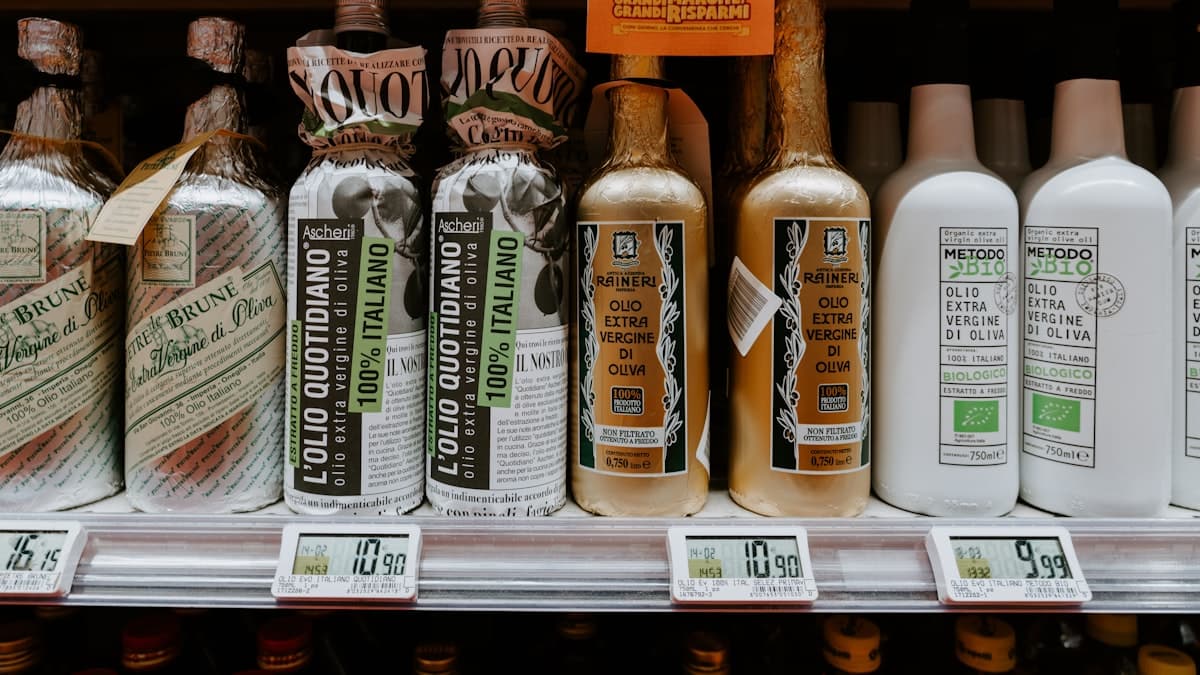
Single-varietal EVOO labels often carry tasting notes along the lines of "grassy opening with a peppery finish." The format echoes wine labeling, but the vocabulary is specific to olive oil. Here is a practical breakdown of the key descriptors and what they signal.
Green Notes Are a Freshness Indicator
When a label mentions "herb", "grass", "tomato leaf", or "artichoke", it is signaling the presence of green notes — a character typically found in oils pressed from early-harvest olives. On the palate, green notes arrive as a fresh, verdant aroma and flavour. Oils with a pronounced green-note profile tend to work well as a finishing drizzle over carpaccio or raw vegetables, where that brightness can shine rather than be overwhelmed by heat.

A Peppery Finish Points to Polyphenol Richness
Descriptors such as "peppery", "pungent finish", or "catches at the back of the throat" are markers of an oil rich in polyphenols — oleocanthal in particular. The familiar mild sting felt at the back of the throat after swallowing is the hallmark sensation of pungency, and producers typically rate its intensity as mild, medium, or intense. Cultivars known for delivering this quality include Picual and Coratina. The descriptor is a positive attribute under the IOC sensory standard, not a flaw.
Bitterness Is Not a Defect
Expressions like "bitter", "pleasantly sharp", or "oleuropein note" on a label describe a natural character produced by polyphenols, not a production problem. A well-made EVOO will show mild-to-medium bitterness as part of its normal sensory profile. When bitterness is very intense, it can clash with delicate dishes, so for contexts where a softer finish is preferred — a light salad dressing, for instance — a label indicating mild-to-medium bitterness is the better match.
Reading the Finish
Tasting notes typically close with a description of the finish: how the oil lingers — or doesn't — after swallowing. Common phrases include "long peppery finish", "clean and short", or "a hint of ripe apple at the end". As a rule of thumb, an oil with a short, clean finish suits lighter preparations where subtlety matters, while an oil with a long, persistent finish earns its place alongside strongly flavoured foods that can match its intensity.
Label vs. Palate
Tasting notes are a producer's best description of the oil, written under controlled conditions. They are a useful guide, but no label fully prepares you for the actual experience of tasting. The most reliable way to calibrate your reading of tasting notes is to start with a smaller bottle, taste a few drops neat at room temperature, and then compare what the label promised with what you actually perceive. Over time, that gap between label and palate narrows — and so does the guesswork at the shelf.
Frequently asked questions
- What do green notes mean on an olive oil label?
- Green notes — descriptors like 'grass', 'herb', 'artichoke', or 'tomato leaf' — indicate that the olives were harvested early and the oil retains a fresh, vibrant character. They are a reliable freshness signal and pair especially well with raw vegetables and carpaccio.
- Does a peppery finish mean the olive oil is better quality?
- A peppery or throat-stinging finish is associated with higher polyphenol content, particularly oleocanthal. It is not a quality defect; on the contrary, it is a marker of an oil pressed from healthy, well-timed fruit. Intensity is usually described as mild, medium, or intense on the label.
- Is bitterness in olive oil a sign something is wrong?
- No. Mild-to-medium bitterness in an extra virgin olive oil is a normal, positive characteristic produced by polyphenols such as oleuropein. A completely flat, non-bitter oil may actually indicate age or oxidation rather than refinement.
- How should I use the finish length described on a tasting note?
- A short, clean finish suits lighter dishes where you do not want the oil to compete. A long, lingering finish — often described as extended pepper or sustained fruitiness — stands up to bold flavors like grilled meats, aged cheeses, or heavily seasoned dishes.
- How accurate are tasting notes on the label?
- Tasting notes are a producer's description, not a guarantee. The only reliable way to verify them is to taste the oil yourself. Starting with a smaller bottle lets you compare the label's promise against your own impression before committing to a larger format.
Related reading
- Bitter, Pungent, Fruity: The Three Words Every EVOO Taster Needs to Know
The three positive attributes at the heart of professional olive oil evaluation — fruitiness, bitterness, and pungency — are not arbitrary descriptors. Understanding exactly what they mean changes how you read a label, trace an origin, and choose a bottle.
- First Week vs. One Month: How an Open Bottle of EVOO Changes
Extra virgin olive oil smells and tastes noticeably different the day a bottle is opened compared with a month later. This guide traces what air, light, and heat do to polyphenols and volatile aromas — and how to slow the process down.
- A Drop of Science: Pairing Dark Chocolate with Extra Virgin Olive Oil
A drizzle of extra virgin olive oil over dark chocolate softens bitterness and amplifies aroma. From the molecular interactions of phenolic compounds to cultivar-by-cultivar pairing choices, OLEA explores this combination through the lens of culinary science.
- Giving Olive Oil as a Gift: A Guide to Size, Grade, and Packaging
The difference between a memorable olive oil gift and a forgettable one often comes down to three decisions: grade, volume, and packaging. This guide walks through each in order, with practical pairings for different recipients.
- How to Pick an Olive Oil Gift Set: A Price-by-Price Guide
From entry-level blends to single-estate bottles, choosing an olive oil gift set calls for a different eye than buying a single bottle. Here is what to look for on the label and in the box at every price tier.
- EVOO in the Italian Home Kitchen: A Long History in Baking and Pastry
Extra virgin olive oil is widely known as a finishing oil, but Italian home cooks have long relied on it in baking and pastry. From focaccia dough to apple cake batter, here is how EVOO earns its place in the oven.
Tags
- tasting notes
- evoo
- polyphenols
- sensory
- label reading