Table
From Pintxos to Ajo Blanco: How Olive Oil Holds Spanish Tapas Together
Olive oil sits at the center of Spain's tapas culture — toasting the bread for pintxos, frying the potatoes for patatas bravas, and emulsifying the silky cold soup known as ajo blanco. This guide traces the oil's role across the Spanish bar counter.
Translated from the Korean edition, originally published November 4, 2026 · read the original
Tapas: A Spanish Philosophy Served on Small Plates
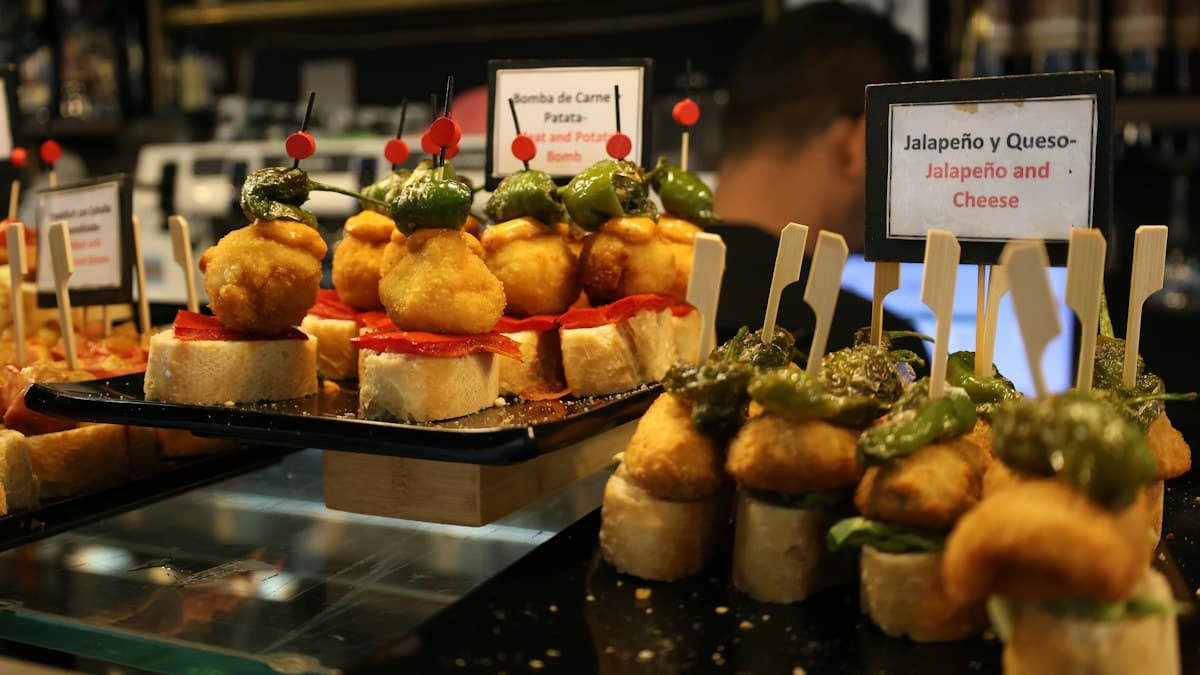
The Spanish way with tapas goes well beyond a convenient way to eat. The act of lingering over small shared plates at a bar, letting conversation stretch across the afternoon, has its own name: tapeo. And at the center of that ritual sits extra virgin olive oil. According to 2023 data from the International Olive Council (IOC), Spain produces approximately 44% of the world's olive oil, and that oil permeates Spanish cooking at every level — from a home frying pan to the finishing drizzle at a Michelin-starred restaurant.
The origin of the word tapas is contested, but the most widely repeated account traces it to a slice of bread placed on top of (tapar — to cover) a glass of wine to keep out dust and insects in the sun. That modest scrap of bread has since evolved into dozens of distinct small-plate dishes. Through every transformation, olive oil has never left the picture.
Pintxos: What Olive Oil Does to a Single Bite
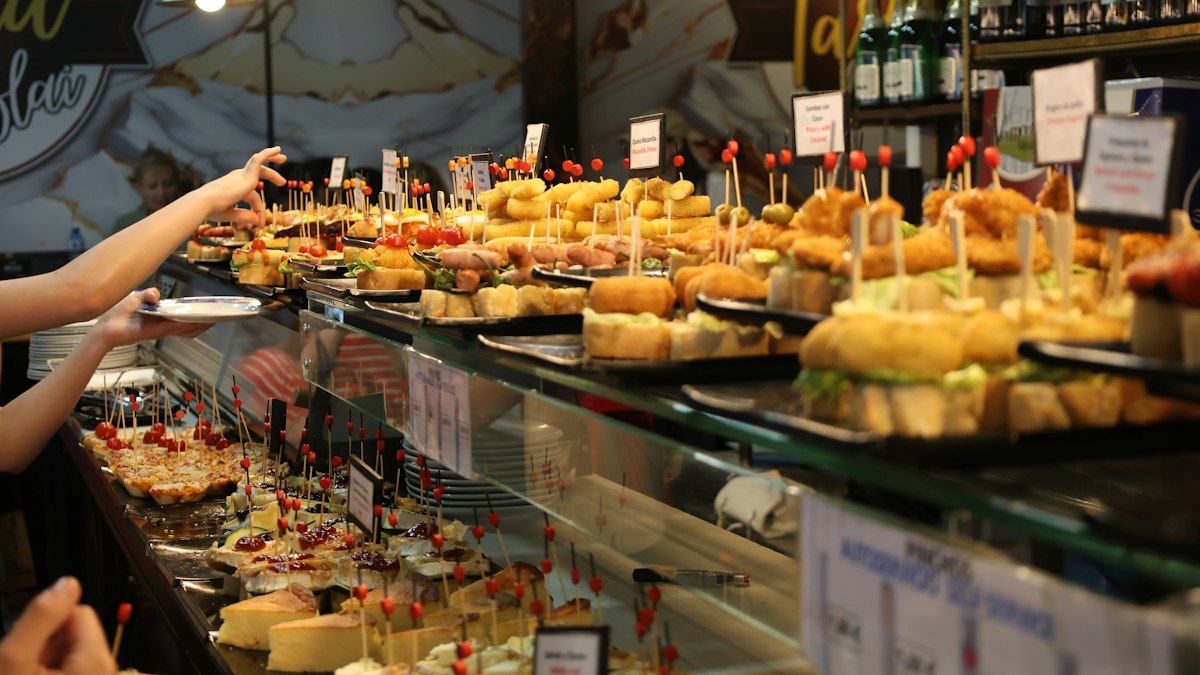
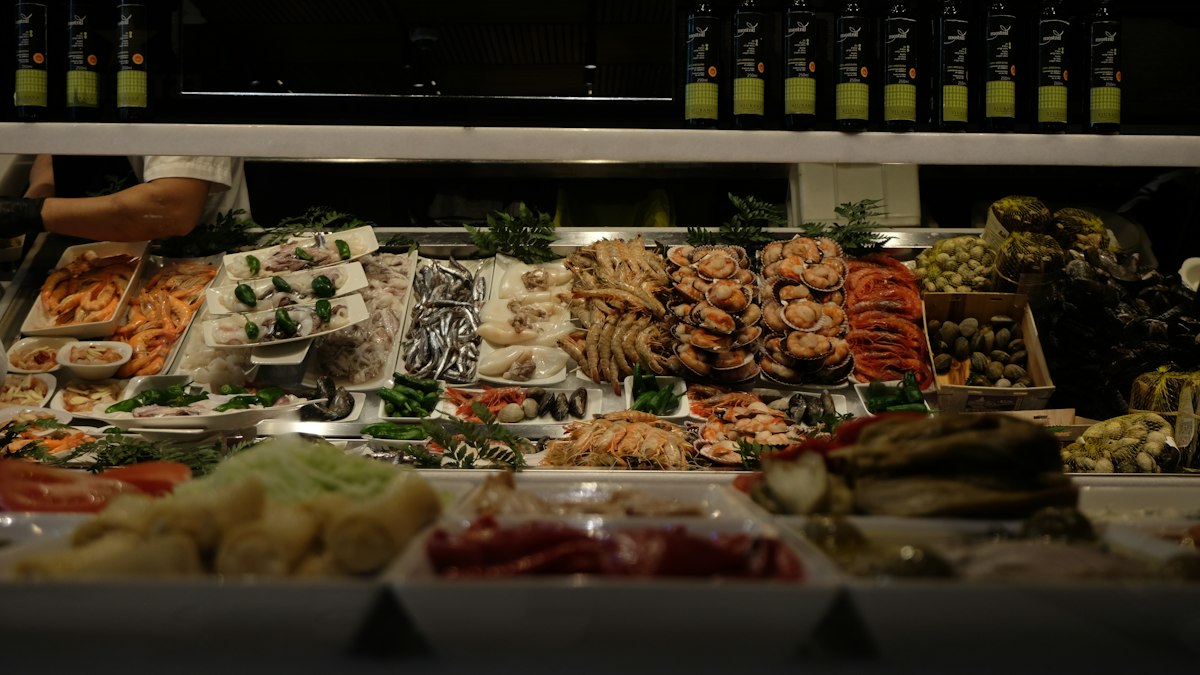
Pintxos, born in the Basque Country, are tapas' northern cousins — small canapés pinned with a cocktail stick (pintxo) and lined up along the bar counter in a display that is as much visual as culinary. The small baguette slice at the base of each pintxo is brushed with olive oil and briefly toasted before anything else goes on top. That step is not decorative: it creates a surface that is crisp on the outside and moist within, and it activates the oil's fat-soluble aroma compounds so that whatever follows — anchovies, jamón, roasted peppers, salt cod (bacalao) — lands on a foundation already layered with fragrance.
Extra virgin olive oil is generally reported to have a smoke point in the range of 190–210 °C, making it reasonably stable for the brief, moderate heat involved here. But in pintxos cookery the oil's role is not primarily about heat tolerance. The moment the oil soaks into the bread, its fruit-forward volatile compounds are released; when the saltiness and umami of the topping meet those fruit notes, a more complex flavor structure emerges. That is why many chefs apply one round of oil before the topping goes on, and a second drizzle immediately before serving.
Patatas Bravas: The Logic Behind the Golden Crust
Patatas bravas — diced potatoes fried in olive oil, served with a spicy bravas sauce or alioli — appears on virtually every tapas menu in Spain. The traditional recipe follows a two-stage frying method. The potatoes go into olive oil at a relatively low temperature (around 130 °C) first, cooking the interior through slowly, then move to high heat (above 180 °C) for a final crisping of the surface.
This double-fry traps interior moisture while building a thin, firm crust that holds the sauce on the potato rather than letting it run off. The oleic acid that makes up the majority of olive oil's fat content has been reported to offer relatively good oxidative stability during cooking, which means the oil's own aroma remains present in the finished dish. Madrid-style bravas lean toward a tomato-and-paprika sauce that gives the plate its red color; in Barcelona, alioli is the more common accompaniment.
Ajo Blanco: Emulsion as the Point of the Dish
Ajo blanco is a chilled soup from Andalusia, sometimes called the "white gazpacho" because it contains no tomato. The ingredient list is short: soaked almonds, day-old white bread, garlic, sherry vinegar, cold water, and olive oil. Blended together and passed through a sieve, they produce a soup of pure white, with a texture closer to heavy cream than to a vegetable purée.
In ajo blanco, olive oil is not a finishing touch — it is structural. During blending, the oil must be poured in a thin, steady stream so that it emulsifies into the almond-and-bread base. That emulsification is what creates the soup's signature velvet texture. Pour the oil too fast and the soup breaks; use too little and it tastes thin and flat. Andalusian home cooks have traditionally calibrated this ratio by feel, passing the technique from one generation to the next. The finished soup is served with a few green grapes and one final turn of olive oil across the surface — a step that adds a last layer of grassy, nutty aroma alongside the visual finish.
Local chefs report a clear difference between cultivars in this preparation. A Picual, with its assertive bitterness and herbaceous character, adds depth to the soup's backdrop. An Ojiblanca, softer and more fruit-forward, draws out the natural sweetness of the almonds. Neither is the single correct choice; the decision depends on the balance a cook is after.
Choosing an Olive Oil for Tapas at Home
Reproducing tapas culture at home begins with the oil. Under IOC grading standards, extra virgin olive oil must register free fatty acid content (acidity) no higher than 0.8% and show no sensory defects on a trained evaluation panel. Lower acidity is generally taken as evidence that the olives were milled at peak ripeness under good conditions. Higher polyphenol content tends to correspond with more pronounced bitterness and a peppery finish.
Among Andalusian cultivars, the personality differences are significant. Picual carries a strong herbaceous quality and a firm bitter note that holds its own against robust preparations like patatas bravas or spiced sauces. Ojiblanca, with its almond and stone-fruit notes, pairs more naturally with ajo blanco or delicate pintxos toppings. Sibarita sits between the two in intensity, offering a balanced profile that travels well across a range of dishes.
Spanish tapas culture prizes good ingredients used correctly over elaborate technique. Selecting the right bottle of extra virgin olive oil is, in that sense, the first step toward a proper tapeo.
Frequently asked questions
- Why do Spanish tapas recipes almost always call for olive oil?
- Spain accounts for roughly 44% of global olive oil production, according to 2023 data from the International Olive Council (IOC), so the ingredient is embedded in Spanish cooking at every level — from home frying pans to Michelin-starred finishing drizzles. Its flavor, stability under moderate heat, and emulsifying properties make it the natural fat for the full range of tapas preparations.
- What is the difference between tapas and pintxos?
- Tapas is the broader term for small shared plates found across Spain, while pintxos (from the Basque word for skewer) are a regional variation originating in the Basque Country. Pintxos are typically bite-sized canapés anchored to a small baguette slice with a cocktail stick and displayed along the bar counter.
- What makes the double-frying method for patatas bravas work?
- The two-stage approach — first a slow cook at around 130 °C to cook the potato through, then a high-heat finish above 180 °C to crisp the surface — traps moisture inside while forming a firm outer crust that holds the bravas sauce in place. The oleic acid in extra virgin olive oil has been reported to show relatively good oxidative stability during frying, which helps the oil's own aroma carry through to the finished dish.
- Which olive oil cultivar works best for ajo blanco?
- Local chefs in Andalusia report that the choice of cultivar noticeably shifts the soup's character. A robust Picual oil, with its grassy bitterness, adds depth; a softer Ojiblanca, with its fruit and almond notes, echoes the sweetness of the blanched almonds. Neither is strictly correct — the preference depends on how much bitterness you want in the finished soup.
- How do I choose an extra virgin olive oil for cooking Spanish tapas at home?
- Under IOC grade standards, extra virgin olive oil must have a free fatty acid content (acidity) no higher than 0.8% and show no sensory defects on a trained panel. Lower acidity generally signals olives pressed at peak freshness. For tapas with bold sauces — patatas bravas, grilled peppers — a Picual with higher polyphenols and a pronounced bitter finish stands up well. For delicate pintxos toppings or ajo blanco, an Ojiblanca or Sibarita offers a more balanced, fruit-forward profile.
Related reading
- One Drop Over Washoku: How Japanese Cuisine Made Peace with Olive Oil
Dashi broths, silken tofu, and grilled fish are unlikely companions for extra virgin olive oil — yet Japan's culinary world is quietly rewriting that assumption. From finishing drizzles in kaiseki courses to marinade brushed on fatty fish, the logic behind the pairing turns out to be deeply Japanese.
- Soy Sauce Meets Olive Oil: How Japanese Cuisine Made Room for a Western Fat
Japan's washoku table — built on dashi, miso, and soy sauce — has been quietly absorbing extra virgin olive oil for decades. This guide traces the cultural logic behind that shift and the real dishes where it plays out.
- Guacamole, Tacos, and Olive Oil: A Pairing That Goes Back Centuries
From sixteenth-century Spanish missionaries to modern Latin kitchens in Mexico City, New York, and Los Angeles, extra virgin olive oil has long had a place at the Mexican table. This guide traces the history and explores how chefs are using it today.
- Butter Country No More: How Scandinavia Learned to Cook with Olive Oil
Olive oil is reshaping Nordic kitchens — from Copenhagen's Michelin-starred restaurants to Swedish home pantries. This guide traces how EVOO found its place alongside smoked fish, fermented rye, and root vegetables in one of the world's most distinctive food cultures.
- Hummus, Shakshuka, Sabich: How Israeli Cooking Uses Olive Oil at Every Layer
From the finishing pour on hummus to the base of a shakshuka and the layered construction of a sabich, olive oil functions as a primary ingredient on the Israeli table — not a neutral medium. This guide traces how Levantine culinary tradition treats the oil itself as the point.
- Matching Olive Oil Intensity to Your Ingredients: A Pairing Guide
Acidity and grade tell you whether an olive oil is good; intensity tells you where it belongs on the plate. This guide walks through the mild, medium, and intense tiers — and the cooking variables that shift the equation.