Table
A Drizzle Over Doenjang: Pairing Extra Virgin Olive Oil with Korean Fermented Foods
From a finishing pour over doenjang jjigae to kimchi bruschetta, extra virgin olive oil slots into the Korean fermented table more naturally than you might expect. Here is the flavor logic and the practical how-to.
Translated from the Korean edition, originally published August 27, 2026 · read the original
Fermentation and Oil: A Combination Worth Reconsidering
The idea that olive oil has no place alongside fermented foods dissolves quickly once you look at Mediterranean food culture. Pairing oil with fermented cheese, cured olives and aged vinegar has thousands of years of history behind it. The Korean fermented table is built on a similarly deep tradition — flavors shaped over long periods of salting, aging and microbial activity. Doenjang, ganjang, cheonggukjang, kimchi, jeotgal: the complex umami these ingredients generate meshes with the green bitterness, peppery finish and grassy aroma of extra virgin olive oil in ways that feel less like fusion and more like a logical extension of both traditions.
The compatibility also has a food-science dimension. Amino acids such as glutamate, produced during fermentation, are thought to combine with the oleic acid matrix in olive oil and help savory flavors persist on the palate. In that sense, the oil may act as an amplifier for the deep character of fermented ingredients rather than competing with it.
Doenjang and Olive Oil: Amplifying Umami
Doenjang carries some of the heaviest flavor weight in the Korean fermented pantry. The organic acids and amino acids generated as soybeans ferment give it a layered, almost mineral depth. There are two practical ways to bring olive oil into the picture.
The first is a doenjang dressing. Whisk one tablespoon of doenjang with two tablespoons of extra virgin olive oil, one teaspoon of lemon juice or yuzu syrup, and a small amount of minced garlic. The result works across salads, tofu and seasoned namul. The doenjang's salinity anchors the oil's grassy notes while the fat smooths the paste's sharper edges.
The second approach is a finishing drizzle over completed doenjang jjigae or doenjang soup. Finishing a broth-based dish with olive oil at the last moment is common practice in Italian ribollita and Spanish sopas, and the logic transfers directly. A thin film of oil forms on the surface, trapping aroma so that each spoonful releases a gentle wave of green fragrance.
Kimchi and Oil: Sourness Meets Bitterness
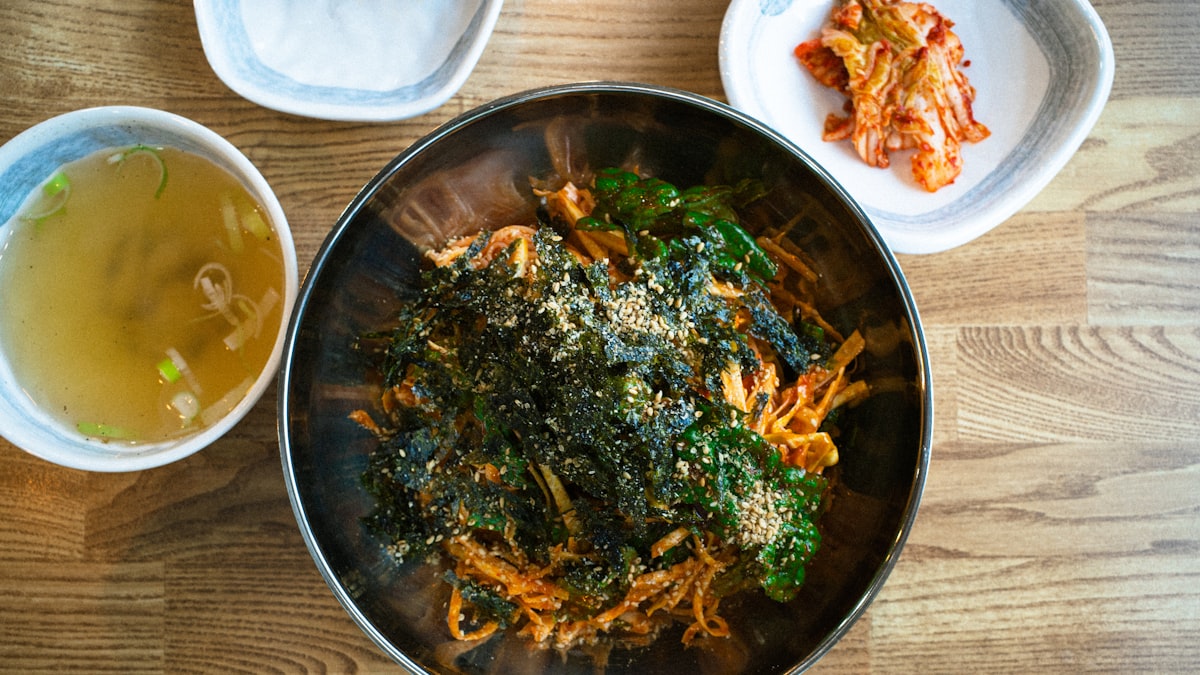
Kimchi's defining characteristic is the bright acidity produced by lactic-acid fermentation. That sourness enters into an unexpected dialogue with the bitterness of extra virgin olive oil — a bitterness that comes from polyphenols. Rather than canceling each other out, the two qualities tend to preserve their individual character while arriving at a working balance.
The most accessible entry point is using olive oil when making kimchi pancakes (kimchi-jeon) or kimchi fried rice. The concern about low smoke points is largely overstated: according to International Olive Council (IOC) data, the actual smoke point of extra virgin olive oil ranges from approximately 190 °C to 210 °C depending on quality — sufficient for standard stir-fry temperatures. Prolonged exposure to very high heat is still worth avoiding.
A more adventurous option is kimchi bruschetta. Finely chop well-fermented kimchi, sauté it briefly in olive oil, spoon it onto croutons or rice crackers, and finish with a second pour of raw olive oil. The layered result — fermented acidity underneath, fresh oil fragrance on top — works well as a starter.
Expanding the Range: Ganjang, Cheonggukjang, and Jeotgal
Once doenjang and kimchi feel familiar, the rest of the fermented pantry opens up naturally.
Ganjang vinaigrette: Combine one tablespoon of low-sodium brewed soy sauce with three tablespoons of extra virgin olive oil, one teaspoon of brown rice vinegar and one teaspoon of sesame oil. The result is a Korean-inflected vinaigrette that rounds out beautifully over namul, salads or cold tofu. The soy sauce's umami softens and broadens when emulsified with oil.
Cheonggukjang dip: Mix a small amount of cheonggukjang with olive oil and chopped fresh herbs — green onion, perilla — to create a dip for vegetable sticks or flatbread. The fat in the oil is thought to moderate the intensity of cheonggukjang's characteristically pungent aroma, making it more approachable.
Myeolchi-jeot finishing sauce: This mirrors a technique common in Italian cooking, where anchovy paste is melted into olive oil to build a sauce. A small amount of well-fermented salted anchovy (myeolchi-jeot) can be dissolved into olive oil and used as a finishing sauce for pasta or roasted vegetables. The combination of fermented protein character and olive oil aromatics produces a more refined flavor layering than either ingredient suggests on its own.
Choosing Your Cultivar: Matching Oil to Fermented Ingredient
Not every extra virgin olive oil pairs equally well with every fermented food. Understanding a cultivar's flavor profile sharpens the pairing.
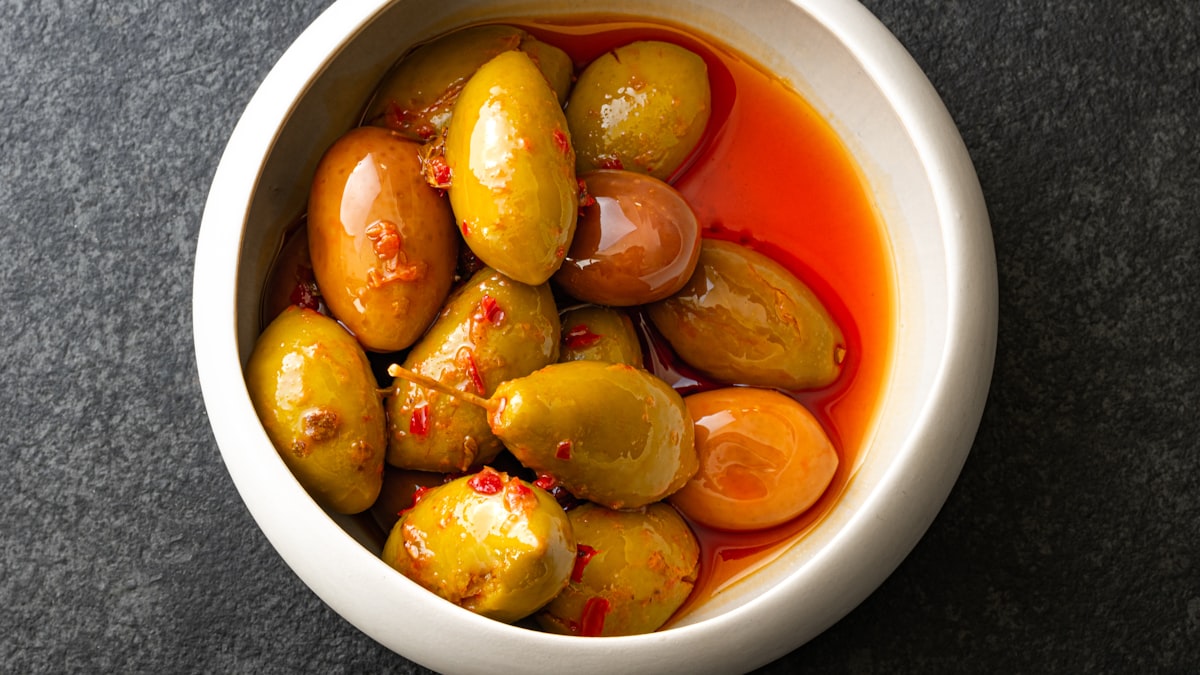
Full-bodied oils with prominent bitterness and a long peppery finish hold their own against assertive fermented ingredients — aged kimchi, cheonggukjang, pungent jeotgal. Lighter, butterier oils suit preparations where balance is the priority, such as a doenjang dressing. Picual, with its high polyphenol content and clear bitter character, tends to form a strong partnership with doenjang and cheonggukjang. Ojiblanca, which offers an almond note alongside gentler bitterness, integrates more quietly into ganjang dressings and delicately seasoned namul dishes.
When You Add the Oil Shapes the Flavor
Olive oil plays a different role depending on whether it goes in before cooking, during cooking, or after. When working with fermented ingredients, the finishing drizzle is the most consistently effective technique. Added just before serving, while the food is still warm, the oil's volatile aromatic compounds ride the heat upward rather than cooking off in the pan. Applied in that final moment over doenjang jjigae, namul, braised tofu or steamed egg custard, even a single circuit of oil around the bowl shifts the aromatic profile noticeably.
None of this requires a recipe overhaul. The pairing begins with a small habit: a thread of oil — carrying the sun of the Mediterranean — poured over dishes already carrying thousands of years of fermentation.
Frequently asked questions
- Does extra virgin olive oil go with fermented foods like doenjang and kimchi?
- Yes — the pairing is more natural than it sounds. Amino acids produced during fermentation, such as glutamate, are believed to bind with the oleic acid matrix in olive oil, helping savory flavors linger longer on the palate. The bitterness of a good EVOO also finds balance with kimchi's lactic-acid sourness rather than clashing with it.
- Can you cook kimchi pancakes or kimchi fried rice in olive oil without burning it?
- According to International Olive Council (IOC) data, the actual smoke point of extra virgin olive oil ranges from roughly 190 °C to 210 °C depending on quality — comfortably above typical stir-fry temperatures. The main caution is to avoid sustained high heat over a long period.
- Which olive oil cultivar works best with strong fermented ingredients like cheonggukjang?
- Full-bodied, high-polyphenol cultivars with a pronounced bitter and peppery finish — Picual being a prime example — tend to hold their own against assertive fermented flavors like aged kimchi or cheonggukjang. For more delicate preparations such as ganjang dressings or seasoned namul, a lighter, almond-nuanced variety like Ojiblanca integrates more gracefully.
- What is the best moment to add olive oil when cooking Korean food?
- A finishing drizzle — added just before serving while the dish is still warm — is particularly effective. The residual heat carries the oil's aromatic compounds upward without cooking them off, adding a distinct fragrance layer to dishes like doenjang jjigae, egg custard (gyeran jjim) or braised tofu.
- How do you make a doenjang dressing with olive oil?
- Whisk together one tablespoon of doenjang, two tablespoons of extra virgin olive oil, one teaspoon of lemon juice or yuzu syrup, and a small amount of minced garlic. The doenjang's salinity rounds out the oil's grassy bitterness, while the oil's fat softens the sharper edges of the paste. Use it over salads, tofu or blanched vegetables.
Related reading
- Mala, Dim Sum, and a Drizzle of EVOO: Olive Oil Meets Chinese Cooking
Extra virgin olive oil is crossing into Chinese cuisine — from mala tang broth to steamed dim sum and Cantonese stir-fries. Here is a flavor-and-chemistry look at why the pairing works.
- Five Places EVOO Fits Alongside Perilla and Sesame Oil on a Korean Table
Perilla oil and sesame oil have long held the finishing-oil role in Korean cooking. Here are five spots where extra virgin olive oil can sit beside them without displacing them.
- From Omakase to Home Table: How the Fine-Dining-at-Home Trend Is Reshaping the Pantry
A growing appetite for restaurant-grade experiences at home is pushing premium pantry staples—Spanish single-varietal EVOO chief among them—out of professional kitchens and onto domestic shelves.
- Spring Greens Meet EVOO: A Pairing Guide for the Season's First Harvest
From bitter aralia shoots to sweet spring cabbage, Korea's earliest seasonal greens reveal an unexpected affinity with extra virgin olive oil. This guide matches cultivar by cultivar and explains how to use EVOO at every stage of the spring kitchen.
- Korean Holiday Cooking Meets EVOO: A Practical Kitchen Guide
Sesame oil has long ruled the Korean festive kitchen, but extra virgin olive oil is quietly earning a place beside it. This guide covers which holiday dishes benefit most from EVOO, how to blend the two oils, and how to keep a bottle in good condition through a long cooking day.
- Old Kitchens, New Oil: How Extra Virgin Olive Oil Found Its Way into Korea's Long-Standing Restaurants
Decades-old Korean restaurants are quietly adding extra virgin olive oil to their kitchens — not as a foreign import, but as a natural extension of the country's long tradition of finishing dishes with oil. From namul drizzles to doenjang blends, the logic is more intuitive than it first appears.